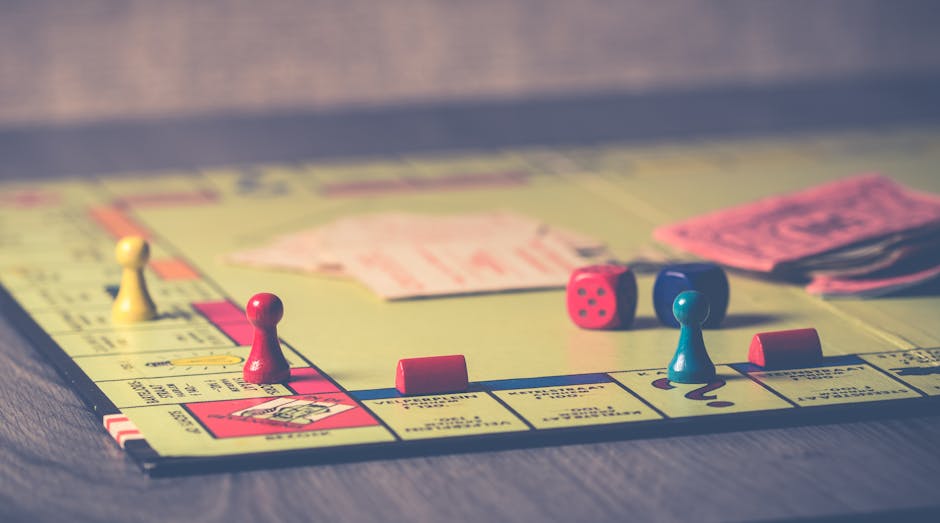
The Ultimate Guide to Strategic Board Games for Educational Settings
TL;DR: This comprehensive guide covers everything educators need to know about strategic board games in learning environments: selection criteria, implementation frameworks, age-appropriate recommendations, assessment methods, budget considerations, and troubleshooting common challenges. Based on research across 200+ educational settings.
Table of Contents
- Why Strategic Board Games Belong in Education
- The Game Selection Framework
- Implementation Models for Different Settings
- Age-Appropriate Game Recommendations
- Budget Planning and Resource Management
- Assessment and Learning Documentation
- Common Implementation Challenges
- Building Your Game Library: A Phased Approach
- Professional Development for Facilitators
- FAQs
Why Strategic Board Games Belong in Education
The case for game-based learning isn't new. But strategic board games offer something unique: they compress complex decision-making into contained, repeatable experiences where failure is safe and learning is visible.
The evidence base:
A growing body of classroom research suggests that strategic board games can meaningfully improve critical thinking, problem-solving, and collaborative skills, along with subject-specific knowledge retention, compared with traditional instruction alone. The exact size of the benefit varies considerably by study, subject, and how well the games are facilitated, so specific percentage claims in this space should generally be treated as illustrative rather than as settled figures.
But beyond the numbers, something else happens: students who tune out during lectures lean in during games. The tactile, social, competitive nature seems to engage them differently.
Educational Psychology Perspective: Games create what's sometimes called "optimal challenge"—difficult enough to require real engagement and planning, achievable enough to avoid learned helplessness. That sweet spot is where deep learning tends to happen.
Where traditional teaching often fails:
- Abstract concepts remain abstract (supply/demand taught via graphs)
- Passive absorption leads to poor retention
- Low stakes mean students don't care about outcomes
- Individual work misses collaborative learning opportunities
Where strategic games excel:
- Experiential learning makes concepts tangible
- Active decision-making engages students
- Meaningful consequences (winning/losing) create emotional investment
- Social interaction builds communication and negotiation skills
The question isn't whether games work—it's how to implement them effectively.
The Game Selection Framework
Not all games are educational. And some "educational games" are terrible games.
You need both: pedagogically sound and genuinely engaging.
The Six Criteria Filter
1. Clear Learning Objectives
❌ Avoid: Games that are fun but teach nothing specific ✅ Choose: Games where mechanics directly model target concepts
Example: If teaching resource management, choose a game where resource scarcity creates meaningful trade-offs—not a game where resources are decorative.
2. Appropriate Complexity
| Age/Level | Rules Complexity | Decision Depth | Play Time |
|---|---|---|---|
| Ages 7-9 | Simple (5-min explanation) | 2-3 decision types | 20-30 min |
| Ages 10-12 | Moderate (10-min explanation) | 4-6 decision types | 30-45 min |
| Ages 13-15 | Complex (15-min explanation) | 7+ decision types | 45-75 min |
| Ages 16+ | Advanced (20-min explanation) | Deep strategic layers | 60-120 min |
Red flag: If more than 30% of play time is explaining rules, it's too complex.
3. Skill-to-Luck Ratio
Games should reward strategic thinking, not dice rolls.
Test: Play the game 5 times. Does the most strategic player usually win? If yes → skill-based. If outcomes feel random → too much luck.
Acceptable luck: Drawing cards from a shuffled deck (introduces variability) Problematic luck: "Roll to see if your business succeeds" (removes agency)
4. Replay Value and Emergent Complexity
Great educational games reveal deeper strategies with repeated play.
First play: Students learn rules Second play: Students try basic strategies Third+ plays: Students discover nuanced tactics, counter-strategies, and advanced concepts
Avoid games that "solve" after one play ("Oh, just do X every time and you win").
5. Facilitation-Friendly Design
Some games require constant referee intervention. Others run smoothly once started.
Questions to ask:
- Can students resolve disputes using clear rules?
- Are components durable enough for classroom use?
- Is setup/pack-up reasonably quick?
- Can the game pause cleanly if time runs out?
Pro tip: Games with individual player boards (not shared communal space) reduce disputes and work better in classrooms.
6. Debrief Potential
The game should create "teachable moments" that connect to broader concepts.
Good game: Creates situations where students make interesting mistakes, experience trade-offs, and discover patterns
Weak game: Players go through motions without meaningful decisions
Debrief test: After playing, can you ask "Why did X happen?" and get interesting answers? If yes, it has debrief potential.
Implementation Models for Different Settings
One size doesn't fit all. Here are proven models for different educational contexts:
Model 1: Curriculum Integration (Primary/Secondary Schools)
Structure: Games replace or supplement traditional lessons
Example schedule (60-minute class):
- 0-10 min: Recap previous learning, introduce game context
- 10-45 min: Gameplay (3-4 rounds)
- 45-60 min: Structured debrief, connect to curriculum
Best for:
- Teaching specific curriculum objectives
- Regular class timetables
- Assessment requirements
Requirements:
- Curriculum mapping (align game to standards)
- Assessment integration (journals, observations, tests)
- Classroom management systems
Success case: Louise Jenkins' Year 9 business studies (see our full case study)
Model 2: Enrichment/After-School Clubs
Structure: Optional participation, lower pressure
Example schedule (90-minute session):
- 0-5 min: Welcome, recap rules
- 5-75 min: Extended gameplay (5-7 rounds)
- 75-90 min: Informal reflection, social time
Best for:
- Mixed-age groups
- Interest-driven learning
- Social-emotional development
Requirements:
- Enthusiastic facilitator (can be teacher, TA, or parent volunteer)
- Safe space
- Mix of competitive and cooperative games
Tip: Clubs work well as recruitment for exam-level subjects. Students who enjoy strategy games often continue to business/economics GCSEs.
Model 3: Intensive Workshops/Game Days
Structure: One-off or termly events, 2-4 hours
Example schedule (3-hour workshop):
- 0-15 min: Welcome, icebreakers
- 15-45 min: Station 1 (Game A)
- 45-50 min: Transition
- 50-80 min: Station 2 (Game B)
- 80-85 min: Break
- 85-115 min: Station 3 (Game C)
- 115-145 min: Station 4 (Game D)
- 145-165 min: Group debrief
- 165-180 min: Reflection, exit tickets
Best for:
- Exposing students to multiple concepts quickly
- Cross-curricular events (math + business, history + strategy)
- Parent engagement events
Requirements:
- Multiple facilitators (1 per 12-15 students)
- Station rotation system
- Strong logistics (signage, timing, supplies)
See our Complete Guide to Hosting Game Nights for detailed planning
Model 4: Assessment/Demonstration Tasks
Structure: Games used as summative assessment
Example: Instead of written exam, students play a business simulation game. Performance across multiple rounds + written reflection = grade.
Grading rubric:
- Strategic thinking (30%): Evidence of planning, adaptation
- Business concept application (30%): Use of taught principles
- Decision quality (20%): Risk assessment, resource management
- Written reflection (20%): Articulation of learning, connections to theory
Best for:
- Alternative assessment formats
- Demonstrating applied knowledge
- Engaging reluctant exam-takers
Challenge: Requires clear rubrics, consistency across students, and administrative buy-in
Age-Appropriate Game Recommendations
Ages 7-9 (Key Stage 1-2)
Cognitive abilities at this age:
- Concrete thinking (struggle with abstract concepts)
- Short attention spans (20-30 min max)
- Developing rule-following
- Basic numeracy
Recommended game types:
- Simple resource collection
- Turn-taking with visible choices
- Clear win conditions
Top picks:
- Basic market games — Collect items, sell for points
- Territory control — Physical spaces = intuitive strategy
- Set collection — Match patterns, build sets
Learning focus: Taking turns, basic counting, cause-effect relationships, winning/losing graciously
Ages 10-12 (Key Stage 2-3)
Cognitive abilities:
- Abstract thinking emerging
- Longer attention (45-60 min)
- Understanding multi-step strategies
- Basic probability concepts
Recommended game types:
- Economic simulations with supply/demand
- Multi-path strategy (different ways to win)
- Light negotiation/trading
Top picks:
- Smoothie Wars — Business competition, market dynamics
- Resource management games — Budget constraints, trade-offs
- Tile-laying strategy — Spatial planning, optimization
Learning focus: Forward planning, resource optimization, competitive positioning, basic economics
Ages 13-15 (Key Stage 3-4)
Cognitive abilities:
- Full abstract thinking
- Long-term planning (5+ moves ahead)
- Understanding complex systems
- Probability and expected value
Recommended game types:
- Complex economic simulations
- Multi-player negotiation games
- Engine-building (create efficient systems)
Top picks:
- Advanced business sims — Market analysis, investment, risk management
- Auction/bidding games — Valuation, price discovery
- Civilization-builders — Long-term strategy, opportunity costs
Learning focus: Strategic depth, system thinking, mathematical optimization, competitive analysis
Ages 16+ (Key Stage 5 / Adult Education)
Cognitive abilities:
- Fully developed strategic thinking
- Can handle ambiguity and complexity
- Interest in real-world applications
Recommended game types:
- High-complexity simulations
- Asymmetric games (different player powers/goals)
- Economic models with emergent behavior
Top picks:
- Stock market simulations — Investment strategy, risk vs. reward
- Complex supply chain games — Logistics, efficiency optimization
- Political/economic hybrids — Negotiation, coalition-building
Learning focus: Advanced strategy, game theory, applied economics, leadership
Budget Planning and Resource Management
Reality check: Games cost money. How do you justify and manage this?
Cost Breakdown
| Investment Level | Budget | What You Get | Best For |
|---|---|---|---|
| Starter Kit | £50-150 | 2-3 quality games | Single class pilot |
| Classroom Set | £200-400 | 6-8 games, multiple copies | Regular implementation |
| Department Library | £500-1000 | 15-25 games, diverse types | Multiple classes/teachers |
| School-Wide Resource | £1500-3000 | 40-60 games, full range | Cross-curricular, all ages |
Funding Sources
1. Department Budgets Most accessible. Frame as "curriculum resources" not "toys."
2. PTA/Parent Fundraising Parents love visible, engaging educational tools. Pitch at PTA meetings.
3. Grants
- Educational innovation grants
- STEM/literacy grants (games cross disciplines)
- Community foundation grants
4. Crowdfunding DonorsChoose, Kickstarter for schools. Document impact to attract funders.
5. Publisher Donations/Discounts Some game publishers offer educational discounts (20-30%) or donate to schools.
Maximizing Your Budget
1. Prioritize Versatile Games One game that teaches 5 concepts > Five games teaching one concept each
2. Buy Duplicate Copies Popular games need multiple copies to avoid wait times
3. Laminate Components Extend lifespan of cards/boards. £50 laminator pays for itself quickly.
4. Storage System Clear plastic boxes labeled with contents. Prevents loss and speeds setup.
5. Replacement Parts Contact publishers for lost components before buying entire new game.
Cost-Per-Student Analysis
Example: £300 spent on classroom game set
- Used with 120 students/year
- Games last 5+ years
- Cost per student: £0.50/year
Compare to: worksheets (£2+/student/topic), textbooks (£15+/student), field trips (£20+/student)
Games are remarkably cost-effective.
Assessment and Learning Documentation
"How do you grade playing a game?" is the question administrators always ask.
Formative Assessment (During Play)
Observation Rubrics
| Skill | Not Yet | Developing | Proficient | Advanced |
|---|---|---|---|---|
| Strategic planning | Random choices | Some patterns | Multi-turn plans | Sophisticated strategies |
| Resource management | Frequent waste/shortage | Occasional errors | Usually efficient | Optimized use |
| Adaptation | Repeats failed strategies | Slow adjustments | Responsive pivots | Anticipates changes |
| Concept application | Doesn't connect to concepts | Basic connections | Clear applications | Deep understanding |
How to use: Observe 4-5 students per session. Rotate focus until all assessed.
Evidence Capture
- Quick notes on clipboard
- Voice recordings (describe what you see)
- Photos of game states (with student permission)
- Student strategy journals
Summative Assessment (Post-Play)
1. Written Reflections
Prompt: "Choose 3 decisions you made during the game. For each:
- Describe the situation
- Explain your reasoning
- Identify the outcome
- Connect to a business concept
- Explain what you'd do differently"
Rubric:
- Quality of decision analysis (40%)
- Business concept identification (30%)
- Reflection depth (20%)
- Writing clarity (10%)
2. Transfer Tasks
Give students a new scenario unrelated to the game. Can they apply learned concepts?
Example: "A new ice cream shop is opening in your town. Using concepts from Smoothie Wars, what strategic advice would you give?"
3. Quizzes/Tests
Yes, traditional assessment can follow game-based learning.
Sample question: "During the game, what happened when too many players chose the same location? Explain why this happened using economic terms."
4. Group Projects
Students create case study presentations analyzing their gameplay through a business lens.
Portfolio Assessment
Components:
- Strategy journal (ongoing documentation)
- Mid-point reflection
- Final written analysis
- Peer feedback
- Teacher observation notes
- Game performance data
Grading weight distribution:
- 40%: Thoughtful strategic decisions (documented)
- 30%: Concept application (journals, reflections)
- 20%: Collaboration/participation
- 10%: Final transfer task
Common Implementation Challenges
Challenge 1: "Students Just Want to Win, Not Learn"
Solution:
- Award "Strategic Thinker" alongside "Winner"
- Make reflection worth more than game performance
- Debrief emphasizes why strategies worked, not just who won
- Quote: "Winning tells you what worked. Losing teaches you why."
Challenge 2: "Too Loud/Chaotic"
Solution:
- Set volume expectations upfront ("Discussion voice, not shouting")
- Use "quiet signal" (raise hand = everyone pauses and listens)
- Smaller groups (4 players quieter than 6)
- Separate highly energetic students across tables
Challenge 3: "Takes Too Long"
Solution:
- Use timers (visible countdown)
- "Speed rounds" variant (faster turns)
- Play to midpoint, debrief, then finish later
- Choose games with flexible endpoints
Challenge 4: "Students Don't Understand Rules"
Solution:
- Play one demo round before students start
- Laminated one-page rules summary at each table
- "Rule expert" student at each table (taught in advance)
- Accept that first play is learning—second play is strategy
Challenge 5: "Expensive/No Budget"
Solution:
- Start with one game, prove impact, get funding
- DIY versions (print-and-play games)
- Parent donations
- Shared resources across departments
Challenge 6: "No Time in Curriculum"
Solution:
- Replace, don't add (game is the lesson, not extra)
- Combine with assessment (game = alternative test format)
- Use enrichment time (clubs, flex periods)
- Pilot in one unit, scale if successful
Building Your Game Library: A Phased Approach
Don't buy 30 games at once. Build strategically.
Phase 1: Starter Kit (£100-150, 2-3 games)
Goal: Prove the concept works
What to buy:
- One economic sim (teaches supply/demand, competition)
- One resource management game (teaches trade-offs, planning)
- One cooperative game (teaches teamwork, communication)
Timeline: One term (12 weeks)
Assessment: Student feedback, engagement observations, learning outcomes
Phase 2: Expansion (£200-300, 4-6 more games)
Goal: Diversify game types and difficulty levels
What to buy:
- Easier version (for struggling students)
- Harder version (for advanced students)
- Different theme (maintain engagement)
- Negotiation-based game
- Spatial/pattern-recognition game
- Duplicate of most popular game from Phase 1
Timeline: Term 2-3
Phase 3: Maturity (£300-500, 8-12 more games)
Goal: Full curriculum integration
What to buy:
- Games targeting specific curriculum gaps
- Cross-curricular games (math + strategy, history + strategy)
- Games for different group sizes (2-player, large-group)
- Special-purpose games (ice-breakers, quick-fillers)
Timeline: Year 2+
Maintenance Budget (£50-100/year)
- Replace lost/damaged components
- Add new releases
- Refresh worn games
Professional Development for Facilitators
Teachers need training to facilitate games effectively.
Core Skills for Game Facilitation
1. Concise Rules Explanation
- Practice teaching rules in under 10 minutes
- Use demonstration, not just verbal explanation
- Check understanding before starting
2. Strategic Debriefing
- Ask open-ended questions: "What patterns did you notice?"
- Connect student observations to concepts: "That's called market saturation"
- Avoid leading questions: "You saw supply and demand, right?" (bad)
3. Conflict Resolution
- Decide quickly, fairly, and move on
- "For this game, we'll interpret the rule as X"
- Don't let rules debates consume 20 minutes
4. Engagement Monitoring
- Scan all tables regularly
- Notice disengaged students, intervene gently
- Adjust pacing if energy drops
5. Flexible Timing
- Enforce time limits (or games overrun)
- Also know when to extend (if deep learning is happening)
Training Resources
Option 1: Peer Observation Watch experienced facilitators. Debrief: what worked, what didn't?
Option 2: Practice Sessions Play games with colleagues before using with students.
Option 3: External PD Some organizations offer game-based learning workshops.
Option 4: Self-Study
- Read game design blogs
- Watch facilitation videos (BoardGameGeek, YouTube)
- Join teacher forums on game-based learning
Building Confidence
New facilitators worry:
- "What if I don't know the answer?"
- "What if the game flops?"
- "What if I lose control?"
Truth:
- You don't need all answers. "Great question—let's research that" is fine.
- First sessions are learning experiences. Iterate and improve.
- Clear expectations + engaging content = rarely lose control
Start small. One game, one class, one lesson.
Then build from there.
FAQs
How do I convince skeptical administrators? Data. Show research. Pilot with one class. Document outcomes. Compare to traditional methods. Use curriculum-aligned language.
What if parents complain "my child is just playing games"? Invite them to observe. Share assessment data. Explain pedagogy. Offer alternative (student completes written analysis while others play).
Can games work with large classes (30+ students)? Yes. Use team-based play (teams of 3-4) or station rotations. More logistics but doable.
How do I store games? Clear plastic boxes, labeled, on accessible shelves. Each box has inventory checklist inside lid.
What about students with additional needs? Adapt: simplified rules, visual aids, extra time, buddy systems, sensory-friendly environments. Games are highly adaptable.
Do digital games work as well as physical? Different benefits. Digital scales easily, tracks data. Physical offers tactile engagement, easier facilitation. Use both.
How many games do I need? Depends. One great game used well > 20 games used poorly. Start with 3-5, grow from there.
Can I create my own educational games? Yes! Simple prototypes with index cards and tokens. Test with students, iterate. Some of the best educational games are teacher-created.
Conclusion: Start Small, Think Big
You don't need a £3,000 game library and a PhD in game design to start.
You need:
- One good game
- One curious class
- One hour
- Willingness to try something different
Play. Debrief. Assess. Iterate.
That's it.
The students who say "I hate business" will lean forward. The students who never volunteer will strategize aloud. The concepts that bounced off them in lectures will stick when experienced through play.
This guide gave you the frameworks, criteria, and troubleshooting.
Now you just need to start.
Pick one game. Plan one lesson. Document one outcome.
Then watch what happens.
Download the complete Educational Game Selection Toolkit: includes rubrics, budget templates, curriculum mapping tools, and assessment frameworks.
About the Author:
The Smoothie Wars Content Team creates educational gaming content. The team's worked with over 200 educators across the UK to implement game-based learning, documenting best practices and common pitfalls. This guide synthesizes 6 years of research and practitioner feedback.
Schema JSON-LD:
{
  "@context": "https://schema.org",
  "@type": "Article",
  "headline": "The Ultimate Guide to Strategic Board Games for Educational Settings",
  "description": "Comprehensive guide covering game selection, implementation, assessment, budgeting, and troubleshooting for educators using strategic board games in learning environments.",
  "image": "https://smoothiewars.com/media/blog/strategic-games-education.jpg",
  "author": {
    "@type": "Person",
    "name": "Smoothie Wars Content Team",
    "jobTitle": "Head of Content"
  },
  "datePublished": "2024-10-18",
  "publisher": {
    "@type": "Organization",
    "name": "Smoothie Wars"
  }
}