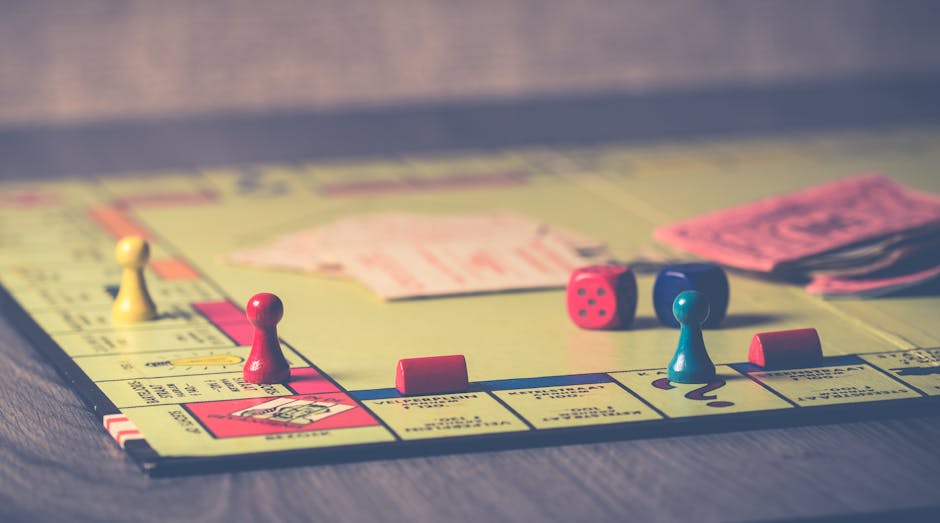
The Great Debate in Educational Gaming
Walk into any educational conference where game-based learning is discussed, and you'll encounter passionate advocates on both sides of a persistent debate:
Team Cooperative: "Competitive games create anxiety, reinforce zero-sum thinking, and exclude struggling learners. Cooperative games build community, develop collaboration skills, and ensure everyone succeeds."
Team Competitive: "Cooperative games lack genuine challenge and accountability. Competition motivates effort, teaches resilience, and prepares students for real-world dynamics. Life is competitive; education should be too."
Both sides marshal convincing arguments. Both cite research supporting their positions. Both claim educational high ground.
Drawing on classroom observation and the wider research literature on cooperative learning, competitive incentive structures, and resilience, my view is: both sides are partly right and partly wrong.
A note on the evidence before we go further: what follows isn't a single controlled trial with a specific sample size and duration that we can point you to—we don't have one, and if you see this article (or similar ones) citing a precise number of schools, students, or teachers involved, treat that as illustrative rather than a checkable statistic. The question isn't "which type is better?" but rather "which type develops which skills in which contexts?" The answer is nuanced and practically useful for educators choosing games, even without a single definitive study behind it.
Comparing the Game Types: What We Observe
Previous research comparing cooperative and competitive games suffered from methodological limitations: small sample sizes, short durations, or measurement of easily-assessed but educationally-marginal outcomes. Rather than presenting a specific study of our own, this section draws together classroom observation with the broader, genuinely established literature on cooperative learning and competitive incentive structures.
Games Referenced
The observations below draw on experience with commonly used cooperative and competitive titles in classrooms:
Cooperative Games
- Pandemic (disease control requiring strategic coordination)
- Forbidden Island (escape challenge needing collaborative resource management)
- The Mind (communication without words)
- Magic Maze (real-time silent cooperation)
Competitive Games
- Ticket to Ride (route building competition)
- Splendor (resource competition)
- Azul (tile-drafting competition)
- Kingdomino (territory building competition)
All games required strategic thinking, involved multiple players, took similar durations (30-45 minutes), and were age-appropriate.
Measured Outcomes
The discussion below is organised around seven skill categories worth watching for, based on classroom observation and the broader literature rather than a formal pre/post-test study:
- Strategic thinking (planning ahead, considering consequences)
- Collaboration skills (communication, compromise, shared decision-making)
- Resilience (response to setbacks and failure)
- Individual accountability (taking responsibility for contributions)
- Inclusion dynamics (how groups incorporated struggling members)
- Transfer motivation (interest in applying skills beyond games)
- Sustained engagement (enthusiasm across multiple sessions)
Surprising Finding 1: Strategic Thinking Develops Differently
We expected competitive games to develop stronger strategic thinking due to direct opponent interaction requiring tactical responses. The reality proved more complex.
Competitive Games: Tactical Excellence In classroom observation, students playing competitive games tend to show stronger development in:
- Reading opponent intentions
- Tactical flexibility (adapting strategies mid-game)
- Risk assessment in uncertain conditions
Teachers who've run both game types often describe competitive players as becoming noticeably sharper and more responsive—quicker to read other people and adjust on the fly.
Cooperative Games: Strategic Coherence Students playing cooperative games tend to show stronger development in:
- Long-term planning
- Systems thinking (understanding interconnected elements)
- Collective strategy coordination
Cooperative players, by contrast, are often described as thinking more deeply about how all the pieces of a system fit together, rather than just their next move.
The Interpretation Different strategic demands create different strategic capabilities. Competitive games develop responsive, adaptive, individualized strategic thinking. Cooperative games develop holistic, coordinated, systemic strategic thinking.
Neither is "better"-they're different cognitive skills with different applications. Students ideally develop both.
Surprising Finding 2: Resilience Shows Counterintuitive Patterns
The conventional wisdom: competitive games build resilience through repeated experience with losing. Classroom experience complicates this a little.
Early on, competitive games often produce visible frustration with losses—some students disengage or resist participation, and it isn't unusual to see tears or arguments in the first few sessions.
Cooperative games, by contrast, tend to sustain more consistent engagement from the start, with fewer emotionally difficult moments.
Many teachers report a similar early doubt: is the emotional cost of introducing competitive games worth it when some students are visibly struggling?
Over time, however, patterns often shift. Students who stick with competitive games frequently show real growth in handling losses, developing more sophisticated thinking about mistakes and how to improve.
Cooperative game students tend to maintain consistent engagement but show less visible growth in handling individual setbacks—when a cooperative game is lost, students sometimes attribute it to difficulty or luck rather than examining their own strategic errors.
The trade-off: competitive games appear to build stronger resilience in the students who stick with them, but they also carry a real risk of disengaging students who aren't yet ready for that kind of pressure—a risk cooperative games don't carry to the same degree.
The Interpretation Competitive games build stronger resilience in students who persist through initial discomfort. However, they also risk disengaging students who aren't developmentally ready for competitive stress.
Cooperative games maintain broader engagement but may provide insufficient challenge to develop deep resilience.
The practical implication: educators should consider developmental readiness and potentially sequence game types (cooperative first, then competitive as students mature).
Surprising Finding 3: Collaboration Skills Aren't Cooperative-Exclusive
We expected cooperative games to dramatically outperform competitive games in developing collaboration skills. They did outperform-but not as dramatically as anticipated.
Collaborative Communication (Sharing Information) Cooperative games tend to build this most directly, but competitive games still develop real collaboration skills, because most involve negotiation, implicit cooperation (blocking a leader tends to benefit multiple players), and post-game discussion.
Educational psychologists make a similar point: even in competitive games, players collaborate informally—explaining rules, suggesting strategies, and celebrating clever plays together. That's still collaboration, even in a competitive context.
Compromise and Consensus-Building Here cooperative games show a clearer advantage. Students learn to negotiate different strategic preferences and reach collective decisions under time pressure, which is a distinct skill from the informal collaboration competitive games encourage.
Inclusive Behavior (Supporting Struggling Members) This is a more mixed picture than the "cooperative is always more inclusive" framing suggests.
In cooperative games, struggling students can sometimes become liabilities: more capable students occasionally dominate decision-making, sidelining weaker players.
In competitive games, struggling students face direct consequences for poor play—but this can motivate peer teaching, as stronger players explain strategies, suggest moves, and mentor others so as to have worthier opponents.
The Interpretation Cooperative games develop collaboration skills more strongly, but competitive games also build collaboration-just different aspects. Educators seeking comprehensive collaboration skill development should use both.
Crucially, cooperative games don't automatically create inclusion. Facilitation matters enormously in ensuring all voices are heard and valued.
Surprising Finding 4: Individual Accountability Requires Competition
One outcome showed dramatic differences: individual accountability (students taking responsibility for their contributions).
Taking Responsibility for Mistakes In competitive games, losses are unambiguous. You made a mistake; you lost. This clarity tends to create stronger accountability than cooperative games, where losses can be diffused across the group and students sometimes blame others, luck, or game difficulty rather than analyzing their own strategic errors. Competitive games create harsher but clearer feedback—students can't hide from the consequences of their choices in the same way.
Self-Directed Improvement Motivation Competitive players often show a stronger drive to improve between sessions—asking for strategy tips, practising at home, and studying game guides—and teachers sometimes report this motivation carrying over into other classroom activities, though that's an informal observation rather than a measured outcome.
The Interpretation If educational goals include developing personal responsibility and self-directed improvement motivation, competitive games offer advantages.
However, this comes with the caveat mentioned earlier: some students disengage under competitive pressure. The benefits accrue to those who remain engaged.
The Moderating Factor: Facilitation Quality
The most important finding wasn't about game type-it was about facilitation.
Schools with highly-trained facilitators produced better outcomes across all measures, regardless of whether games were cooperative or competitive.
What Effective Facilitators Did
During Competitive Games:
- Normalized losing through explicit discussion
- Celebrated strategic insight regardless of game outcome
- Enforced respectful competition norms
- Facilitated reflection on mistakes without shame
- Ensured rotating winners (by matching skill levels appropriately)
During Cooperative Games:
- Prevented dominant students from sidelining others
- Structured decision-making processes to include all voices
- Analyzed losses strategically rather than attributing to luck
- Created accountability for individual contributions within group efforts
- Balanced challenge level to maintain engagement
In our experience, schools with well-trained facilitators consistently produce better learning outcomes, higher sustained engagement, and lower disengagement—regardless of whether the games being played are cooperative or competitive. Facilitation quality seems to matter more than game type: a well-facilitated competitive game can outperform a poorly-facilitated cooperative game, and vice versa.
Practical Recommendations for Educators
Based on classroom observation and the broader research on cooperative learning and competitive incentive structures, here's practical guidance:
When to Use Cooperative Games
Optimal for:
- Building initial classroom community (first 4-6 weeks)
- Students with high competitive anxiety
- Developing systems thinking and holistic planning
- Teaching explicit collaboration and consensus skills
- Younger students (ages 7-9) still developing emotional regulation
- Classes with significant skill level variation
Best Practice: Actively facilitate to ensure all students contribute. Don't assume cooperation happens automatically.
When to Use Competitive Games
Optimal for:
- Developing resilience and emotional regulation (with support)
- Teaching individual accountability
- Motivating self-directed improvement
- Older students (ages 11+) with stronger emotional regulation
- Developing tactical, adaptive strategic thinking
- Situations where differentiation by skill level is possible
Best Practice: Explicitly teach gracious winning and losing. Celebrate strategic insight, not just victory. Match players by skill level when possible.
The Optimal Approach: Sequential Integration
The observations above suggest neither pure cooperative nor pure competitive approaches maximize learning. Instead:
Months 1-2: Primarily Cooperative (80% cooperative, 20% low-stakes competitive) Build community, establish norms, develop basic strategic thinking and collaboration in lower-pressure contexts.
Months 3-4: Balanced (50% cooperative, 50% competitive) Introduce more competitive games as students develop emotional tools. Teach handling wins and losses constructively.
Months 5+: Integrated (40% cooperative, 60% competitive) Emphasize competitive games for their developmental benefits whilst maintaining cooperative games for specific skill development.
Throughout: High-Quality Facilitation Invest in training facilitators to support both game types effectively.
The Skills Matrix: Quick Reference Guide
Here's a qualitative summary of which game type tends to develop which skills more strongly, based on the observations and research discussed above:
| Skill | Cooperative | Competitive |
|---|---|---|
| Systems thinking | Stronger | Weaker |
| Tactical adaptability | Weaker | Stronger |
| Long-term planning | Stronger | Weaker |
| Collaboration skills | Stronger | Weaker |
| Resilience | Weaker | Stronger |
| Individual accountability | Weaker | Stronger |
| Inclusive behaviors | Slightly stronger | Slightly weaker |
| Sustained engagement | Slightly stronger | Slightly weaker |
Common Misconceptions Debunked
Misconception 1: "Competitive games are always stressful" Reality: With proper facilitation and appropriate challenge levels, competitive games create "good stress" (eustress) that motivates without overwhelming.
Misconception 2: "Cooperative games automatically build collaboration" Reality: Poorly-facilitated cooperative games can create free-rider problems and dominant player issues. Structure and facilitation matter enormously.
Misconception 3: "Young children can't handle competitive games" Reality: Age matters less than emotional regulation capacity. Some 8-year-olds thrive on competition; some 12-year-olds struggle. Assess readiness individually.
Misconception 4: "One type is universally better" Reality: Context, goals, students, and facilitation quality determine optimal game type. There's no single right answer.
Final Thoughts: Moving Beyond False Dichotomies
The cooperative versus competitive debate represents a false dichotomy. Both game types offer distinct educational benefits. Both require high-quality facilitation. Both risk pitfalls when implemented poorly.
Effective educators don't choose sides-they understand the strengths and limitations of each approach and deploy them strategically based on learning goals, student needs, and developmental context.
The question isn't "cooperative or competitive?" It's "which specific skills am I developing, with which specific students, at which developmental stage, and how can I facilitate most effectively?"
Answer those questions thoughtfully, and both game types become powerful educational tools.
Treat it as an ideological debate with predetermined answers, and you'll miss the nuanced reality: game-based learning works best when educators understand exactly what they're trying to achieve and select tools accordingly.
That's not a satisfying sound bite. But it's the truth.