Why This Curriculum Exists
Between September 2023 and July 2024, I worked with 18 teachers across 12 schools implementing board game-based learning in Years 5-9 classrooms. We tested dozens of approaches, made countless mistakes, and gradually refined what works.
This curriculum represents those 10 months distilled into a replicable 6-week blueprint.
It's not theoretical. Every lesson has been taught multiple times. Every game has been tested with real students. Every potential classroom management disaster has occurred (and solutions developed).
The curriculum works for teachers with no prior board gaming experience teaching students who've never played strategic games. If you can follow lesson plans and facilitate group work, you can implement this successfully.
Programme Overview and Learning Objectives
Duration: 6 weeks, two 60-minute sessions weekly (12 total sessions)
Suitable For:
- Year 5-6 (ages 9-11): Use simplified versions where noted
- Year 7-9 (ages 11-14): Use standard implementation
Core Learning Objectives
By programme completion, students will demonstrably:
- Apply strategic planning skills (thinking 3-5 moves ahead)
- Evaluate multiple alternatives using decision-making frameworks
- Understand resource management and optimization principles
- Assess risk and probability in uncertain situations
- Recognize systems thinking and interconnected elements
- Collaborate effectively in competitive and cooperative contexts
- Handle wins and losses gracefully with emotional regulation
- Transfer strategic thinking to non-gaming contexts
Assessment Methods
- Pre/post strategic thinking assessments
- Observational rubrics during gameplay
- Self-reflection journals
- Transfer application tasks
- Peer assessment protocols
Required Materials (Per Classroom)
- Budget: £180-250 for complete 6-week programme
- Games listed in weekly plans below
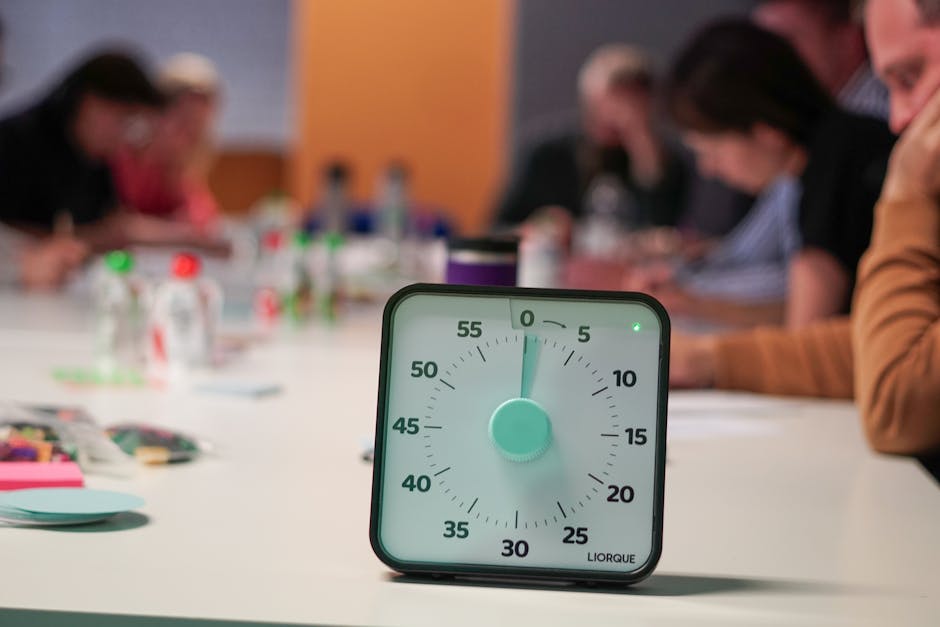
- Timer or smartphone with timer app
- Whiteboard/projector for group discussion
- Reflection journals (one per student, simple notebooks sufficient)
Week 1: Introduction, Community Building, and Foundations
Goals:
- Establish gameplay norms and expectations
- Build classroom community through cooperative gaming
- Introduce fundamental strategic thinking concepts
- Assess baseline strategic thinking capabilities
Session 1: What Is Strategic Thinking?
Opening Discussion (10 minutes)
Begin with whole-class discussion:
- "What does it mean to think strategically?"
- Accept all answers without judgment
- Common student responses: "planning ahead," "being smart," "winning"
- Guide toward: "Strategic thinking means making decisions now that help you succeed later"
Demonstration Activity (15 minutes)
Present simple scenario: "You have £10 and need to pack lunch for a school trip. Sandwiches cost £4 and fill you until dinner. Snacks cost £2 each and last 2 hours. Drinks cost £1. The trip runs 9am-4pm. What do you buy?"
Discuss student approaches:
- Who spent all £10? Was that optimal?
- Who saved money? Why or why not?
- Who thought about timing (snacks running out)?
- Connect: This is strategic thinking—planning to meet goals with limited resources
Game Introduction: The Mind (20 minutes)
Introduce cooperative game The Mind:
- Players hold numbered cards
- Must play cards in ascending order
- No communication allowed
- Develop intuitive timing through group awareness
Why This Game First:
- Cooperative (builds community without competitive stress)
- Simple rules (teach in 3 minutes)
- Forces attention and group awareness
- Success requires strategic thinking but feels like telepathy
Facilitation Notes:
- Play 2-3 rounds maximum
- Expect failure initially—that's the point
- Discuss after each round: "What can we do better?"
- Emphasize: strategic thinking develops through experience
Closing Reflection (15 minutes)
Students write 5-minute journal entry:
- "What did I learn about strategic thinking today?"
- "What was hard about The Mind?"
- "How did our group improve between rounds?"
Share 3-4 reflections with class permission.
Session 2: Introduction to Resource Management
Opening: Connect to Previous Session (5 minutes)
"Last session we discussed planning ahead. Today: managing resources—things you have limited amounts of."
Direct Instruction: Resource Management Concepts (10 minutes)
Introduce three concepts with examples:
1. Scarcity: "You have limited resources, forcing choices" Example: Time, money, energy, attention
2. Opportunity Cost: "Choosing one thing means giving up another" Example: Playing football means not doing homework then
3. Efficiency: "Getting maximum results from minimum resources" Example: Walking to shops uses time but saves bus fare—is that efficient?
Game Introduction: Splendor (30 minutes)
Teach Splendor (simplified for Year 5-6):
- Collect gem tokens
- Buy development cards
- Cards provide permanent gems and victory points
- First to 15 points wins
Strategic Concepts This Teaches:
- Resource collection vs. spending decisions
- Early investments enabling later purchases (compound effects)
- Balancing short-term wants with long-term goals
Facilitation Notes:
- Groups of 3-4 students
- Circulate during play, observing decision-making
- Don't correct mistakes—let students experience consequences
- Note students displaying strong or weak strategic thinking (for differentiation)
Post-Game Discussion (10 minutes)
Facilitate whole-class discussion:
- "What mistakes did you make early that hurt you later?"
- "Who bought expensive cards early? How did that affect your game?"
- "Who bought cheap cards first? Why?"
- "What would you do differently next time?"
Closing Reflection (5 minutes)
Quick journal prompt: "Resource management means ___. I learned ___."
Week 1 Teacher Reflection:
After both sessions, privately note:
- Which students grasped strategic thinking quickly?
- Which students struggled or disengaged?
- Were groupings effective? (Consider adjustments for Week 2)
- Did timing work? (Adjust pacing if needed)
Week 2: Resource Management Deep Dive
Goals:
- Deepen resource management understanding
- Introduce opportunity cost explicitly
- Develop planning 2-3 moves ahead
- Practice strategic reflection and adjustment
Session 3: The Opportunity Cost Game
Opening: Opportunity Cost Discussion (10 minutes)
"Every choice has a cost—not just money, but what you gave up by choosing."
Present scenarios, students identify opportunity costs:
- "You spend Saturday playing video games. What's the opportunity cost?"
- "You spend lunch money on sweets. What's the opportunity cost?"
- "You use your turn taking cheap cards in Splendor. What's the opportunity cost?"
Game: Splendor Replay with Intentional Strategy (35 minutes)
Students play Splendor again BUT:
- Before first turn, each student states their strategy
- Every 3 turns, pause for 30-second reflection: "Is your strategy working?"
- After game: Compare strategy to outcome
Facilitation Focus:
- Listen to stated strategies—are they specific or vague?
- During pauses, ask individual students: "Why did you just make that choice?"
- Watch for students who adapt vs. students who rigidly stick to failing strategies
Post-Game Strategic Analysis (10 minutes)
Structured discussion questions:
- "Whose strategy worked? Why?"
- "Who changed strategy mid-game? Why? Did it work?"
- "What's more important: having a good strategy or changing bad strategies?"
Closing: Concept Crystallization (5 minutes)
Introduce formal term: Strategic Flexibility—"Adapting your plan when circumstances change."
Students journal: "Today I learned that good strategy requires ___."
Session 4: Competitive Resource Management
Opening: Competition vs. Cooperation Discussion (10 minutes)
"Last week The Mind was cooperative—we succeeded together. This week Splendor is competitive—only one person wins. Does competition change how you think?"
Game: Azul (35 minutes)
Introduce Azul:
- Draft patterned tiles from factory displays
- Complete rows on your board for points
- Tiles you can't place penalize you
Strategic Concepts:
- Defensive play (taking tiles to hurt opponents, not just help yourself)
- Risk management (taking tiles you might not place)
- Pattern optimization
Why This Game Now:
- Introduces opponent awareness (you're not playing alone)
- Teaches defensive thinking
- Requires balancing multiple goals simultaneously
Facilitation Notes:
- Year 5-6: Simplify by ignoring row adjacency bonuses initially
- Watch for students who never consider opponent moves
- Highlight examples of defensive play: "Did you see how Sarah took blue tiles knowing Marcus needed them?"
Strategic Debrief (10 minutes)
Key questions:
- "Did you think about what opponents were doing? Should you?"
- "Is it sometimes right to take tiles that hurt opponents rather than tiles that help you most?"
- "Is that mean or is that strategic?"
Closing Reflection (5 minutes)
"Strategic thinking sometimes means blocking opponents, not just advancing yourself. Today I saw this when ___."
Week 2 Teacher Reflection:
Assess student progress:
- Are students planning ahead more consistently?
- Are students discussing strategy using proper vocabulary (resource management, opportunity cost)?
- Which students need additional support?
- Are group dynamics working or do adjustments need making?
Week 3: Strategic Planning and Forward Thinking
Goals:
- Develop planning 3-4 moves ahead
- Understand compound effects and engine building
- Practice explaining strategic reasoning
- Introduce strategic prioritization
Session 5: The Planning Ahead Challenge
Opening: How Far Ahead Do You Think? (15 minutes)
Activity:
- Present chess board position (simple)
- Ask: "What move should white make?"
- Students suggest moves
- Ask follow-up: "Then what happens? And then? And then?"
- Reveal: Strong players think 5-10 moves ahead
"Today we practice thinking multiple moves ahead."
Game: Ticket to Ride (35 minutes)
Teach Ticket to Ride:
- Collect train cards (colours)
- Claim railway routes connecting cities
- Complete destination tickets for points
Strategic Concepts:
- Long-term planning (routes take multiple turns to complete)
- Balancing collection with claiming (timing decisions)
- Route priority (which routes to claim first)
Facilitation Notes:
- This game feels less abstract than previous games—students relate to travel theme
- Watch for students who claim routes randomly vs. students with clear destination plans
- Highlight examples: "Did you notice how James collected blue cards for 3 turns before claiming that long blue route? That's planning ahead."
Post-Game Analysis (5 minutes)
"Who completed their destination tickets? What planning did that require?"
Closing Reflection (5 minutes)
"Planning ahead means ___. I planned ahead today when ___."
Session 6: Systems Thinking Introduction
Opening: Everything Connects (10 minutes)
"In Splendor, early cards make later cards cheaper. That's a SYSTEM—parts working together. Today we think about systems."
Present examples:
- Your body (systems working together)
- A classroom (students, teacher, rules, goals all connected)
- Ticket to Ride (your routes, opponent routes, card availability all interconnected)
Game: Ticket to Ride Replay with Systems Focus (30 minutes)
Students replay BUT:
- Before playing, identify: "What parts of this game affect other parts?"
- During play: Notice when one decision creates chain effects
- After: Discuss chain effects observed
Group Exercise: System Mapping (15 minutes)
In groups of 4, students create visual map:
- Center: "Ticket to Ride Game"
- Branches: All elements (cards, routes, opponents, tickets, points)
- Arrows showing: "This affects this"
Gallery walk: Groups view other maps, note insights.
Closing Reflection (5 minutes)
"Systems thinking means understanding how parts connect. In games, ___. In life, ___."
Week 3 Teacher Reflection:
Assess development:
- Are students' strategic discussions becoming more sophisticated?
- Can students explain their thinking clearly?
- Are students transferring concepts between games?
- Note students ready for advanced challenge vs. students needing consolidation
Week 4: Probability, Risk, and Uncertainty
Goals:
- Introduce probability and risk assessment
- Develop decision-making under uncertainty
- Practice adaptive planning (responding to unexpected outcomes)
- Connect strategic thinking to mathematics
Session 7: Understanding Risk and Probability
Opening: What Are the Chances? (15 minutes)
Simple probability exercises:
- Roll a die: "What's the chance of rolling 6?" (1/6)
- Flip a coin: "What's the chance of heads?" (1/2)
- Draw from deck: "What's the chance of heart?" (1/4)
Connect: "Strategic thinkers assess probability before deciding."
Present scenario: "Two paths to destination. Path A: 100% works but takes 5 turns. Path B: 60% works and takes 2 turns OR fails and you lose. Which is better?"
Discuss: No single right answer—depends on circumstances!
Game: Can't Stop (30 minutes)
Teach Can't Stop:
- Push-your-luck dice game
- Climb columns by rolling numbers
- Each turn: Keep rolling or stop and save progress
- Roll and can't play anything? Lose all this turn's progress
Strategic Concepts:
- Risk assessment (when to stop vs. push further)
- Probability calculation (which numbers are more likely)
- Loss aversion (fear of losing progress)
Facilitation Focus:
- Students will learn through failure—expect them to push too far and bust
- After several busts, students calibrate risk assessment better
- Highlight good decisions that happened to fail (bad luck) vs. bad decisions
Post-Game Probability Discussion (10 minutes)
Reveal: 7 is most common dice roll (six ways to make 7 with two dice). Were students targeting 7?
Discuss: Good strategy + bad luck sometimes fails. Bad strategy + good luck sometimes works. Long-term, good strategy wins.
Closing Reflection (5 minutes)
"Risk assessment means ___. Today I learned about probability ___."
Session 8: Adaptive Strategy Under Uncertainty
Opening: When Plans Fail (10 minutes)
"Last session we learned about probability. Today: what happens when your plans fail?"
Discuss:
- Have you ever had a plan that didn't work?
- What did you do?
- Is it better to quit or adapt?
Introduce: Resilience and Adaptive Thinking
Game: Azul Replay with Adversity Focus (30 minutes)
Students play Azul BUT:
- Explicitly discuss: "Sometimes you can't get tiles you need. Then what?"
- During play, pause occasionally: "Your plan isn't working. Will you adapt?"
Facilitation Focus:
- Watch for students who abandon failing strategies vs. students who persist stubbornly
- Watch for students who get frustrated vs. students who treat setbacks as puzzles
- Celebrate adaptive thinking loudly: "Did you see how Emma's first strategy wasn't working so she switched to completing different rows? That's adaptive thinking!"
Strategic Resilience Discussion (15 minutes)
Key concepts to cover:
- Setbacks are normal in strategic situations (luck, opponent interference, mistakes)
- Strong strategic thinkers adapt rather than give up or persist stubbornly
- Emotional regulation matters (staying calm helps strategic thinking)
Activity: Students identify moment their strategy failed and how they responded.
Closing Reflection (5 minutes)
"When my strategy failed, I ___. Next time I will ___."
Week 4 Teacher Reflection:
Assess emotional regulation development:
- Are students handling losses better than Week 1?
- Are students demonstrating adaptive thinking?
- Are mathematical connections (probability) apparent?
- Note students showing particular growth or continued struggle
Week 5: Synthesis and Application
Goals:
- Synthesize all concepts learned (resource management, planning, probability, systems thinking, adaptation)
- Apply strategic thinking to complex scenarios
- Practice teaching strategic concepts to others
- Prepare for final week competitive tournament
Session 9: Strategy Synthesis Challenge
Opening: What Have We Learned? (10 minutes)
Whole-class brainstorm:
- What strategic thinking concepts have we covered?
- Where might strategic thinking help in real life?
Record responses on board.
Multi-Game Rotation (40 minutes)
Students rotate through four stations (10 minutes each, 4-5 students per station):
- Splendor (resource management review)
- Azul (defensive play and adaptation review)
- Ticket to Ride (planning ahead review)
- Can't Stop (probability and risk review)
Teacher circulates with observational rubric, assessing individual student strategic thinking levels.
Closing Reflection (10 minutes)
"Which game did I think most strategically during? What does that tell me about my strategic strengths?"
Session 10: Teaching Strategic Thinking
Opening: The Best Way to Learn Is to Teach (5 minutes)
"Today you become the teachers. Teaching others shows true understanding."
Preparation (15 minutes)
In pairs, students prepare 5-minute explanation of one strategic concept:
- Resource management
- Opportunity cost
- Planning ahead
- Risk assessment
- Systems thinking
- Adaptive thinking
Provide framework:
- What is it?
- Why does it matter?
- Example from games
- Example from life
Peer Teaching (30 minutes)
Pairs present to other pairs (two pairs teaching each other, 6-7 minutes each including questions).
Teacher circulates, assessing understanding through teaching quality.
Closing: Preparing for Tournament (10 minutes)
Announce Week 6 tournament structure. Students choose which game they'll compete in.
"Tournament isn't just about winning—it's about demonstrating strategic thinking skills we've developed."
Week 5 Teacher Reflection:
Final developmental assessment before tournament:
- Which students demonstrate mastery across concepts?
- Which students show strength in specific areas?
- How will you structure tournament to ensure all students can demonstrate growth?
- Plan recognition beyond just tournament winners (Most Improved, Best Strategic Thinking, Best Adaptation, etc.)
Week 6: Tournament and Assessment
Goals:
- Apply all learned strategic thinking skills in competitive context
- Demonstrate strategic growth through documented play
- Complete formal assessment of strategic thinking development
- Celebrate learning and growth
Session 11: Tournament Round 1
Opening: Tournament Purpose (10 minutes)
"This tournament shows your growth. I'm not looking for winners—I'm looking for strategic thinking."
Review assessment criteria:
- Planning ahead (explaining moves)
- Adaptation (responding to setbacks)
- Probability assessment (where applicable)
- Opponent awareness
- Resilience (emotional regulation)
Tournament Play (40 minutes)
Students compete in chosen games:
- Groups of 4 students
- Teacher observes with rubric
- Students cannot complete matches finish in Session 12
Documentation (10 minutes)
After matches, students complete strategic reflection:
- "My strategy was ___"
- "Something unexpected happened when ___"
- "I adapted by ___"
- "I demonstrated strategic thinking when ___"
Session 12: Tournament Conclusion and Celebration
Tournament Round 2 (30 minutes)
Complete remaining matches and finals.
Awards Ceremony (20 minutes)
Present multiple awards celebrating different achievements:
- Tournament Champions (by game)
- Most Improved Strategic Thinker
- Best Adaptive Thinking
- Best Strategic Explanation
- Best Resilience
- Best Sportspersonship
Ensure every student receives recognition for specific demonstrated growth.
Final Reflection (10 minutes)
Students complete final journal entry: "Six weeks ago I thought strategic thinking was ___. Now I know ___. I will use strategic thinking in my life by ___."
Closing Circle:
Students share one thing they learned about themselves through this programme.
Post-Programme Assessment and Reporting
Assessment Rubric (Use for final evaluation)
Strategic Thinking Development Rubric
Planning Ahead
- Beginning: Makes decisions without considering consequences
- Developing: Considers next move consequences
- Proficient: Plans 2-3 moves ahead consistently
- Advanced: Plans 4+ moves ahead, considers multiple scenarios
Resource Management
- Beginning: Spends resources without consideration
- Developing: Understands scarcity, makes basic prioritization
- Proficient: Optimizes resource use, understands opportunity cost
- Advanced: Demonstrates sophisticated efficiency optimization
Adaptation
- Beginning: Persists with failing strategies or gives up
- Developing: Recognizes when strategy isn't working
- Proficient: Adapts strategy in response to new information
- Advanced: Fluidly adjusts strategy based on opponent actions and probability
Systems Thinking
- Beginning: Sees game elements in isolation
- Developing: Recognizes some connections between elements
- Proficient: Understands how different game parts interact
- Advanced: Anticipates chain effects and leverages system interactions
Resilience
- Beginning: Frustrated by setbacks, poor emotional regulation
- Developing: Accepts setbacks but struggles to recover
- Proficient: Maintains emotional regulation through challenges
- Advanced: Treats setbacks as learning opportunities, encourages others
Transfer Assessment
Two weeks after programme completion, present real-world strategic scenario:
"You're planning a fundraising event for school. You have £200 budget, 20 volunteers, and 4 weeks. How do you approach this strategically?"
Score responses based on:
- Do they identify resources and constraints?
- Do they plan multiple steps ahead?
- Do they consider alternative approaches?
- Do they identify potential risks?
Strong transfer: Students apply specific concepts from gaming to this scenario explicitly.
Common Implementation Challenges and Solutions
Challenge 1: Students Who Struggle with Rules
Solution: Buddy System
- Pair struggling students with strong learners
- Strong learners reinforce learning by teaching
- Struggling students learn through supported play
Challenge 2: Disengaged Students
Solution: Choice and Connection
- Let students choose games when possible
- Connect game concepts to their interests explicitly
- Provide alternative roles (scorekeeper, referee, observer-commentator)
Challenge 3: Sore Losers
Solution: Reframe Losing
- Explicitly teach: Losing reveals mistakes, helping you improve
- Celebrate "best mistake of the day"—interesting errors that taught something
- Never let winning be the only praised outcome
Challenge 4: Time Management
Solution: Strict Timing
- Use visible timers
- Give 5-minute warnings before transitions
- Have unfinished games continue next session rather than rushing
Challenge 5: Behaviour Management During Games
Solution: Clear Norms Established Week 1
- One person speaks at a time during their turn
- Voices stay at "table level" (not shouting across room)
- Hands off other players' pieces
- Three-warning system (warning, time-out from game, meeting with teacher)
Final Thoughts for Teachers
This curriculum works. I've seen it transform students who thought "I'm just bad at thinking ahead" into strategic thinkers who analyze multi-step problems confidently.
The key is facilitation quality. Games alone don't teach—games combined with structured reflection, explicit concept connection, and teacher guidance teach powerfully.
You don't need to be a board game expert. You need to follow the lesson plans, facilitate reflection discussions, and genuinely believe your students can develop these capabilities.
Because they can. And they will.
Start with Week 1. See what happens. Adjust based on your students. Trust the process.
Strategic thinking matters. This curriculum develops it. Now implement it.