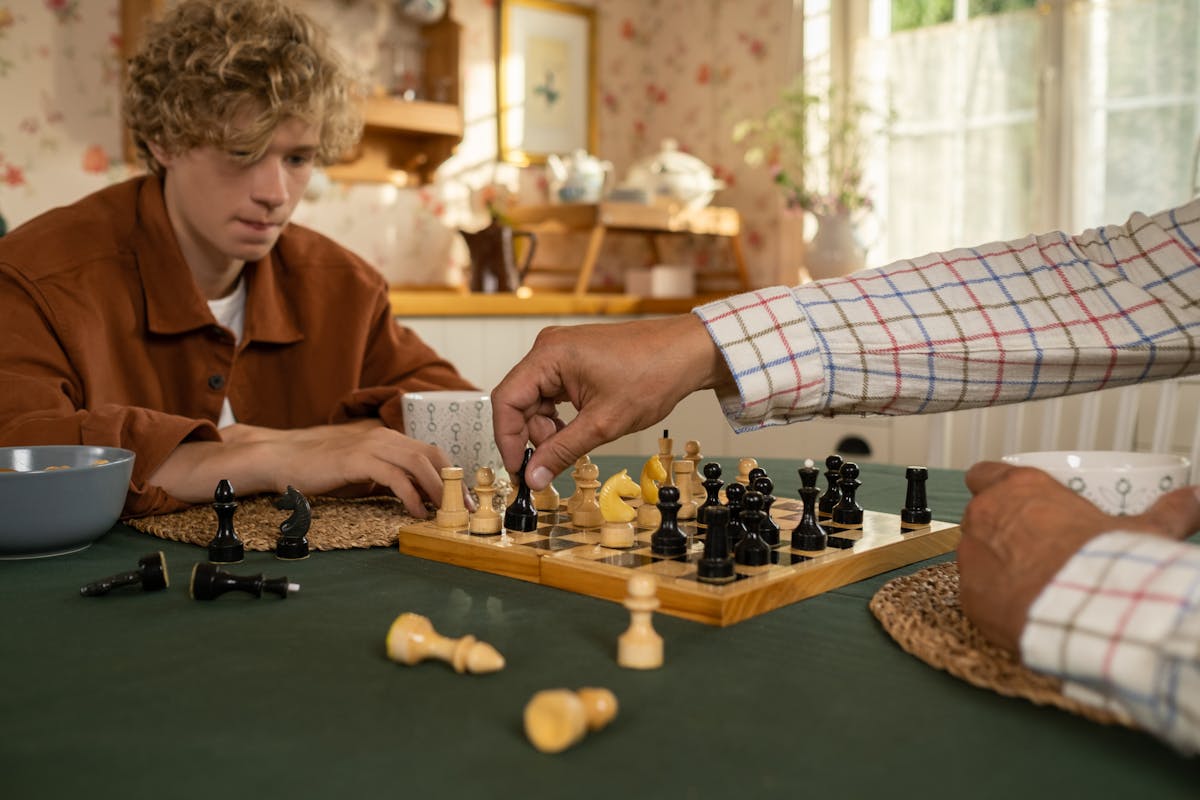
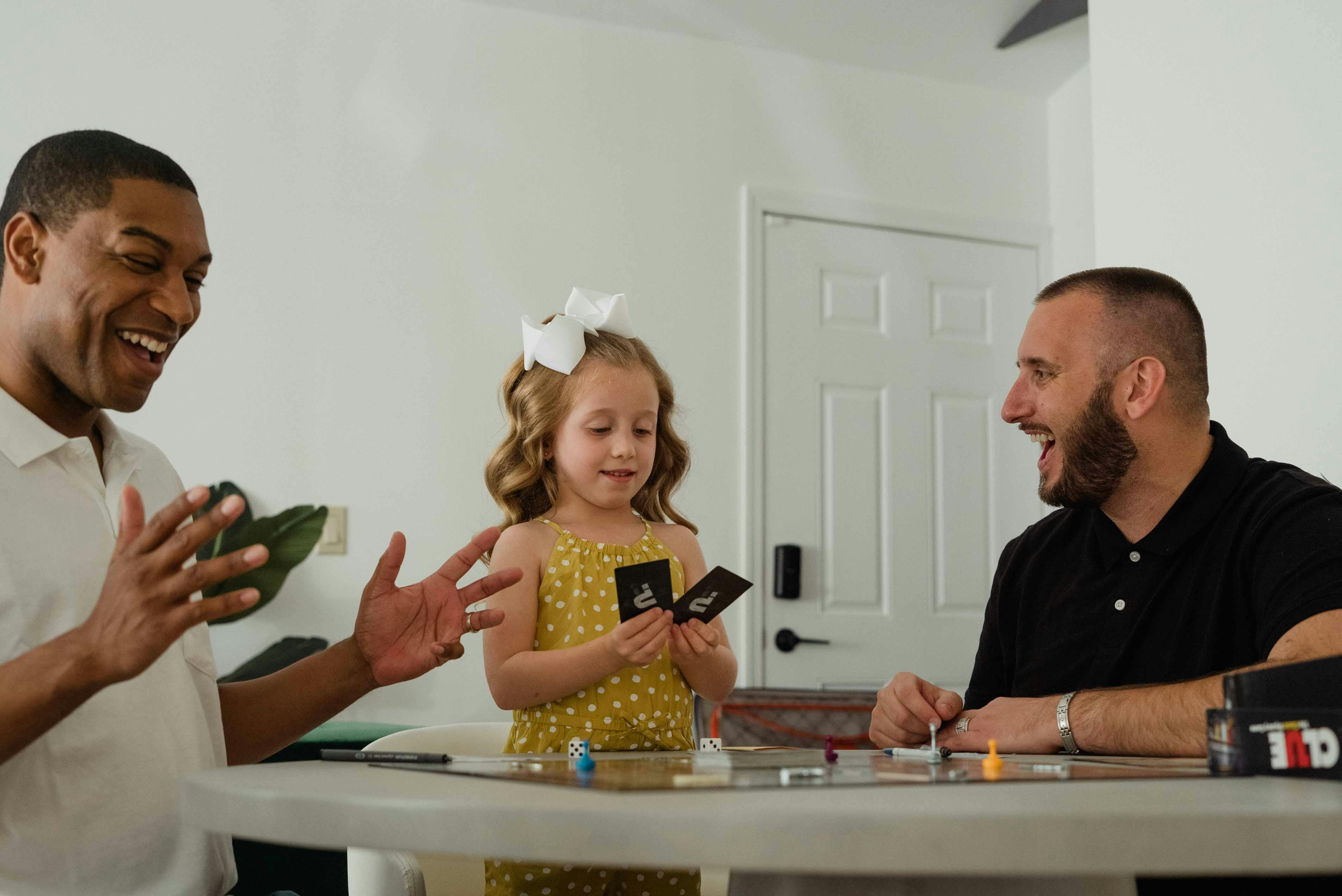
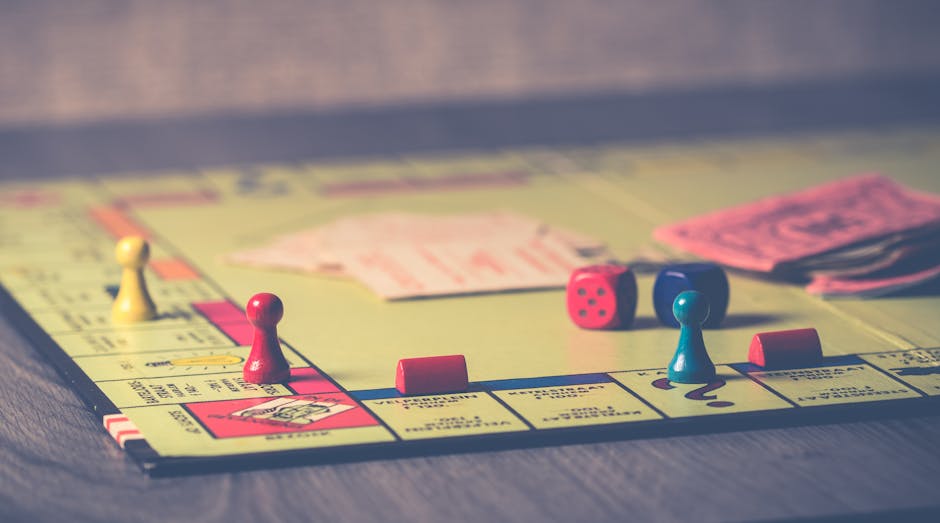
Something has quietly shifted in British living rooms over the past few years. Screens are everywhere, of course. But families are pushing them aside -- at least for one evening a week -- and pulling out board games instead. Sales of family board games have surged. Cafes dedicated entirely to board games have opened on high streets across the country. And a new phrase has worked its way into family calendars: game night.
It is not just nostalgia. Parents are genuinely searching for ways to be present with their children. Teenagers are looking for something to do that does not involve scrolling. Grandparents want to join in without feeling lost. Games for family are filling a real need, and when game night works well, it really works.
This guide is here to help you make it work every single time.
Why Family Game Night Has Made Such a Strong Comeback
The pandemic pushed a lot of families back to basics. With nowhere to go and nothing to do, board games came back out of cupboards. But even now that life has returned to normal, families are keeping the habit.
There is a good reason for that. Time spent around a table with a game is qualitatively different from time spent side by side watching a screen. Everyone is involved. Everyone has a stake. Conversations happen naturally, laughter breaks out unexpectedly, and the experience becomes something you actually remember.
It makes intuitive sense, too. When children and parents compete -- even gently -- they build a different kind of relationship. One based on mutual respect and genuine fun, rather than the more passive dynamic of sitting side by side watching the same screen.
The good news is that the market for games to play with family has never been better. There is something out there for every household. The challenge is finding the right games for your particular mix of ages, personalities, and patience levels.
Choosing Games for Your Family Configuration
Not all families look the same. A multigenerational household with grandparents, parents, and young children needs different games from a household with two adults and a pair of competitive teenagers. Here is how to think about it.
Young Children (Ages 4 to 10)
Young children need short games with simple rules and lots of colour. Games like Dobble, Snakes and Ladders, and Uno work brilliantly here. The key is keeping rounds to 20 minutes or less. Attention spans are short. Accept that and work with it.
Mixed Ages Including Teenagers
This is the hardest family configuration to please. Teenagers often resist family activities on principle. The trick is finding games that are genuinely competitive and intellectually interesting -- not watered-down kids' games, and not dry abstract games that feel like homework.
Strategy games with real decisions, bluffing mechanics, and a bit of chaos tend to land well. Games where a teenager can actually beat an adult. That matters more than you might think.
Multigenerational Play with Grandparents
Look for games with clear rules that can be explained in under five minutes, no reading under time pressure, and a structure that allows for conversation between turns. Scrabble is a classic for a reason. So are games like Ticket to Ride, which have enough strategy to be interesting but are not so complex they intimidate.
Blended Families and Larger Groups
Finding games for family groups of six, seven, or eight people is genuinely difficult. Most strategy games cap out at four or five players. This is one area where Smoothie Wars really stands out -- it was designed to scale all the way up to eight players without any awkward waiting around or loss of quality.
The Art of Managing Different Skill Levels
Every family has one person who takes games too seriously. There is also usually one person who has no idea what they are doing and does not particularly care. Getting both of them to the same table -- and keeping them happy -- is the real skill.
A few things help enormously.
Pick games with catch-up mechanics. Some games are designed so that a losing player has more options or resources. This prevents runaway winners and keeps everyone invested until the end.
Rotate who teaches the rules. When the same person always explains the game, others disengage. Passing that responsibility around builds buy-in.
Introduce a handicap gracefully. For very mixed skill levels, experienced players can voluntarily take on a disadvantage -- fewer starting resources, a harder role, or simply agreeing to offer advice to younger players rather than playing to win.
If you want to avoid the most common pitfalls, have a read through these family game night mistakes that trip up even well-meaning families.
A Realistic Family Game Night: The Wilson Household
Picture the Wilson family on a Friday evening in Surrey. Mia (42) and David (44), their daughter Priya (16) who thinks board games are deeply uncool, their son Jake (13) who will happily play anything, and Mia's mother Eileen (71) who drives over every other Friday.
They have tried various games. Eileen found Catan too complicated. Priya won Ticket to Ride so easily she stopped being interested. Jake beat everyone at Codenames and then complained it was boring.
Last month they tried Smoothie Wars. They were sceptical. A game about selling smoothies on a tropical island sounded... fine. Not exciting.
Within twenty minutes, Priya was completely engaged. She had undercut David's pricing strategy without him noticing, cornered a key location on the island, and was quietly building a cash reserve while everyone else scrambled. "This is actually kind of like real economics," she said, without any irony. Eileen ran out of stock twice but found the social elements -- negotiating with Jake for ingredients -- far more accessible than she expected. Jake spent most of the game trying to bluff David into a bad trade. It did not work. He tried again anyway.
They played for 55 minutes. Priya won. She has suggested it every Friday since.
That is what a great family game does. It meets people where they are and gives everyone something to engage with.
6 Great Games for Family Night
Different families need different games. Here is a starting list across different categories.
| Game | Players | Age | Play Time | Best For |
|---|---|---|---|---|
| Smoothie Wars | 3-8 | 12+ | 45-60 min | Teens and adults, mixed groups up to 8 |
| Ticket to Ride | 2-5 | 8+ | 45-75 min | Multigenerational, strategy beginners |
| Dobble | 2-8 | 6+ | 15 min | Young children, quick warm-up game |
| Codenames | 4-8 | 14+ | 20-30 min | Wordplay lovers, team families |
| Sushi Go Party | 2-8 | 8+ | 20-30 min | Mixed ages, casual play |
| Cluedo | 3-6 | 8+ | 45-60 min | Deduction fans, classic family play |
Each of these works for a slightly different household. If you have teenagers who need genuine competition and strategic depth, Smoothie Wars sits in a category of its own -- particularly because it scales to eight players, which almost nothing else in the strategy space does properly.
Making Game Night a Ritual That Actually Sticks
One-off game nights are easy. Weekly ones require structure. Here is what families who have built lasting habits tend to do differently.
Fix the time in advance. Friday evenings, Sunday afternoons -- it does not matter which, but consistency is everything. When game night is optional and flexible, it gets bumped by other things.
Rotate game choices. Each family member picks the game one week in four. This prevents the same person always getting their way and builds anticipation.
Sort the snacks. Crisps, popcorn, a bowl of sweets -- these are not optional extras. They are part of the ritual. Hands are occupied between turns, moods lift, and the whole evening feels like an occasion rather than just playing a game.
Keep sessions to 90 minutes or under. Even the most enthusiastic family has a limit. Finishing while everyone still wants more is far better than dragging on until people are irritable.
Create a house trophy. One family we know has a small plastic trophy that lives on the kitchen shelf. The current game night champion keeps it until next week. It sounds silly. It absolutely is. Their children talk about it at school.
What to Do When Kids Hate Losing
This is the thing nobody warns you about. Some children are genuinely distraught when they lose. Others express that distress by flipping the board, sulking, or declaring the game rigged. It can derail the whole evening.
A few approaches that actually help.
First, normalise losing explicitly before the game starts. "Everyone is going to lose at some point tonight, including the grown-ups." Say it out loud. Make it funny.
Second, celebrate specific moments rather than just the outcome. "That trade you made in round three was really clever" lands much better than "never mind, you did your best." The child hears that someone noticed their good decision, even though they did not win.
Third, play games where the gap between first and last place is small. Games with strong catch-up mechanics or shared outcomes (co-operative games like Pandemic) are excellent for loss-sensitive players.
Finally, check the game length. A child who loses a 15-minute game recovers quickly. One who loses after 90 minutes of emotional investment needs a longer cool-down. Match the game length to the temperament of your family.
If you are looking to help older players develop real competitive instincts along with the ability to lose gracefully, strategy tips for board games offers a practical starting point.
Family Game Night Setup Checklist
Use this before your next game night to make sure everything runs smoothly.
| Task | Notes |
|---|---|
| Choose the game in advance | Avoid decision fatigue on the night |
| Check you have all the pieces | Missing components ruin the mood |
| Read the rulebook beforehand | One person explains; others ask questions |
| Set up the table before people sit down | Reduces faffing and keeps momentum |
| Prepare snacks and drinks | On the table before the first turn |
| Agree on a finish time | Prevents the "just one more round" spiral |
| Switch phones to silent | Even the adults |
| Decide tiebreaker rules upfront | Avoids arguments at the end |
Small preparation makes a big difference. Families who do the setup in advance report smoother evenings and less friction around rules disputes.
Building Real Skills Through Play
The best family board games do something that pure entertainment cannot -- they teach you things without feeling like a lesson. Business lessons from board games explores this in more depth, but the short version is this: children who regularly play strategy games develop measurably better decision-making skills, patience, and competitive resilience.
Smoothie Wars takes this further than most. The game is built around real economic concepts -- supply and demand, cash flow, pricing under competition -- and players learn them through doing, not reading. Dr Thom Van Every, the game's creator, designed it specifically to teach business thinking in a way that feels like play. That combination is genuinely rare.
FAQ
What is a good game to play as a family?
The best answer depends on your family's ages and patience for complexity. For mixed ages including teenagers, Smoothie Wars or Ticket to Ride tend to land well. For younger children, Dobble or Sushi Go are faster and simpler. For large groups of six to eight, Smoothie Wars is one of the few strategy games that genuinely works at that scale.
How do I get my family interested in board games?
Start with something short and easy to learn -- 20 to 30 minutes maximum. Let everyone win sometimes by choosing games with catch-up mechanics. Build a ritual around it (same evening each week, good snacks). And most importantly, let family members choose the game on rotation. Buy-in rises sharply when people have a say.
What games can the whole family play including teenagers?
Teenagers typically need genuine competition and real decisions to stay engaged. Games that feel babyish or luck-heavy quickly lose them. Smoothie Wars works particularly well because the bluffing and business strategy elements give older players real agency. Codenames and Catan are also popular with the teenage set.
How long should family game night last?
For most families, 60 to 90 minutes is the sweet spot. Long enough to play one substantial game or two shorter ones. Short enough that energy does not flag and no one has to be dragged away from screens for too long. If you have young children, aim for 45 minutes. If it is teenagers and adults only, 90 minutes is comfortable.
Do board games actually teach children anything?
Yes -- and the evidence is reasonably strong. Strategy games develop planning, patience, and decision-making under uncertainty. Games with trading and negotiation (like Smoothie Wars) build communication and emotional intelligence. Cooperative games build teamwork. Even simple games teach young children turn-taking and counting. The learning happens naturally, which is what makes it stick.