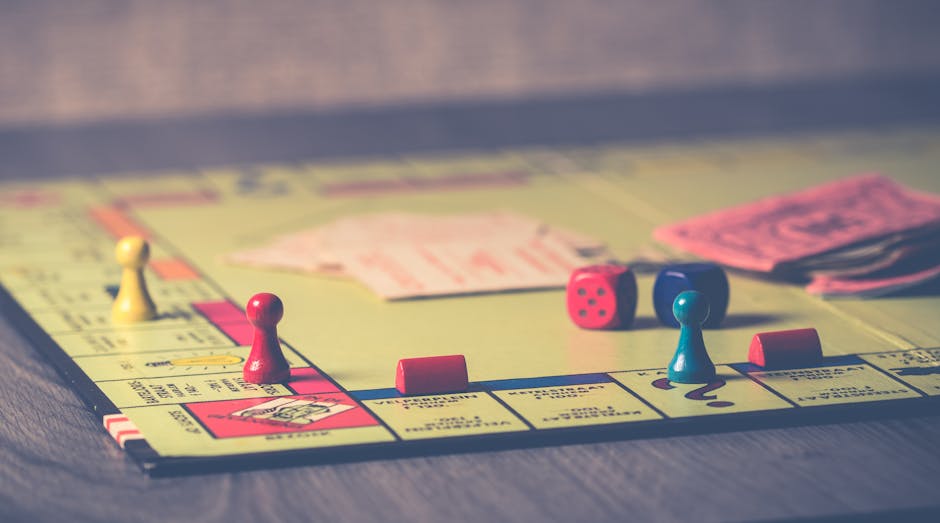
15 Essential Strategy Tips for Family Board Games
My daughter beat me at her first strategy game when she was nine. Not through luck—through better strategy. While I'd been casually playing, she'd been thinking three turns ahead, watching what I collected, and positioning herself perfectly. When I realized I'd lost two turns before the game ended, I felt proud and slightly embarrassed simultaneously.
"You're better at this than me," I admitted.
"You taught me to always have a plan," she replied. "You just forgot to have one yourself."
She was right. I'd been making reasonable moves without strategic coherence. She'd been executing a coordinated strategy. That's the difference between playing a game and playing it well.
The beautiful thing about strategic board games: you don't need to be a genius to play well. You need to consistently apply foundational strategic principles. These aren't game-specific tricks—they're universal concepts that work across most family board games, from simple gateway games to more complex strategy titles.
This guide presents 15 essential tips that immediately improve your gameplay, whether you're 8 or 80, playing your first strategic game or your thousandth.
TL;DR Key Takeaways:
- Focus on efficiency (value per resource) rather than absolute quantities
- Plan at least 2 turns ahead and maintain strategic coherence
- Watch opponents closely—their actions reveal intentions and create opportunities
- Identify the actual victory condition early and align all decisions to it
- Balance consistency across game systems rather than over-specializing in one area
- Master timing—the same action at different moments produces vastly different results
- Stay adaptable—rigid plans fail when conditions change
- Learn from every game through deliberate reflection
1. Focus on Efficiency Over Quantity
The Principle: What matters isn't how many resources you have, but how much value you extract from them.
Why it works: A player with 10 gold generating 3 points per turn will eventually overtake a player with 20 gold generating 2 points per turn. The first player has better efficiency—more output per unit of input.
How to apply it:
Calculate efficiency ratio for major decisions:
Output Generated ÷ Resources Invested = Efficiency
Example from Smoothie Wars:
- Option A: Spend £8 on location generating £3 per turn = 37.5% return per turn
- Option B: Spend £5 on fruit yielding £7 sale = 40% return (one-time)
Option B has higher efficiency, but Option A compounds over multiple turns. This introduces the next layer: immediate vs sustained efficiency.
Beginner application: Before major resource expenditures, ask: "What am I getting per resource spent? Is there a better deal available?"
Advanced application: Track efficiency trends. If your efficiency is declining (more resources invested for same output), you're losing ground even if your absolute position looks strong.
2. Plan Two Turns Ahead (Minimum)
The Principle: Thinking only about the current turn is reactive, not strategic.
Why it works: Strategic advantage comes from positioning yourself for future success, not just handling immediate needs. The player thinking furthest ahead (while staying grounded in reality) typically wins.
The planning horizon ladder:
- Beginners: Think only about current turn
- Intermediates: Plan 2-3 turns ahead
- Advanced: Plan strategic arcs while staying adaptive
How to apply it:
Before each turn, articulate:
- What I'm doing this turn
- How it sets up my next turn
- What I'll likely do turn after that
Example: "This turn: Buy strawberries. Next turn: Use them at premium location I'm securing now. Turn after: Reinvest profits into more fruit."
This creates strategic coherence rather than disconnected actions.
Common mistake: Planning rigidly. Plans should be "default pathway, subject to revision" not "inflexible commitment." See Tip #7 on adaptation.
3. Watch What Opponents Are Doing
The Principle: Your opponents' actions contain valuable information about their strategies and intentions.
Why it works: Strategic games are interactive, not solitaire puzzles. Understanding opponent positions, needs, and plans allows you to:
- Anticipate their moves
- Block critical actions when strategically valuable
- Identify uncontested opportunities they're ignoring
- Adjust your strategy based on competitive landscape
What to watch:
- Resources they're collecting: Signals what they're building toward
- Locations/actions they prioritize: Shows their strategy focus
- Resources they're NOT acquiring: Reveals potential opportunities
- Their position relative to victory: Determines threat level
Practical habit: During opponents' turns, don't zone out. Instead, ask yourself: "Why did they do that? What's their next move likely to be?"
Age-appropriate application:
- Young children (7-9): "What do you think Sarah is trying to do?"
- Teens/adults: Track opponent resources and positions systematically
4. Identify the Victory Condition Early
The Principle: You'd be surprised how many players forget what actually wins the game.
Why it matters: Games have explicit victory conditions. Sometimes it's most points. Sometimes first to X. Sometimes meeting specific requirements. Playing without clear awareness of how you actually win leads to impressive-looking positions that don't translate to victory.
The diagnostic question: "If the game ended right now, who would win and why?"
If you can't answer this instantly, you don't understand the victory condition well enough.
Common disconnects:
What feels like success: Having the most resources, biggest engine, most impressive board presence
What actually matters: The specific scoring mechanism the game uses
Example: In some games, having twice the resources as opponents means nothing if they've focused on the obscure scoring category worth double points.
Application: First few turns of any game: Study victory conditions. Then align every decision toward those conditions. Periodically check: "Is what I'm doing moving me toward victory?"
5. Don't Neglect Any Scoring Area Completely
The Principle: Balance beats over-specialization in most family games.
Why it works: Many games have multiple paths to points. Players who completely ignore one area usually lose to players who develop moderately across all areas.
The math behind it:
Specialist approach: 30 points in Area A, 0 in Area B, 0 in Area C = 30 points total
Balanced approach: 12 points in each area = 36 points total
Even moderate performance across all areas often beats excellence in one.
When specialization works:
- Games explicitly designed for specialization (rare in family games)
- When you can so thoroughly dominate one path that it compensates for neglecting others
- When certain areas synergize (doing both together is more efficient than separately)
Application rule: If a game has 3-4 scoring mechanisms, contribute to at least 2-3 of them. Don't put all resources into one basket.
6. Timing Matters—A Lot
The Principle: The same action at different moments produces vastly different results.
Why it's crucial: Strategic timing transforms mediocre actions into brilliant ones or ruins potentially strong moves by executing too early or late.
Timing considerations:
Too Early:
- Resources committed before you need them (opportunity cost)
- Showing your intentions to opponents who can respond
- Missing better opportunities that appear later
Too Late:
- Opponent has already claimed what you needed
- Insufficient time to benefit from investment
- Market conditions have shifted unfavorably
The timing sweet spot: Late enough that you've gathered good information, early enough that opportunities are still available.
Example from Smoothie Wars: Securing premium locations:
- Too early: Pay rent while building fruit inventory (expensive)
- Too late: Opponent has already claimed it
- Just right: Secure it one turn before you're ready to use it
Skill development: Notice when opponents' timing was perfect or terrible. Learn from patterns.
7. The Best Plan Adapts
The Principle: Rigid adherence to initial strategy despite changing conditions is a recipe for failure.
Why flexibility wins: Games are dynamic systems. Opponent actions, random events, and new information constantly change optimal strategy. The player who adapts fluidly outperforms the one who dogmatically executes their initial plan.
The Sunk Cost Trap: "I've already invested three turns building this engine; I can't abandon it now!"
Yes, you can. If conditions have changed and your initial approach is no longer optimal, cut your losses and pivot. The resources already spent are gone regardless—base decisions on future value, not past investment.
Adaptation triggers:
When to pivot strategy:
- Opponent blocks your primary path
- Game state changes (resources scarce/abundant)
- You discover a better approach you hadn't initially seen
- Your strategy is working worse than expected
When to stay the course:
- Temporary setback in otherwise sound strategy
- Short-term sacrifice for long-term gain
- Opponent trying to bluff you into poor pivot
The skill: Distinguishing between "minor obstacle, stay the course" and "fundamental invalidation, pivot immediately."
8. Build Engines Early, Convert Late
The Principle: In games with economic engine building, early investment in production pays dividends.
The strategic arc:
Early game: Invest in production capacity (sacrifice immediate points for future strength)
Mid game: Leverage maturing engine to pull ahead
Late game: Convert resources into victory points efficiently
Why this works: Early investment compounds. The player who builds a strong engine early generates more resources throughout the game, ultimately converting more efficiently than players who took early points.
The balance: Don't invest so heavily early that you fall hopelessly behind. The game needs to last long enough for your investment to pay off.
Application: Ask: "Does this purchase generate ongoing value (engine piece) or one-time value (immediate points)?" Early game, favor engines. Late game, favor conversion.
9. Read the Table—Social and Competitive Dynamics Matter
The Principle: Understanding group dynamics and player psychology provides strategic advantages.
Social reading:
The competitive landscape:
- Who's winning? (They'll face pressure from others)
- Who's behind? (They might make desperate risky plays)
- Who's been blocked repeatedly? (They might spite-block the blocker)
Psychological factors:
- Risk tolerance (conservative vs aggressive players)
- Negotiation style (if trading exists)
- Pattern tendencies (some players are predictable)
Strategic applications:
When you're leading: Don't antagonize others; you want them fighting each other, not teaming up against you
When you're behind: Sometimes bold gambits are necessary; playing it safe guarantees loss
Reading opponents: Predict moves based on their tendencies and current needs
Advanced skill: Occasionally making suboptimal-appearing moves that psychologically influence opponents can be optimal if it shapes their behavior favorably.
10. Accept Uncertainty—Manage Risk, Don't Avoid It
The Principle: Most games include randomness or hidden information. Trying to eliminate all uncertainty is impossible and counterproductive.
Risk management vs risk avoidance:
Risk avoidance: Never taking chances, always choosing safe options Risk management: Calculating probabilities, taking calculated risks when odds favor you
Expected value thinking:
Scenario:
- Safe option: Guaranteed 3 points
- Risky option: 60% chance of 6 points, 40% chance of 0 points
Expected value calculation: Risky option: (0.6 × 6) + (0.4 × 0) = 3.6 points
The risky option has higher expected value. Over many decisions, taking appropriately calculated risks outperforms excessive caution.
Context matters:
- When leading: Often wise to avoid unnecessary risk (protect your lead)
- When behind: Sometimes must take risks; playing safe guarantees losing
- Early game: Can afford failures more easily
- Late game: Single failures can be catastrophic
Application: Don't just ask "Could this fail?" Ask "What's the probability? What's the payoff? What's the cost if it fails? Is the risk-adjusted return favorable?"
11. Value Options and Flexibility
The Principle: Keeping options open is often more valuable than committing prematurely.
Why flexibility has value:
- Respond to opponent actions
- Capitalize on unexpected opportunities
- Gather more information before committing
- Avoid being locked into suboptimal paths
The option premium: Sometimes the "best" move on paper is committing to a specific strategy. But maintaining flexibility might be strategically superior even if it looks less efficient, because it preserves options.
Example:
- Option A: Buy specialized resource giving 4 points if used for Strategy X
- Option B: Keep flexible currency giving 3 points for Strategy X, Y, or Z
Option A has higher upside for one strategy. Option B preserves flexibility. Which is better depends on how certain you are that Strategy X will remain viable.
Application: Before committing to specialized paths, ask: "Am I closing off valuable options? Is the gain worth the reduced flexibility?"
12. Don't Forget to Have Fun
The Principle: Optimal strategy at the cost of enjoyment defeats the purpose.
The balance: Yes, play to win. But if you're:
- Getting frustrated when behind
- Making others miserable through excessive competitiveness
- Sucking joy out of the experience through over-analysis
- Treating family game night like a championship tournament
...you've lost the plot.
Healthy competition:
- Play your best
- Celebrate good plays from anyone
- Lose gracefully
- Win humbly
- Enjoy the process, not just the outcome
- Remember it's bonding time, not just competition
Age considerations: With young children, sometimes modeling good sportsmanship and strategic thinking matters more than optimal moves. Let them experience success while still playing genuinely.
13. Learn from Every Game
The Principle: Deliberate learning accelerates improvement far faster than just playing more games.
The reflection habit:
After every game, spend 5 minutes thinking:
- What worked well? (Reinforce effective strategies)
- What didn't work? (Identify mistakes)
- What would I do differently? (Concrete improvements)
- What did the winner do? (Learn from success)
Mistake categorization:
- Rules misunderstanding: Correctable through better rules knowledge
- Tactical error: Didn't see best move
- Strategic error: Wrong overall approach
- Execution error: Right plan, poor execution
Identifying error type helps focus improvement.
Growth mindset: View losses as tuition paid for education. Every mistake teaches you something if you're paying attention.
14. Understand Probability Basics
The Principle: Strategic games often involve randomness. Basic probability literacy dramatically improves decision quality.
Essential concepts:
Expected value: Average outcome over many repetitions. Calculated as: (Probability × Outcome) summed across all possibilities.
Sample size: One die roll tells you little. 100 rolls approach true probabilities. Don't over-interpret short-term variance.
Gambler's fallacy: Dice/cards don't remember previous results. If you've rolled poorly five times, your sixth roll has the same probabilities.
Risk assessment: High-probability low-payoff vs low-probability high-payoff choices require different analysis.
Practical application:
When dice/cards are involved:
- Calculate rough probabilities of outcomes
- Don't make plans that require unlikely dice results
- Have backup plans when probability-dependent
- Distinguish between bad luck and bad strategy
Age-appropriate learning: Young children: Basic fractions and "more likely vs less likely" Teens: Formal probability calculations Adults: Expected value thinking
15. Practice Makes Better (Not Perfect)
The Principle: Strategic skill develops through deliberate practice, not just repetition.
Deliberate practice elements:
Focused attention: Not mindlessly repeating, but consciously working on specific skills
Immediate feedback: Seeing results of decisions quickly (games provide this naturally)
Progressive challenge: Playing against better opponents, trying more complex games
Reflection: Analyzing performance (see Tip #13)
The improvement curve:
Beginner stage: Rapid improvement as you learn basics Intermediate stage: Slower gains, developing nuanced understanding Advanced stage: Marginal improvements, but mastery feels qualitatively different
Skill development focus:
Early: Learn rules thoroughly, understand basic strategy Intermediate: Develop planning, efficiency thinking, opponent awareness Advanced: Master timing, subtle optimizations, reading competitive dynamics
Reality check: You'll never play "perfectly"—games are too complex. But you can consistently play "well"—and that's enough to win regularly.
Bringing It All Together
These 15 tips aren't meant to be applied all at once (that's overwhelming). Instead:
Your First Few Games:
- Focus on #1 (efficiency) and #2 (planning ahead)
- Internalize #4 (victory condition clarity)
As You Improve:
- Add #3 (opponent awareness)
- Develop #10 (risk management)
- Practice #7 (adaptation)
For Advanced Play:
- Master #6 (timing)
- Refine #11 (option value)
- Study #14 (probability)
Always Remember:
- #12 (have fun)
- #13 (learn from every game)
The beautiful thing: these principles transfer across games. Learn them once, apply them everywhere.
Frequently Asked Questions
Q: Should I teach these strategies to kids I'm playing against?
A: Yes, absolutely. Teaching strategic thinking is more valuable than winning. Plus, games are more fun when everyone plays well. The satisfaction of winning through better strategy among competent opponents beats crushing inexperienced players.
Q: What if focusing on strategy makes games feel like work rather than fun?
A: Scale strategy focus to the context. Casual family game night? Light strategic thinking, emphasis on enjoyment. Dedicated gaming session with experienced players? Deeper strategic engagement. Match your approach to the situation and group.
Q: How do I improve when I keep losing to the same people?
A: Focus on specific skill gaps. Are you: Making tactical mistakes (not seeing good moves)? Executing poor strategies? Playing too reactively? Not adapting to opponents? Identify your specific weakness and deliberately practice that one thing. Also, ask better players for advice—most will gladly share insights.
Q: Do these tips work for all board games?
A: Most strategic board games, yes. Pure luck games (where skill matters minimally) obviously don't reward strategy. Very light party games have limited strategic depth. But for the vast majority of family strategy games—economic games, resource management, area control, etc.—these principles apply.
Q: What's the difference between strategy and tactics?
A: Strategy is your overall plan (what you're trying to achieve and how). Tactics are specific moves executing that plan. Good strategy with poor tactics often loses. Good tactics without strategy is aimless efficiency. You need both, but strategy provides direction for tactics.
Q: Should I deliberately block opponents or focus on my own position?
A: Context-dependent. Generally: Focus primarily on optimizing your position (80% of decisions). Selectively block opponents when: (1) Blocking costs you little, (2) It prevents them from winning, (3) It's the difference between winning and losing. Pure spite blocking (hurting opponents while hurting yourself) rarely makes sense.
Q: How do I avoid analysis paralysis (overthinking moves)?
A: Set time limits. For routine mid-game turns, give yourself 30-60 seconds. For critical pivotal decisions, take more time. Most decisions don't require perfect optimization—good enough beats analysis paralysis. Develop intuition through experience so you recognize common patterns quickly.
Q: Can younger children (7-8) really apply these concepts?
A: Simplified versions, yes. They can understand: efficiency (getting good deals), planning ahead (what comes next), watching opponents (what they're collecting), and victory conditions (how to win). Don't expect sophisticated probability calculations, but basic strategic thinking absolutely develops at this age.
Conclusion: From Tips to Transformation
Strategic board gaming skill isn't mysterious talent—it's learnable through consistent application of principles. The player who routinely asks "What's the most efficient move? What happens next turn? What are opponents doing? What wins this game?"—that player develops strategic competence that translates to wins.
These 15 tips provide your strategic foundation. They work across games, ages, and experience levels. They transform scattered tactical decisions into coherent strategic gameplay.
More importantly, they make games more engaging. When you understand why you're winning or losing, when you see the strategic patterns underlying the game, when you execute a plan that actually works—the satisfaction deepens.
You're not just playing anymore. You're strategizing. And that's where the real fun lives.
Start with one or two tips. Internalize them through deliberate practice. Add more as each becomes natural. Within a dozen games, you'll notice improvement. Within fifty, you'll be the strategic player others watch to learn from.
Your family game nights will never be quite the same—in the best possible way.
Your Action Plan:
- Choose your next family game session
- Focus on just 2-3 tips (don't overwhelm yourself)
- Apply them consciously throughout the game
- Reflect afterward on what worked
- Gradually incorporate more principles as each becomes natural
Strategy awaits. Play well.
About the Author
The Smoothie Wars Content Team creates educational gaming content. With years of experience teaching strategic thinking through gameplay, the team helps players of all ages develop the skills that transform good players into great ones.
Internal Links: