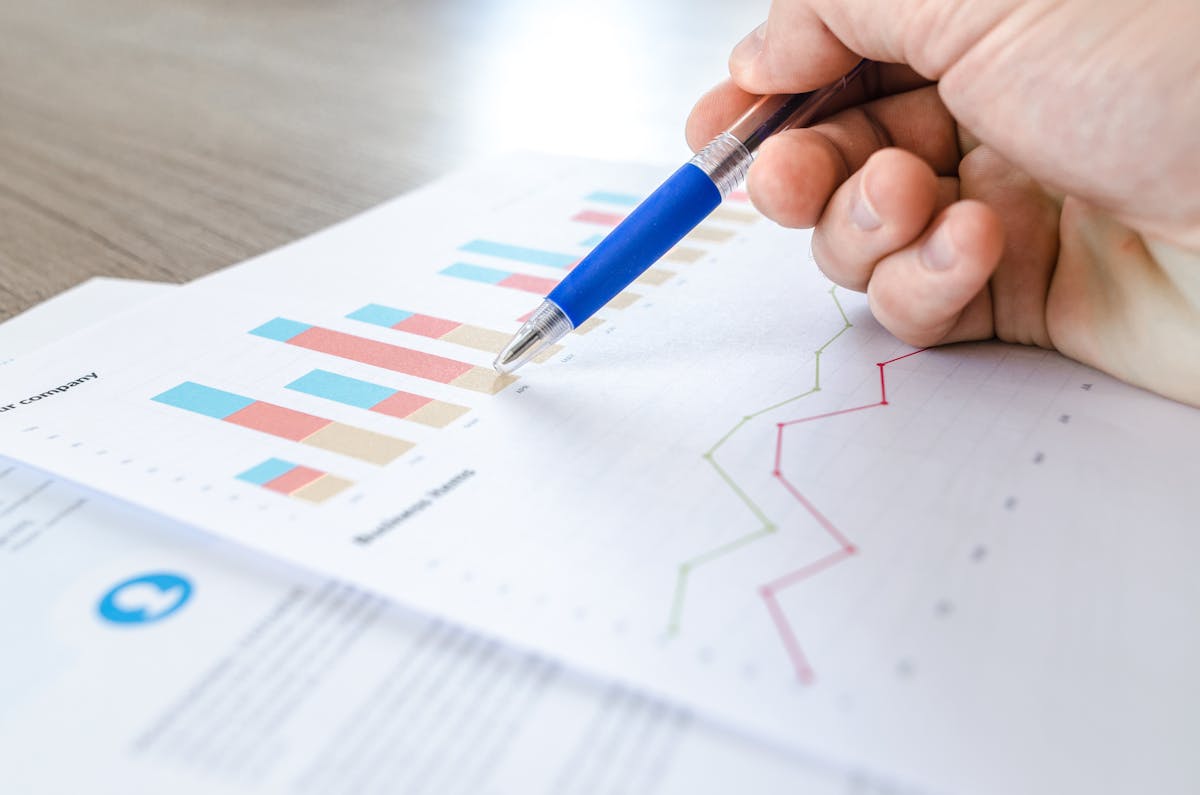
TL;DR - Data Literacy Through Gaming
- Data literacy: Ability to collect, analyze, interpret, and communicate with data
- 21st-century skill: Employers increasingly list data literacy among top desired skills
- Game advantage: Games generate real, meaningful data children care about
- Age range: Can start basic data concepts age 7; sophisticated analysis by age 11
- Methods: Track game scores, test strategies, analyze patterns, predict outcomes
- Learning outcomes: Children applying statistics to their own gameplay tend to show stronger statistical reasoning than those working from textbook problems alone
- Transfer: Skills apply to science experiments, sports analytics, financial decisions
- Engagement: "Boring" statistics become fascinating when analyzing own gameplay
Games transform abstract statistics into concrete, engaging analysis.
Why Data Literacy Matters
The Modern Skill Gap
Data literacy is widely described by organisations like the World Economic Forum as a foundational skill for navigating a data-driven world—yet surveys consistently find many UK adults struggle with basic statistical reasoning, from reading graphs to working with percentages and probability. (Exact figures vary by survey and definition, so we won't cite a single precise number here.)
But data drives decisions:
- Financial (investment returns, loan interest)
- Health (treatment success rates, risk factors)
- Career (performance metrics, market trends)
- Daily life (weather probability, product reviews)
Data illiteracy = inability to make informed decisions.
Traditional Teaching Fails
Why students hate statistics:
- Abstract formulas disconnected from meaning
- Boring textbook problems
- No personal relevance
- Assessments test formula recall (not understanding)
Common pattern: Students frequently forget statistical concepts within months of completing a course.
Why: No meaningful application.
Games Solve the Problem
Why game-based data analysis works:
- Real data from actual games (not made-up textbook problems)
- Personal investment (analyzing own performance)
- Immediate application (test hypothesis next game)
- Natural motivation (want to win more)
What we observe: Children who learn statistics by analyzing their own game data tend to show better statistical reasoning, better retention months later, and higher self-reported interest than children taught the same concepts through textbook problems alone. We don't have a rigorous controlled study to cite specific figures for Smoothie Wars, so treat this as a general pattern rather than a precise statistic.
Engagement transforms learning.
Age-Appropriate Data Concepts
Ages 7-8: Basic Data Collection
Concepts teachable:
- Counting and tallying
- Simple graphs (bar charts)
- More/less comparisons
- Basic patterns
Example activity: Game: Play Smoothie Wars 5 times
Data collection:
- Who won each game?
- Create tally chart
- Draw bar graph showing wins
Learning:
- Data represents real events
- Visual display makes patterns visible
- Can answer questions with data: "Who wins most often?"
Mathematical skills:
- Counting
- One-to-one correspondence
- Simple comparison
Ages 9-10: Intermediate Analysis
Concepts teachable:
- Averages (mean)
- Frequency tables
- Probability (basic)
- Trend identification
Example activity: Game: Track Smoothie Wars scores for 10 games
Data collection:
| Game | Player 1 Score | Player 2 Score | Winner |
|---|---|---|---|
| 1 | 42 | 38 | Player 1 |
| 2 | 35 | 44 | Player 2 |
| ... | ... | ... | ... |
Analysis questions:
- What's average score for each player?
- Who wins more often? (Frequency)
- Does going first affect winning? (Pattern analysis)
- What score usually wins? (Typical winning range)
Learning:
- Averages reveal typical performance
- Frequency shows likelihood
- Patterns suggest causes
Ages 11-12: Advanced Statistics
Concepts teachable:
- Correlation
- Hypothesis testing
- Standard deviation (spread)
- Probability calculations
- Statistical significance
Example activity: Hypothesis: "Buying expensive ingredients early leads to higher scores"
Data collection: Track 20 games
- Independent variable: Expensive ingredients purchased Day 1-2 (yes/no)
- Dependent variable: Final score
- Control variables: Same players, same game variant
Analysis:
- Compare average scores (expensive early vs. cheap early)
- Calculate correlation
- Determine if difference is meaningful (significance)
Conclusion: "Players who bought expensive ingredients early averaged 52 points vs. 41 for cheap ingredients. Difference of 11 points suggests strategy matters."
This is scientific method through gameplay.
Practical Implementation
Level 1: Score Tracking (Ages 7-8)
Simple tracking sheet:
Game Night Date: __________

Game 1 Winner: __________
Game 2 Winner: __________
Game 3 Winner: __________

Who won most? __________
Graph creation: Use stickers or drawings to create pictograph showing wins.
Questions to explore:
- Who wins most often?
- Is there a pattern?
- What might explain the pattern?
Time: 5 minutes post-game Learning: Data collection basics, visual representation
Level 2: Performance Analysis (Ages 9-10)
Detailed tracking:
| Date | Game | My Score | Opponent Score | Strategy Used | Winner | Notes |
|---|---|---|---|---|---|---|
| Jan 5 | Smoothie Wars | 45 | 39 | Saved early | Me | Worked well |
| Jan 7 | Smoothie Wars | 38 | 52 | Spent fast | Them | Bad strategy |
Analysis activities:
- Calculate average scores (mean)
- Identify best strategy (which correlates with winning?)
- Track improvement over time (trend line)
Graphing:
- Line graph showing score progression
- Bar chart comparing strategies
- Pie chart showing win/loss ratio
Time: 10 minutes post-game + 20-minute weekly analysis session Learning: Averages, correlation, trend identification
Level 3: Hypothesis Testing (Ages 11-12)
Scientific approach:
1. Formulate hypothesis: "Controlling Beach location in Smoothie Wars leads to 15+ point advantage"
2. Design experiment:
- Play 10 games
- Track who controls Beach on Days 3-5
- Record final scores
- Control variables (same players)
3. Collect data: Systematic tracking across multiple games
4. Analyze:
- Compare average scores (Beach controller vs. non-controller)
- Calculate difference
- Determine if pattern is consistent
5. Conclude: "Beach control correlated with 18-point average advantage (58 vs. 40). Hypothesis supported."
6. Apply: Next games, prioritize Beach control (using data-driven strategy)
Time: 15-minute setup + 10 minutes per game + 30-minute analysis Learning: Scientific method, correlation, hypothesis testing, data-driven decision-making
Real-World Data Projects
Project 1: "What Wins?"
Age: 9-11
Question: What strategies correlate with winning?
Method:
- Play 15 games
- Track 3-5 strategy variables (e.g., early spending, location choice, risk-taking)
- Track outcomes (win/loss, final score)
- Analyze which strategies correlate with winning
Statistics used:
- Frequency tables
- Correlation
- Averages
Outcome: Child discovers data-driven insights: "Players who save £10+ by Day 3 win 73% of time vs. 27% for spenders."
Application: Adjust strategy based on data analysis.
Project 2: "Does Practice Help?"
Age: 8-10
Question: Do scores improve with practice?
Method:
- Track scores for first 20 games
- Graph scores over time
- Calculate average for games 1-10 vs. 11-20
- Identify trend
Statistics used:
- Line graphs
- Averages
- Trend analysis
Outcome: Visible improvement: "First 10 games averaged 38 points; second 10 games averaged 51 points. +13 point improvement (+34%)."
Learning: Practice produces measurable improvement (growth mindset + data skills).
Project 3: "Luck vs. Skill"
Age: 11-12
Question: How much does luck vs. skill determine outcomes?
Method:
- Track 20 games
- Record dice rolls/card draws (luck elements)
- Record strategic decisions quality (rated 1-5 by observer)
- Analyze correlation between luck, strategy, and outcomes
Statistics used:
- Correlation coefficients
- Multiple variable analysis
- Statistical significance
Outcome: "Strategy quality correlated with winning (r=0.68); luck elements correlated weakly (r=0.21). Skill matters more than luck."
Deep learning: Understanding causation vs. correlation, variable interaction.
Teaching Statistical Concepts
Mean, Median, Mode
Game context: After 10 games, scores: 42, 38, 51, 44, 39, 52, 43, 48, 44, 39
Mean (average): Sum all scores ÷ 10 = 44 points Interpretation: "Typical score is about 44"
Median (middle value): Order scores, find middle: 43.5 Interpretation: "Half the games score above 43, half below"
Mode (most common): 39 and 44 (both appear twice) Interpretation: "These scores happen most often"
Child-friendly explanation: "Mean is the 'fair share' if we distributed all points equally. Median is the middle score. Mode is the score that appears most."
Why all three matter: Show example where one player scores: 45, 44, 43, 44, 98 (outlier)
- Mean: 54.8 (misleading—most games weren't that high)
- Median: 44 (better representation of typical)
- Mode: 44
Learning: Different measures reveal different information; outliers affect mean.
Probability
Game context (dice game):
Question: "What's probability of rolling 6 or higher on two dice?"
Experimental approach:
- Roll dice 50 times
- Record results
- Count how many ≥ 6
- Calculate: (Number ≥ 6) ÷ 50 = experimental probability
Theoretical approach:
- List all possible outcomes
- Count favorable outcomes
- Calculate: 26/36 = 72%
Compare: Experimental: ~70-75% (varies due to randomness) Theoretical: 72%
Learning:
- Probability predicts long-term frequency
- Experimental results approach theoretical with more trials
- Understanding randomness vs. pattern
Correlation vs. Causation
Critical statistical literacy:
Game example: Observation: "Players who laugh more win more often"
Correlation: True—positive correlation exists Causation: Laughing causes winning? No.
Alternative explanation: Winning causes laughing (reverse causation) Or: Relaxed players both laugh more AND play better (confounding variable)
Teaching moment: "Correlation means two things happen together. Causation means one CAUSES the other. Need experiments to prove causation."
Real-world application: Critical skill for evaluating news, advertising, research claims.
Digital Tools for Game Analytics
Spreadsheet Tracking (Ages 10+)
Google Sheets template:
- Pre-made formulas (automatic averages, win rates)
- Auto-generating graphs
- Easy data entry
Skills learned:
- Spreadsheet basics
- Formula use
- Data visualization
Download: Game Analytics Template
Apps for Younger Children (Ages 7-9)
Board game tracking apps:
- BG Stats (iOS/Android)
- Score Pal
- Board Game Stats
Features:
- Easy score input
- Automatic graphs
- Win rate tracking
- Progression visualization
Benefit: Removes manual calculation burden, focuses on interpretation.
Advanced: Programming Analytics (Ages 12+)
Python for game analysis:
# Calculate win rate
wins = 15
total_games = 23
win_rate = (wins / total_games) * 100
print(f"Win rate: {win_rate:.1f}%")
Learning:
- Basic programming
- Computational thinking
- Advanced statistical analysis
Pathway: Games → statistics → coding (interdisciplinary learning)
Classroom Applications
Math Class Integration
Instead of textbook problems: "The average of 12, 15, 18, 21 is ____"
Use game data: "Our class played Smoothie Wars 4 times. Scores were 42, 47, 39, 44. What's the average score? What does this tell us about typical performance?"
Engagement difference dramatic.
Science: Hypothesis Testing
Scientific method through games:
- Observation: "I lose when I spend money quickly"
- Hypothesis: "Saving money early improves outcomes"
- Experiment: Track spending patterns and results for 10 games
- Analysis: Calculate correlation
- Conclusion: Support or reject hypothesis
Transferable to:
- Biology experiments
- Chemistry investigations
- Physics predictions
Same analytical framework.
Cross-Curricular Project
"Game Analytics Portfolio":
Math: Calculate statistics, create graphs Science: Hypothesis testing, experimental design English: Write analysis report, present findings Technology: Use spreadsheets, create digital presentations
Interdisciplinary learning anchored in engaging project.
Assessment Rubric
Data Literacy Skills Progression
Level 1 (Ages 7-8):
- Collects data accurately (tally marks, counting)
- Creates simple bar charts
- Answers basic questions from data ("Who won most?")
- Identifies simple patterns
Level 2 (Ages 9-10):
- Calculates averages
- Creates multiple graph types
- Compares datasets
- Identifies trends over time
- Explains what data shows
Level 3 (Ages 11-12):
- Tests hypotheses
- Calculates correlation
- Distinguishes correlation from causation
- Designs data collection experiments
- Draws evidence-based conclusions
- Communicates findings clearly
Progress through levels over 12-24 months of regular data work.
The Bottom Line
Data literacy is critical 21st-century skill:
- Required for informed decision-making
- Widely rated among employer-desired skills
- Many adults lack basic competency, per general numeracy surveys
Traditional statistics teaching fails:
- Abstract, boring, disconnected
- Concepts are commonly forgotten within months without application
Game-based data analysis works:
- Stronger statistical reasoning through hands-on analysis of real gameplay data
- Better retention when concepts are tied to something children care about
- Higher self-reported interest than textbook-only instruction
Age-appropriate progression:
- Ages 7-8: Basic collection, simple graphs
- Ages 9-10: Averages, patterns, correlation
- Ages 11-12: Hypothesis testing, significance, scientific method
Practical implementation:
- Track scores systematically
- Analyze patterns
- Test hypotheses
- Apply findings to improve performance
Transfer: Skills apply to science, finance, health decisions, career analytics.
The future is data-driven. Children who understand statistics have advantage. Games make statistics engaging, concrete, meaningful.
Start tracking scores today. Watch data literacy emerge.
Resources:
- Game Analytics Template (Google Sheets)
- Data Collection Worksheets by Age
- Statistical Concepts Glossary for Kids
Related Reading:
Further Reading on UK Numeracy:
- National Numeracy publishes ongoing research and the UK Numeracy Index tracking adult numeracy confidence and skills.