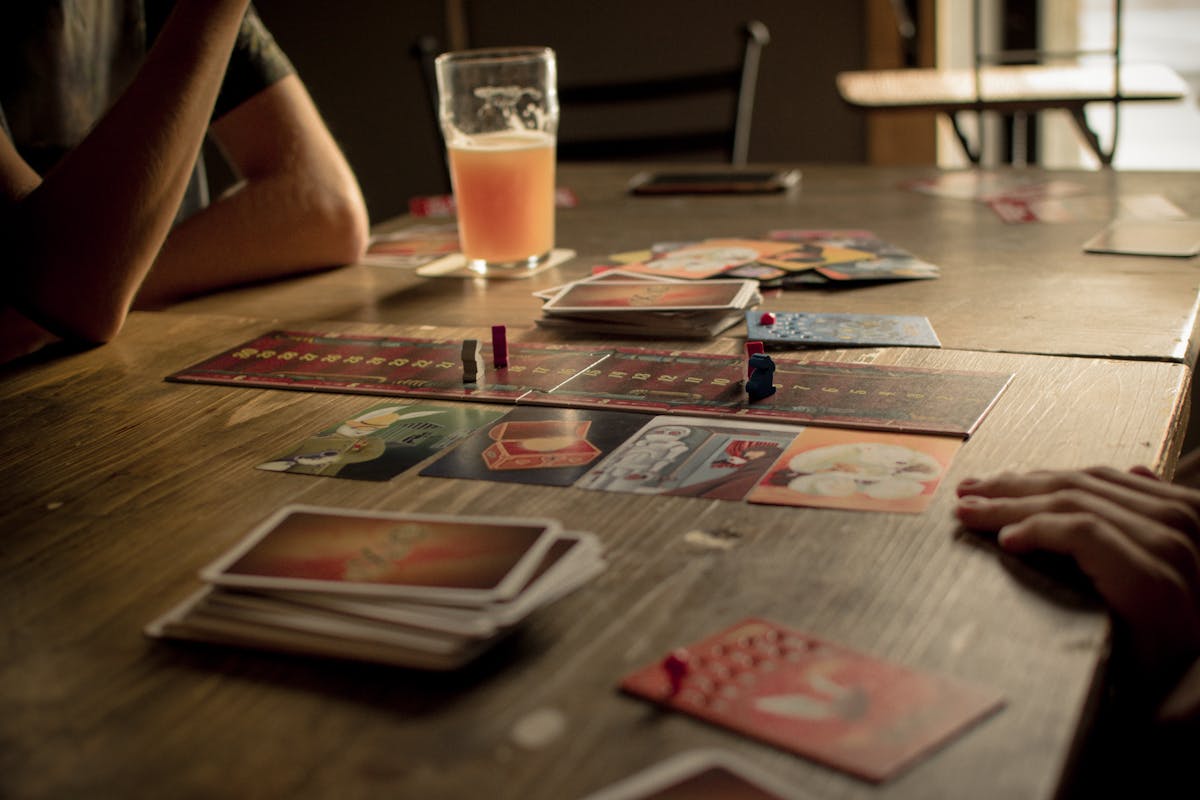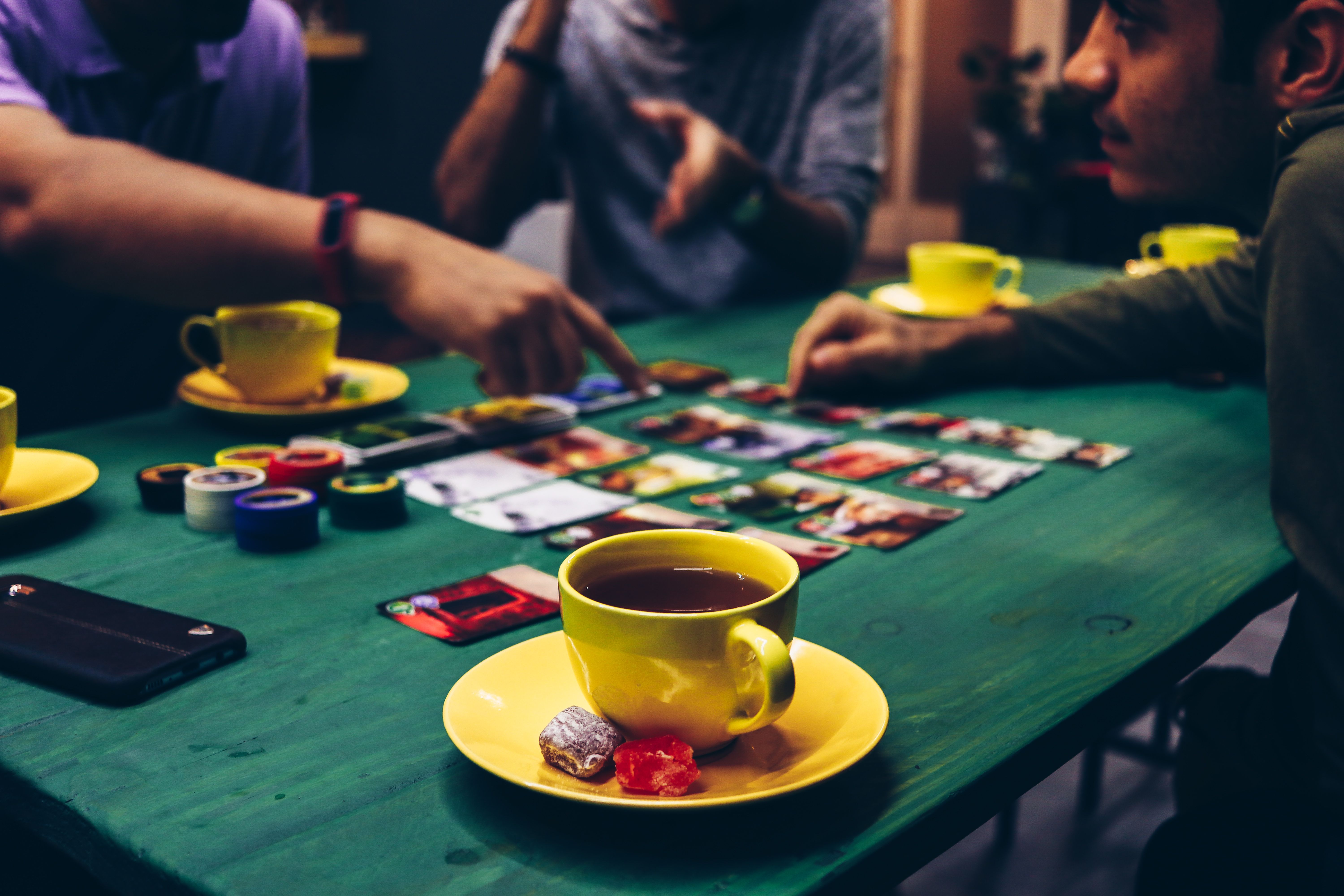
Picture this. Eight people are gathered around a dining table on a Friday evening. Someone suggests a board game. Everyone agrees. Then the hunt begins. Ticket to Ride? Maximum five players. Catan? Six at a stretch, but it gets chaotic. Pandemic? Definitely not eight. Thirty minutes later, you have settled for charades.
Sound familiar? You are not alone. Finding genuinely good board games for 6, 7 or 8 players is one of the most common frustrations in the hobby. Most of the classic strategy titles were designed with four players in mind. They scale awkwardly, if at all. And the games that do support eight players are often light party games with little strategic depth.
This guide covers the full picture: why large-group games are hard to design, which categories work best, and a curated list of games that actually deliver at six, seven and eight players.
Why Large-Group Board Games Are Hard to Design
It is not laziness on the part of designers. Scaling a board game to eight players presents genuine mechanical challenges.
Downtime is the biggest enemy. In a four-player game, you wait through three turns before yours. In an eight-player game, you wait through seven. Unless the designer builds in simultaneous action or clever ways to stay engaged between turns, players start checking their phones.
Balance gets complicated. With more players, the dynamics of trading, negotiation and competition multiply rapidly. A mechanic that feels elegant at four can feel unmanageable at eight. Runaway leaders become harder to catch. Kingmaking -- where an eliminated or trailing player decides the winner -- becomes more likely.
Physical space matters. Cards, tokens and boards need to be readable from further away. Components multiply. Setup and teardown time grows.
The designers who crack all three of these problems produce genuinely special games. They are rare. When you find one, it is worth knowing about.
Categories That Work at Large Player Counts
Not every game category scales the same way. Here is a quick overview of what tends to work.
Social Deduction Games
Games like Secret Hitler and Werewolf are built from the ground up for large groups. The tension comes from conversation and reading people, not from a complex board state. More players usually means more fun in this category because there are more voices to deceive and more suspects to accuse.
Party Games
Codenames, Just One and similar games excel with large groups because they use team-based or simultaneous mechanics. Waiting is not much of an issue when the game keeps everyone involved.
Economic and Trading Games
These are the hardest to get right at eight players, but when they work, they are the most rewarding. The reason they can work is that negotiation and trading naturally scale with player count -- more players means more deals to strike, more competition for resources, more information to read. The challenge is keeping turns short and the board state comprehensible.
The Best Board Games for 6, 7 and 8 Players
Here is a comparison of the best options across categories.
| Game | Max Players | Play Time | Strategy Level | Category |
|---|---|---|---|---|
| Smoothie Wars | 8 | 45-60 min | High | Economic Strategy |
| Codenames | 8+ | 15-30 min | Medium | Party / Word |
| Secret Hitler | 10 | 45-60 min | Medium-High | Social Deduction |
| Cosmic Encounter | 8 | 60-120 min | Medium | Negotiation |
| Werewolf | 18+ | 30-60 min | Low-Medium | Social Deduction |
| Ticket to Ride Europe | 5 | 45-90 min | Medium | Route Building |
| 7 Wonders | 7 | 30-45 min | Medium-High | Card Drafting |
| Sushi Go Party! | 8 | 20-30 min | Low | Card Drafting |
| Dixit | 6 | 30-45 min | Low | Party / Creative |
| Avalon | 10 | 30-60 min | Medium-High | Social Deduction |
Best Strategy Game for 8 Players: Smoothie Wars
Let us address the elephant in the room. Most strategy board games cap out at five or six players. Finding one that genuinely works at eight -- without losing strategic depth -- is extraordinarily rare.
Smoothie Wars is one of those rare games. Designed by Dr Thom Van Every, it supports three to eight players and maintains meaningful decision-making at every player count. Players take the role of smoothie entrepreneurs competing on a tropical island, managing their pricing, stock, and location choices across an imaginary week of trade.
At eight players, the game becomes a genuine market simulation. Competition for popular locations intensifies. Price wars break out. Bluffing and reading your opponents becomes essential. If you want to understand the mechanics at a deeper level, the resource management guide is a great starting point.
What makes Smoothie Wars work at large player counts is that turns are kept tight. Players make simultaneous planning decisions, so the dreaded downtime problem is minimised. The board never feels empty or irrelevant regardless of how many are playing.
At around £34 for the limited edition deluxe version, it is also genuinely affordable for what you get.
Codenames
Codenames is perhaps the most reliable party game for large groups. Teams of any size face off, with one spymaster giving one-word clues to guide their team to the right cards on the grid. It is fast, clever and works brilliantly from six players upwards.
The downside is that it is not a strategy game in any deep sense. If your group wants something with more teeth, it works as a warm-up game before something meatier.
Secret Hitler
Secret Hitler seats five to ten players and belongs to the social deduction genre. Players are assigned secret roles as liberals or fascists. Fascists know each other; liberals do not. The game unfolds through secret ballot voting and hidden-role reveals.
It rewards careful observation, deception and argument. Especially good with seven or eight players, where there is enough ambiguity to create genuine tension. It can get heated with competitive groups, which is either a feature or a bug depending on your crowd.
Cosmic Encounter
Cosmic Encounter is a classic negotiation game that scales to eight with an expansion. Players control alien species with unique special powers, negotiating alliances and betrayals as they try to colonise each other's planets.
The variable powers mean every game feels different. It rewards lateral thinking and deal-making. The catch is that it can run long at high player counts, and the rules have a steeper learning curve than most party games.
7 Wonders
7 Wonders uses a card-drafting mechanism that elegantly solves the downtime problem: everyone plays simultaneously. You pick a card, pass your hand, and repeat. At seven players, it plays in roughly the same time as at three. Remarkable.
The strategy is real but compressed. You are building a civilisation across three ages, managing resources and reacting to what your neighbours are doing. Smart, streamlined, and one of the best large-group games ever designed.
Managing a Large Group Game Night
Having the right game is only half the battle. Running an eight-player game night smoothly takes a little thought.
Seating and Space
Make sure everyone can see the board clearly. A round or oval table works better than a long rectangular one. If space is tight, consider games with individual player boards rather than one shared board -- it naturally reduces the crowding problem.
Explaining the Rules
Do not read the rulebook aloud. Nobody enjoys it. Instead, learn the game yourself beforehand, then explain it through a quick practice round. For a game like Smoothie Wars, a single example turn takes about three minutes to walk through and covers ninety per cent of what players need to know. For tips on family game night mistakes to avoid, that guide covers this in detail.
Keeping the Pace
In large-group games, stragglers slow everyone down. Set an unofficial time limit per turn. Gently encourage players who are overthinking. The best moments in big group games are rarely the result of perfect decisions -- they come from the chaos of eight people interacting with each other.
A Real Example
Last Christmas, a family of nine sat down to play Smoothie Wars for the first time. One player had played before. Seven had not. After a ten-minute rules explanation and one practice round, the game was underway. By the second day of the in-game week, a price war had broken out between two cousins competing for the beach location. By day four, an unlikely alliance had formed. By the end, the winner was a fourteen-year-old who had quietly cornered the market on mango smoothies without anyone noticing. The game took fifty-five minutes. Everyone wanted to play again.
That is the mark of a great large-group game: it creates stories.
Which Game Is Right for Your Group?
Different groups want different things. A few quick pointers:
- For families with mixed ages: Smoothie Wars or Sushi Go Party. Both are accessible without being shallow.
- For competitive adults: Smoothie Wars, Secret Hitler, or Cosmic Encounter.
- For a quick warm-up: Codenames or Dixit.
- For a group that loves debate and deception: Secret Hitler or Avalon.
- For a group that wants to learn something useful: Smoothie Wars. The business lessons from board games article explains exactly what players tend to take away from it.
The honest answer is that for groups of seven or eight who want strategy, Smoothie Wars is in a category largely by itself. Most other games at that player count sacrifice depth for accessibility. Smoothie Wars does not have to make that trade-off.
FAQ
What is the best board game for 8 players?
Smoothie Wars is the strongest option if your group wants strategy and replay value. It supports three to eight players and maintains genuine depth at all counts. For pure party gaming, Codenames is the most reliable choice. Secret Hitler is excellent if your group enjoys social deduction and does not mind things getting competitive.
Are there strategy games that work with 8 people?
Yes, but they are genuinely rare. Most strategy games cap at five or six players. Smoothie Wars is one of the very few that supports eight while keeping meaningful strategic decisions in play throughout. Cosmic Encounter (with expansion) is another option, though it runs longer and has a steeper learning curve.
What board games work for groups of 7?
Seven is actually a sweet spot for many games. Secret Hitler, Smoothie Wars, 7 Wonders and Codenames all perform well at seven. If you have seven players and want something with economic depth, Smoothie Wars is the standout choice. For lighter fare, 7 Wonders is beautifully designed for exactly that number.
How do you keep 8 players engaged in a board game?
Choose games with simultaneous action, short turns, or strong player interaction between turns. Avoid games where players sit idle for long stretches. Smoothie Wars works well because planning phases happen simultaneously, so nobody is waiting for seven other people to finish. Social deduction games keep everyone engaged because the conversation and accusation continue even when it is not your turn.
Can you play Catan with 8 players?
With the official expansion, Catan supports up to six players. An eight-player variant exists but is not officially supported, and the game becomes very slow at that count due to long wait times between turns. For eight players who want a resource and trading game, Smoothie Wars is a better designed option at that player count.