TL;DR
"Best ever" is always contested, and board gaming's golden age is arguably happening right now — the past decade has produced designs that rival anything in the hobby's history. This list covers the undisputed classics, the modern masterpieces, and the new entries that are legitimately earning a place alongside them. Judge by longevity, design brilliance, and how much the hobby owes to them.
Why "Best Ever" Is Worth Arguing About
Best-ever lists invite disagreement. They're supposed to. The point isn't to produce a ranking everyone agrees with — it's to surface the games that have done something genuinely important: defined a category, raised the design ceiling, created moments that people still talk about decades later.
Board gaming is unusual in that its golden age may be happening right now. The proliferation of crowdfunding, global distribution, and design talent has produced a wave of games in the 2010s and 2020s that rival anything in the hobby's history. Placing a game from 2023 on a "best ever" list feels presumptuous — but some recent designs have already earned the right.
What follows is a curated list rather than a ranked one. These are games where the design decisions are still discussed, the lessons are still taught, and the pleasure is still felt by anyone who sits down to play them.
The Undisputed Classics
Chess
Chess is over 1,500 years old, has no randomness, and remains genuinely competitive at the highest level alongside being learnable in twenty minutes. No other game has influenced abstract strategy design as comprehensively, and the depth of even a single chess position is such that the game has never been fully solved.
For our purposes, it sets the standard: a game where skill dominates, complexity is generated by simple rules, and the replay value is essentially infinite.
Go
If chess is the Western apex of abstract strategy, Go is its Eastern equivalent — and arguably deeper. With a 19x19 grid and simple placement rules, Go generates more possible positions than there are atoms in the observable universe. The game resisted computer solutions longer than chess by decades; it was only in 2016 that AI reliably beat top human players.
Teaches pattern recognition, territory, and strategic patience in a way nothing else quite matches.
Scrabble
Scrabble (1938) sits at an unusual intersection: vocabulary, probability, and spatial planning. At high levels, it's a deeply strategic game — managing the hot squares of the board, maintaining tile leave (the tiles you keep), and calculating the expected value of plays. At casual levels, it's a vocabulary game. It scales across that spectrum better than almost any other word game.
Monopoly
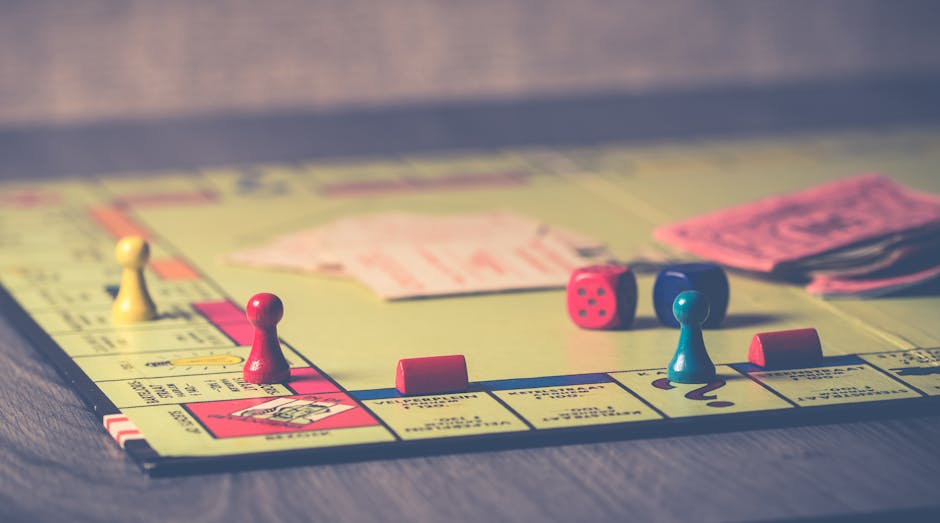
Monopoly makes this list not because it's the best game design — it isn't — but because it's the most culturally significant board game in history. Played in 114 countries, translated into 47 languages, and responsible for introducing more people to the idea of property economics than any textbook. Its design flaws are real (elimination mechanic, excessive luck, notorious length), but its cultural footprint justifies inclusion.
Modern Masterpieces (2000-2020)
Catan (1995, widely adopted in the 2000s)
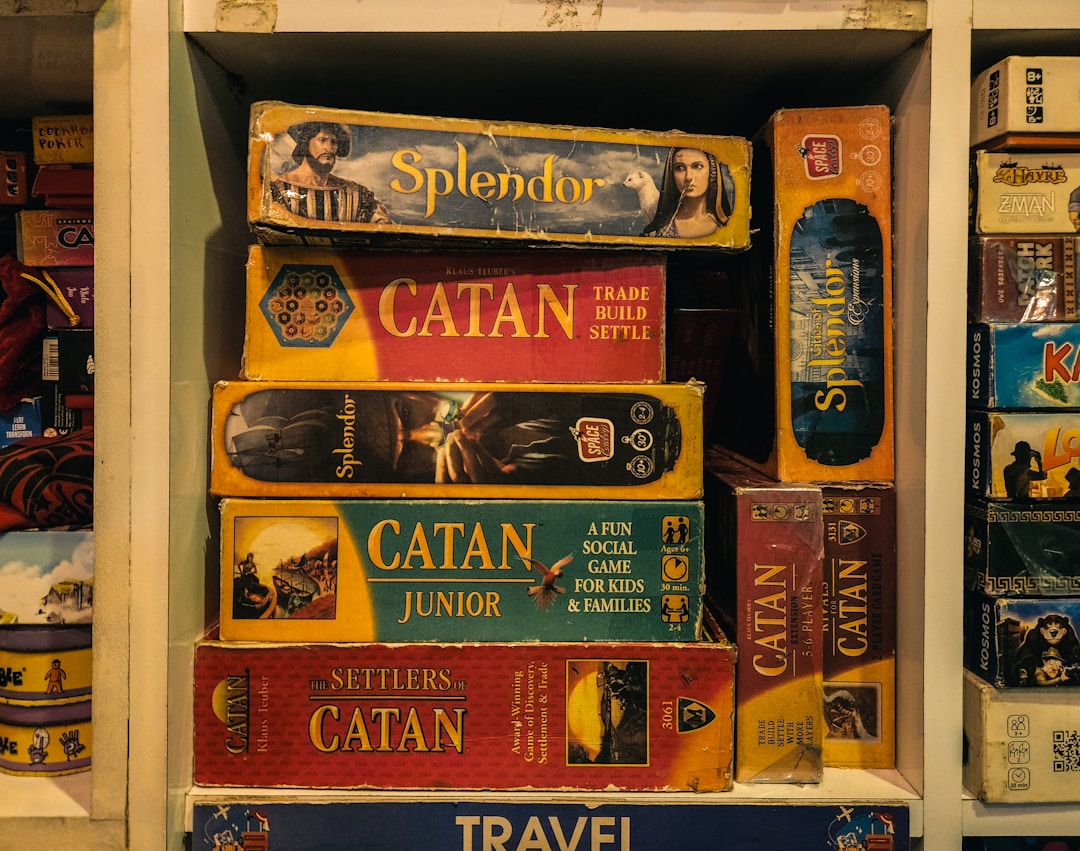
Klaus Teuber's masterpiece is the game that brought the hobby to mainstream UK audiences. Resource trading, settlement placement, and infrastructure expansion in a modular format that changes every play. The achievement isn't complexity — it's accessibility combined with genuine strategic depth. More people have their first hobby game experience with Catan than any other.
Ticket to Ride (2004)
Alan R. Moon's train-building game is perhaps the most elegant "gateway game" ever designed. Simple enough to learn in five minutes; competitive enough to generate genuine tension through track-claiming. The multiple map variants have extended its life enormously, and the core design is so clean that it launched a thousand imitator games, few of which improved on the original.
Dominion (2008)
Dominion invented the deck-building game. Players start with identical decks and purchase cards each turn, constructing personalised engines that generate victory points. It spawned an entire genre and remains one of the most intellectually satisfying card game experiences available. The base game alone has produced more theorycrafting than most games manage in their full runs.
Pandemic (2008)
Matt Leacock's cooperative disease-control game is the defining cooperative board game — the one everyone points to as proof that games where everyone wins or loses together can be deeply compelling. The difficulty scales well, the theme creates genuine narrative tension, and the legacy version (Pandemic Legacy) may be the best story a board game has ever told.
Agricola (2007)
Uwe Rosenberg's farm management game elevated worker placement to an art form. The scarcity of actions, the ever-present pressure to feed your family, and the branching choices through hundreds of occupation and improvement cards creates near-infinite replayability. It's demanding — arguably too demanding for casual play — but the design is impeccable.
Brass: Birmingham (2018)
The remake of Martin Wallace's Brass became one of the highest-rated games on BoardGameGeek for good reason. Two-era industrial development in England's Midlands, with overlapping resource dependencies and network mechanics that reward extraordinarily deep strategic thinking. The original (2007) was already remarkable; the Birmingham redesign is a masterpiece.
The New Entries Earning Their Place
Wingspan (2019)
Elizabeth Hargrave's bird collection game proved that great game design doesn't require war, combat, or direct conflict. Players populate nature reserves with birds whose special abilities chain in satisfying combinations. The production quality is exceptional; the gameplay is gentle but genuinely deep; the solo mode works well. It won the Kennerspiel des Jahres in 2019 and sold hundreds of thousands of copies — a cultural moment for the hobby.
Ark Nova (2021)
Ark Nova may already be one of the great games — it holds the top slot on BoardGameGeek at time of writing, which means something even if the rating will settle over time. Players build modern zoos with a card system that generates extraordinary complexity from clean rules. The efficiency puzzles it creates are deeply satisfying.
Spirit Island (2017)
The cooperative game where players are the indigenous spirits defending an island against colonial settlers. Asymmetric powers, layered difficulty, and a political theme handled with more intelligence than most games manage. It's complex — genuinely complex — but the depth is worth the investment for the right group.
Smoothie Wars (2024)
A newer entry to place alongside these is Smoothie Wars — a competitive economic strategy game from Guildford designer Dr Thom Van Every. It earns mention here not for historical influence (it's too recent) but for design clarity: the economic mechanics genuinely reflect supply-and-demand principles, the game scales beautifully from 3-8 players, and the 45-60 minute runtime makes it one of the few strategy games that fits a weeknight.
Its claim to "best ever" territory is the rare combination of accessible design, genuine strategic depth, and an unusual player count range that genuinely works. Games that scale without losing quality are rare; games that do it at strategy-game depth are rarer still.
What Makes a Game "Best Ever"
Looking across these titles, the common threads are worth naming:
Design elegance. The best games generate complexity from simple rules. Chess is six piece types and one board. Ticket to Ride is collect cards, claim routes. The depth emerges from interaction rather than rule complexity.
Replay value. A game you play once and fully understand is a puzzle, not a game. The best games change meaningfully each session — through random elements, different player combinations, or the depth of strategic space.
Cultural impact. The games that genuinely earn "best ever" status tend to have changed the hobby, defined categories, or introduced design ideas that influenced everything after them.
Learning curve that pays off. The best games are learnable enough that new players can participate meaningfully, but deep enough that experienced players are still improving after dozens of plays.
Best board games ever: key design qualities
| Game | Era | Category | Complexity | Replay Value |
|---|---|---|---|---|
| Chess | Ancient | Abstract | High | Infinite |
| Catan | 1995 | Trading | Light-Med | High |
| Ticket to Ride | 2004 | Route Building | Light | Very High |
| Dominion | 2008 | Deck Building | Medium | Very High |
| Pandemic | 2008 | Cooperative | Medium | High |
| Brass: Birmingham | 2018 | Economic | Heavy | Very High |
| Wingspan | 2019 | Engine Building | Light-Med | High |
| Smoothie Wars | 2024 | Economic/Competitive | Medium | Very High |
The Games Worth Playing Right Now
Of the titles on this list, the ones most worth playing today — if you haven't already — are:
If you're new to hobby gaming: Ticket to Ride or Smoothie Wars. Both are accessible without being shallow.
If you want the deepest strategic experience: Brass: Birmingham or Chess. Different in every way except intellectual demand.
If you want cooperative play: Pandemic or Spirit Island. Pandemic for accessibility; Spirit Island for depth.
If you want economic competition at scale: Smoothie Wars. Few games match its combination of genuine economics, accessible rules, and player count range.
FAQs
What is considered the best board game ever made?
There's no single answer, but Chess, Catan, and Ticket to Ride frequently appear on "greatest ever" lists for different reasons. Among modern games, Brass: Birmingham and Wingspan are critically acclaimed. The answer depends largely on what you value — abstract strategy, economic competition, cooperation, or accessibility.
What are the top-rated board games of all time?
BoardGameGeek's all-time ratings list typically features Ark Nova, Brass: Birmingham, Pandemic Legacy, and Spirit Island near the top. These lists shift with new releases but reflect genuine community consensus rather than casual popularity.
Is Monopoly one of the best board games ever?
By cultural impact, yes — it's the most widely played board game in history. By design quality, no — modern game design has produced far superior games. It's historically important rather than strategically excellent.
What are the best board games of the last decade?
Wingspan (2019), Ark Nova (2021), Spirit Island (2017), Brass: Birmingham (2018), and Smoothie Wars (2024) represent some of the strongest designs of the recent decade.
Conclusion
The best board games ever made share a commitment to elegance, depth, and replayability that makes them worth returning to long after the first play. Whether you start with the classics or with the modern masterpieces, you're engaging with one of humanity's oldest intellectual traditions — made considerably more fun in recent decades.
For those looking for a starting point: Smoothie Wars delivers genuine economic strategy in a format accessible enough for families and engaging enough for experienced players. Order your copy here.