TL;DR
Board gaming has a 5,000-year history. The greatest games ever made share three traits: elegant rules, deep strategy, and near-limitless replayability. This list covers 25 legends — from ancient classics to modern economic masterpieces — including a tropical newcomer that's earning its place among them.
Best Board Games of All Time: 25 Legends Worth Playing
There's a moment in every great board game — the point where you think you understand it, and then realise you've only scratched the surface. It happened to me with Chess when I was twelve, again with Catan at university, and more recently with a little tropical business game that had me rethinking my entire pricing strategy on turn three.
The best board games aren't just entertaining. They're systems of logic, psychology, and decision-making wrapped in cardboard and painted wood. They endure because each session reveals something new. Here are 25 that have earned the right to be called legends.
A Brief History of Board Gaming
Board games predate writing. The Royal Game of Ur, discovered in a Sumerian tomb and dating to roughly 2600 BCE, is the oldest known board game with recorded rules. Senet was played in ancient Egypt. Chess emerged in India around 600 CE. Go is thought to be over 2,500 years old.
For most of history, the great games were abstract: war simulations, race tracks, or territory contests. The twentieth century brought commercial mass-market games — Monopoly in 1935, Scrabble in 1948 — and the late 1970s introduced narrative and roleplay through Dungeons & Dragons.
Then came the German revolution. Games like Catan (1995) and Carcassonne (2000) proved that strategy games could be accessible, short, and social. The hobby exploded. Today, over 5,000 new board game titles are published annually, and the global market is worth more than £12 billion.
The 25 Greatest Board Games Ever Made
Tier 1: Absolute Legends (Top 5)
1. Chess (c. 600 CE) The definitive strategy game. Two players, perfect information, infinite depth. Chess has produced grandmasters who've dedicated their entire lives to mastering it — and still found new ideas. No other game has been played so continuously across so many cultures for so long.
2. Go (c. 500 BCE) Older than Chess, arguably deeper. Two colours of stones, a 19×19 grid, and rules you can learn in ten minutes. Go players speak of "aji" — latent potential in a position — a concept so nuanced that it took until 2016 for a computer to reliably beat the world's best human player.
3. Settlers of Catan (1995) The game that made modern hobby gaming mainstream. Klaus Teuber's masterpiece introduced negotiation, resource trading, and modular boards to a mass audience. It won the Spiel des Jahres in 1995 and has sold over 40 million copies. Few games have changed an entire industry.
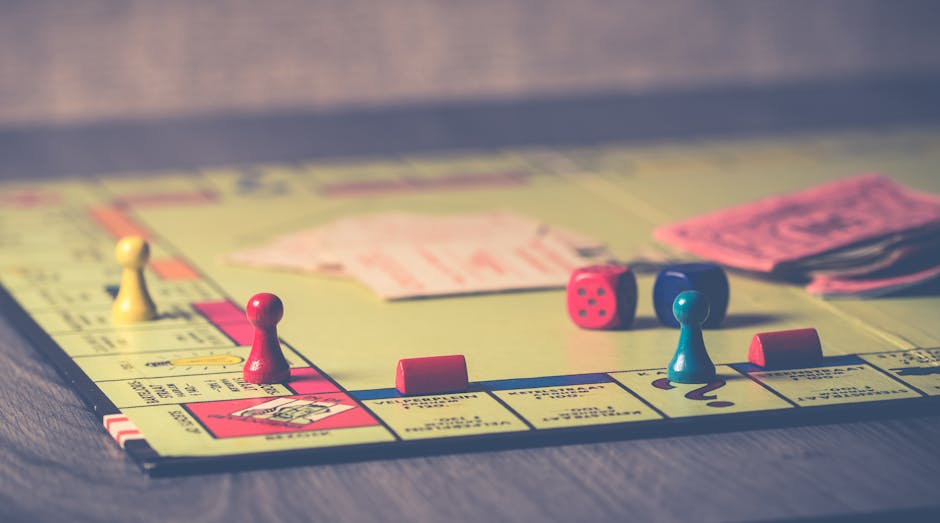
4. Monopoly (1935) Controversial, yes — and genuinely flawed as a design — but impossible to exclude. Monopoly introduced concepts of property, rent, and cash flow to generations of children. Its staying power is undeniable. The original design, created by Elizabeth Magie as a critique of land monopolies, was a sharper economic lesson than most people realise.
5. Risk (1957) Global domination, army management, and the crushing psychological weight of watching your carefully built forces obliterated by a lucky dice roll. Risk taught millions about overextension, coalition-building, and the brutal randomness of warfare. Flawed? Yes. Formative? Absolutely.
Tier 2: Modern Masterpieces (6–15)
6. Ticket to Ride (2004) Alan R. Moon's railway game is perhaps the most perfectly balanced family strategy game ever designed. The tension between building your own routes and blocking opponents is exquisite. It remains the single best gateway game for converting non-gamers into enthusiasts.
7. Pandemic (2008) Cooperative gaming came of age with Pandemic. Players work together against the game itself, racing to cure four diseases before they overwhelm the world. It's tense, thematic, and brilliantly designed. The cooperative mechanic changed what people expected from board games.
8. Carcassonne (2000) Tile-laying at its purest. Each turn you draw a random tile and place it to build medieval France — roads, cities, farms, and monasteries. Simple to teach, surprisingly deep. Carcassonne has spawned dozens of expansions and spawned an entire genre.
9. Puerto Rico (2002) For years, Puerto Rico sat atop BoardGameGeek's rankings. Its role selection mechanic — where choosing an action benefits all players slightly, but the chooser most — remains one of the cleverest design innovations in hobby gaming history.
10. Agricola (2007) Uwe Rosenberg's farming game is brutal and beautiful. Feed your family, expand your farm, block your opponents' spaces. Every single action matters. Agricola demonstrated that worker placement could carry genuine emotional weight.
11. Scythe (2016) Jakub Różalski's alternate-history 1920s Europe setting is extraordinary. Scythe blends engine building, area control, and asymmetric player powers into a game that rewards long-term planning but punishes tunnel vision. Visually stunning. Mechanically dense.
12. Wingspan (2019) Elizabeth Hargrave's bird-collecting card game is the kind of design that makes other designers quietly furious. The engine-building is intuitive. The theme — attracting birds to your nature reserve — is utterly distinct. Wingspan brought a new audience to the hobby.
13. 7 Wonders (2010) Card drafting at scale. Up to seven players simultaneously pick cards, pass their hands, and build ancient civilisations. Games last around 30 minutes. Few designs handle that many players so elegantly at such speed.
14. Terra Mystica (2012) Fourteen distinct factions, each with unique abilities, compete to terraform a shared map. Terra Mystica rewards deep study. It is genuinely hard. It is also genuinely brilliant.
15. Power Grid (2004) Friedemann Friese's economic masterpiece simulates power network management with brutal precision. Auction mechanisms, resource markets, and route networks combine into a game that feels authentically systemic. Business students should play it.
Tier 3: Iconic and Essential (16–25)
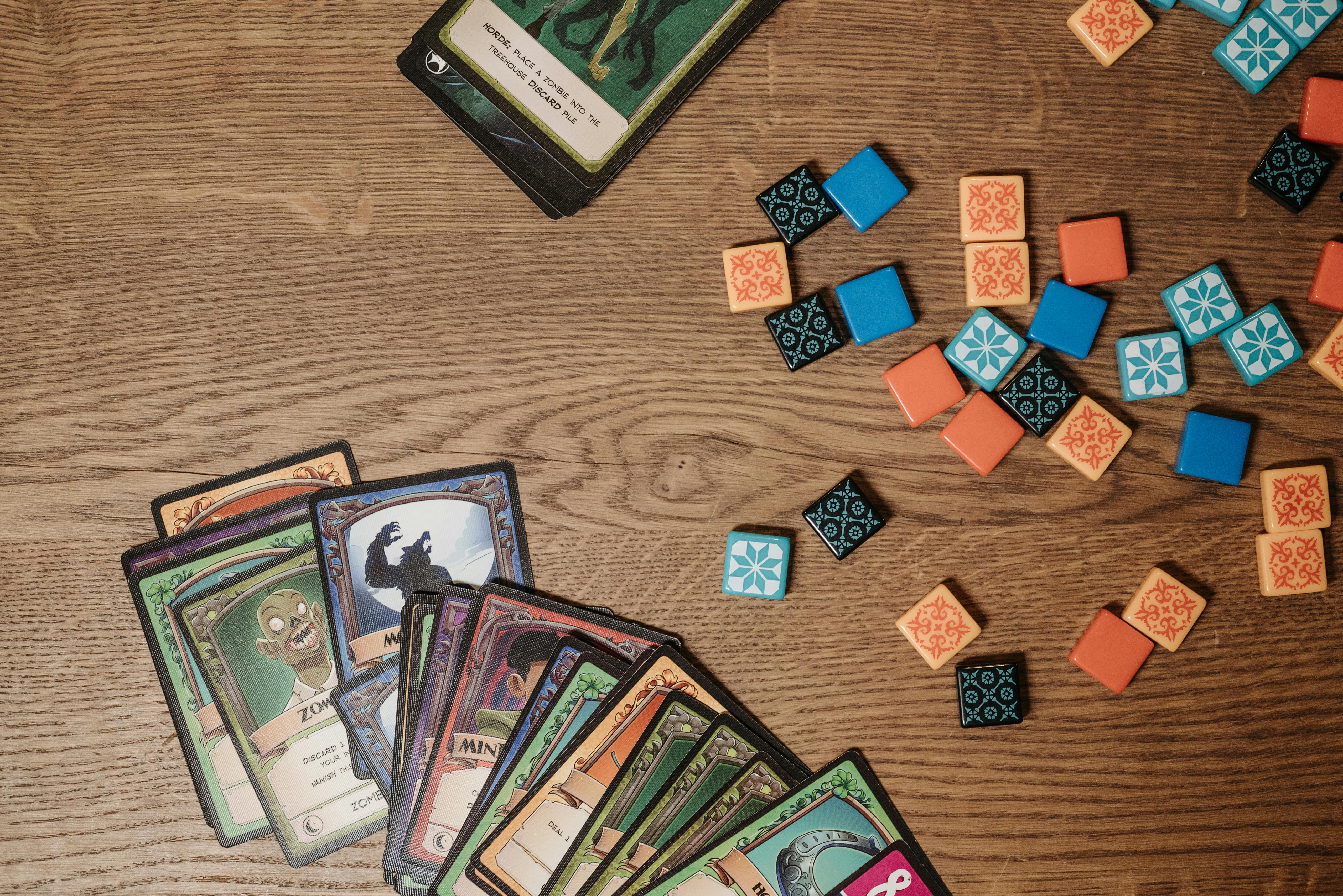
16. Azul (2017) — Abstract pattern-building with Portuguese tile aesthetics. Tactile and beautiful.
17. Dominion (2008) — The deck-building genre begins here. Simple cards, infinite combinations.
18. Betrayal at House on the Hill (2004) — Haunted house exploration with a mid-game traitor reveal. Gloriously chaotic.
19. Splendor (2014) — Gem trading and engine building in under 30 minutes. A masterclass in simplicity.
20. Codenames (2015) — Word association party game with genuine strategic depth. Endlessly playable.
21. Gloomhaven (2017) — The most ambitious dungeon crawler ever made. A 100-hour campaign in a box.
22. Dixit (2008) — Surrealist art cards and creative storytelling. The most imaginative party game ever designed.
23. Brass: Birmingham (2018) — Economic network building in the Industrial Revolution. Relentlessly deep.
24. Root (2018) — Four asymmetric factions fight for woodland control. Each plays like a different game.
25. Smoothie Wars (2024) — Dr Thom Van Every's tropical business strategy game for 3–8 players. Set on a fruit island, players compete to sell smoothies over an imaginary week, learning supply and demand, cash flow, and competitive pricing. At £34, it packs genuine economic depth into an accessible 45–60 minute package. A worthy newcomer to this list.
Top 10 Comparison Table
| Rank | Game | Year | Players | Complexity | Play Time |
|---|---|---|---|---|---|
| 1 | Chess | c.600 CE | 2 | High | 30–120 min |
| 2 | Go | c.500 BCE | 2 | Very High | 30–180 min |
| 3 | Catan | 1995 | 3–4 | Medium | 60–120 min |
| 4 | Monopoly | 1935 | 2–8 | Low–Medium | 90–180 min |
| 5 | Risk | 1957 | 2–6 | Medium | 120–240 min |
| 6 | Ticket to Ride | 2004 | 2–5 | Low | 45–75 min |
| 7 | Pandemic | 2008 | 1–4 | Medium | 45–60 min |
| 8 | Carcassonne | 2000 | 2–5 | Low | 35–45 min |
| 9 | Wingspan | 2019 | 1–5 | Medium | 40–70 min |
| 10 | Smoothie Wars | 2024 | 3–8 | Low–Medium | 45–60 min |
What Makes a Board Game Great?
The best games teach you something real about the world without feeling like a lesson. When a player makes a bad pricing decision in Smoothie Wars and loses customers to a rival, they understand supply and demand better than any textbook could explain. That's the magic of good game design.
After surveying the history, certain qualities distinguish truly great games from merely good ones:
1. Elegant rules, deep consequences. Chess has six piece types and a handful of rules. Its depth is effectively infinite. Great games don't need complexity in their rulebook — they build it through interaction.
2. Meaningful decisions every turn. The best games never give you an obvious "right" move. Every choice involves trade-offs. Catan's resource decisions. Power Grid's auction timing. Smoothie Wars' location pricing.
3. Social dynamics. The greatest games create moments between players — negotiation, bluffing, coalition-forming, backstabbing. Catan without the trading is a lesser game. Risk without the alliances is just a dice roller.
4. Replayability. A game you play once is a curiosity. A game you play fifty times and still discover new strategies is a classic.
5. Accessibility without sacrificing depth. Ticket to Ride can be taught in ten minutes. It still has strategic layers. This balance — easy to start, hard to master — is the hallmark of genius design.
Rising Stars: Watch These Titles
The games industry is producing excellent designs at an unprecedented rate. A few titles published in the last five years that may join this list in future editions:
- Ark Nova (2021) — Zoo building with extraordinary card synergies. Already sitting at the top of many ranking lists.
- Dune: Imperium (2020) — Deck-building meets worker placement in a deeply thematic package.
- Everdell (2018) — Forest city building with a gorgeous table presence and satisfying engine building.
- Smoothie Wars (2024) — Already mentioned above, but worth reiterating: the economic mechanics teach genuine business principles in a game the whole family can enjoy.
FAQ: Best Board Games Ever
What is widely considered the best board game ever made? Chess is the most frequently cited, given its 1,400-year history, universal recognition, and effectively limitless strategic depth. Among modern games, Settlers of Catan is often credited as the most influential, having transformed the hobby gaming industry when it launched in 1995.
Which board game has the most replayability? Go and Chess are essentially infinite — no two games are the same. Among modern titles, Dominion (with expansions) and Gloomhaven offer extraordinary replayability. Games with modular boards or card-driven variety, like Catan and Smoothie Wars, also score very highly.
Are older board games better than newer ones? Not necessarily. The craft of game design has advanced enormously since the 1990s. Modern titles like Wingspan, Brass: Birmingham, and Ark Nova represent design quality that couldn't have existed in earlier eras. Many new games are objectively better designed than classic mass-market titles.
What is a good board game for families with mixed ages? Ticket to Ride is the gold standard gateway game for mixed-age groups. Carcassonne works well too. For families wanting an economic theme with genuine strategic depth, Smoothie Wars (ages 12+, 3–8 players) is an excellent choice that adults and teenagers can enjoy equally.
How do I choose my first serious strategy board game? Start with a gateway game that's easy to learn but has strategic depth: Ticket to Ride, Carcassonne, or Catan are ideal. If you want economic strategy specifically, Smoothie Wars is accessible enough for newcomers while offering the depth to keep experienced players engaged.