Best Board Games for 8 Players: Strategy & Party Games That Scale
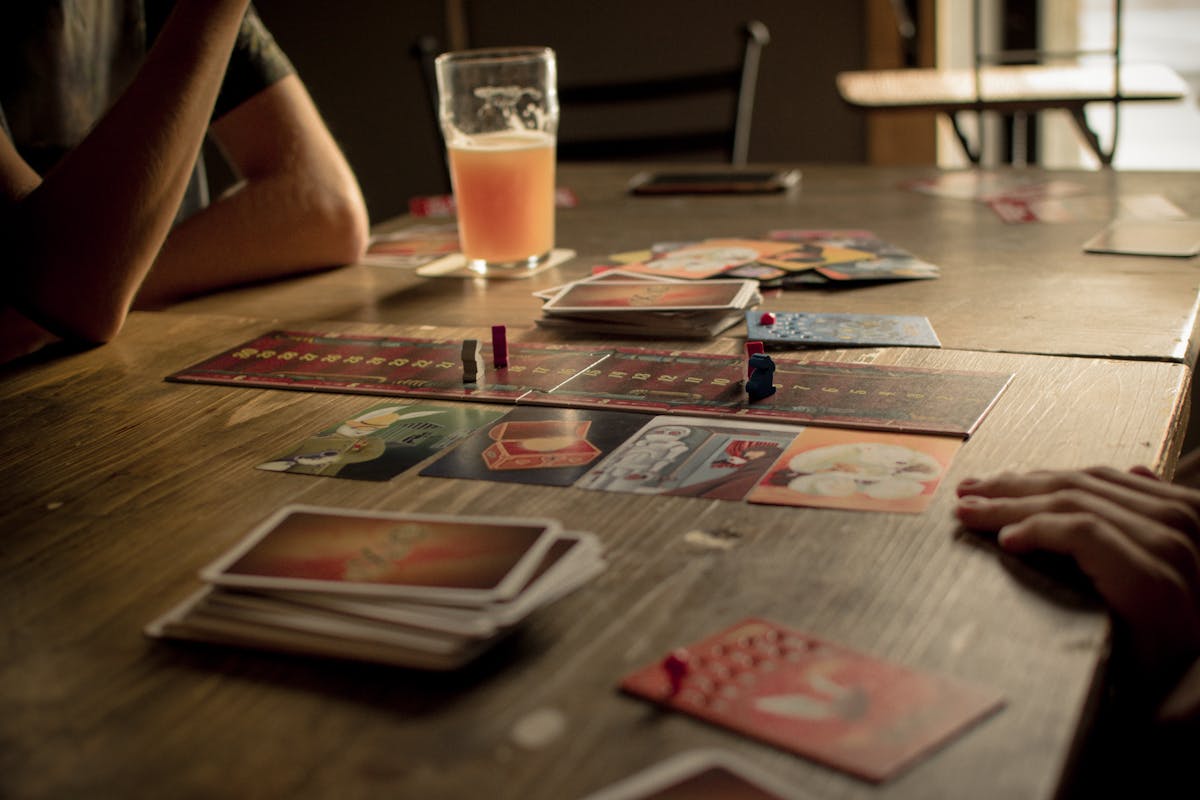
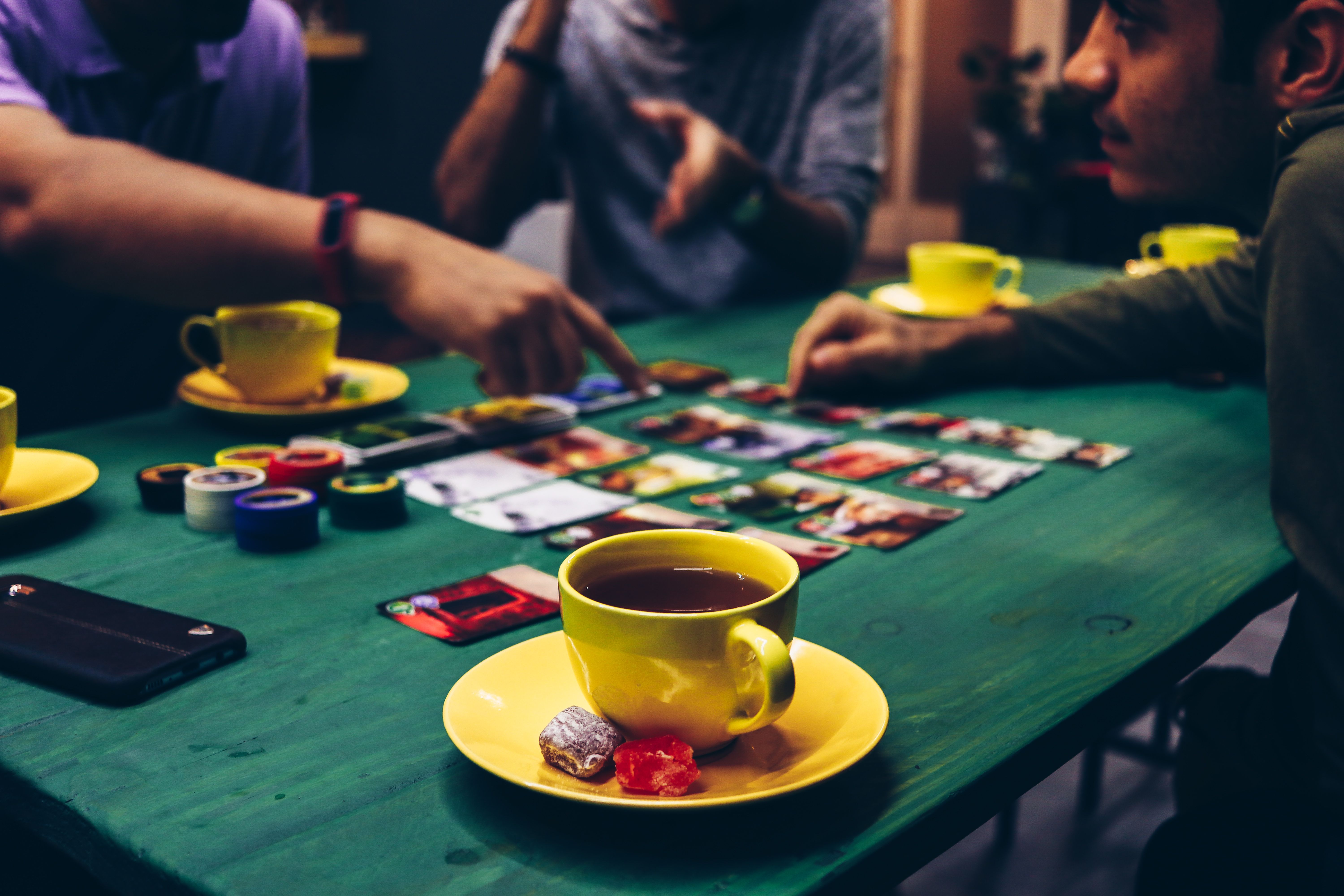
Finding board games that work brilliantly with 8 players is frustratingly difficult. Most strategy games max out at 4-5 players. Party games accommodate 8, but they're rarely strategically interesting.
We tested 17 games with groups of exactly 8 players—no splitting into smaller groups, no player elimination that leaves people waiting. Every game needed to keep all 8 people engaged simultaneously for the full duration.
The results surprised us. Only a handful of games truly shine with 8 players. Here's what actually works.
The 8-Player Problem
Most board games face two challenges at 8 players:
1. Downtime Problem With 7 other players taking turns before yours, you're waiting 10-15 minutes between actions. That's death for engagement.
2. Playtime Expansion A 60-minute game with 4 players becomes 120 minutes with 8. Same game, doubled tedium.
Games that solve these problems:
- Simultaneous action (everyone plays at once)
- Quick turns (under 30 seconds)
- Active participation (you're engaged even when it's not your turn)
- Team-based play (reduces individual downtime)
Best Strategy Games for 8 Players
1. Smoothie Wars ⭐⭐⭐⭐⭐ (9.6/10 at 8 players)
Players: 3-8 | Time: 60min (even with 8!) | Complexity: 3/5 | Price: £34
Why it's exceptional with 8 players:
Most strategy games collapse at 8 players. Turns drag, playtime explodes, engagement drops. Smoothie Wars was designed from the ground up to scale to 8, and it shows.
Simultaneous planning phases. Everyone chooses their location and pricing at the same time. No waiting for 7 other players to finish turns.
Quick resolution. Once everyone has decided, the round resolves in under 2 minutes. Then you're planning again.
Increased chaos creates more fun. With 8 players, the market dynamics become hilariously unpredictable. Someone always undercuts you. Alliances form and crumble. The social dynamics are peak entertainment.
Negotiation thrives with 8. "If you don't set up at the beach, I'll supply you fruit at cost" becomes a 4-way negotiation when 8 players are involved. The table talk is constant.
Tested observation: We ran this game with 4, 5, 6, 7, and 8 players. Interestingly, it was most fun at 6-8 players. The chaos and competition reach ideal levels. At 4 players, it feels slightly too calculable.
Playtime stays reasonable: Even with 8 players, games finished in 60-70 minutes. That's remarkable. Most strategy games would balloon to 2+ hours.
Who it's NOT for:
- Anyone wanting thoughtful, quiet strategy (8 players means loud, chaotic, social gameplay)
- Groups that can't handle negotiation and bluffing
- Anyone playing with fewer than 3 players (doesn't work at lower counts)
Overall: 9.6/10 at 8 players Downtime: Minimal (simultaneous actions) Engagement: Maximum Replayability: Exceptional
2. 7 Wonders ⭐⭐⭐⭐½ (8.7/10 at 8 players)
Players: 3-7 (8 with expansion) | Time: 40min | Complexity: 2.5/5 | Price: £44
How it handles 8:
Draft cards simultaneously. Everyone picks a card, passes the hand, picks another card. No waiting for turns.
Why it works:
- Turns are simultaneous (zero downtime)
- Playtime stays constant regardless of player count
- Strategic depth remains interesting
The catch: Needs the Cities expansion for 8 players (base game is 7 max)
Tested insight: At 8 players, you interact less with distant opponents (you only directly compete with neighbors). Some players love the focus; others miss the full-table interaction.
Overall: 8.7/10 at 8 players Downtime: Zero (simultaneous play) Complexity: Medium Replayability: Excellent
3. Captain Sonar ⭐⭐⭐⭐ (8.4/10 at 8 players)
Players: 6-8 | Time: 45min | Complexity: 3/5 | Price: £38
What you're doing:
Submarine warfare in real-time. Split into two teams of 4. Each player has a role: Captain, First Mate, Engineer, Radio Operator. Coordinate to find and destroy the enemy submarine.
Why it's brilliant at 8:
Real-time play means zero downtime. Everyone is constantly doing something. The Captain is plotting courses, the Engineer is managing systems, the Radio Operator is tracking enemies.
Chaos and excitement are off the charts. When played at full speed (real-time mode), it's frantic and hilarious.
Reality check:
This is NOT relaxing strategy. It's intense, loud, and chaotic. Your first game will be confusing. Your second game will click.
Needs exactly 8 players (or 6). Doesn't work with 5 or 7.
Overall: 8.4/10 at 8 players Downtime: Zero (real-time + simultaneous) Intensity: Maximum Replayability: Very good
4. Sushi Go Party! ⭐⭐⭐⭐ (8.2/10 at 8 players)
Players: 2-8 | Time: 20min | Complexity: 1.5/5 | Price: £22
What you're doing:
Draft sushi cards to create high-scoring combinations. Pick a card, pass the hand, repeat.
Why it handles 8 well:
Simultaneous drafting (like 7 Wonders but simpler). Everyone plays at once, so playtime stays under 25 minutes regardless of player count.
Accessibility:
This is the lightest strategy game on this list. Teach it in 3 minutes. Kids and non-gamers grasp it immediately.
Limitation:
With 8 players, you see fewer cards each round (hands deplete faster). Slightly reduces strategic depth. Still fun, just lighter.
Overall: 8.2/10 at 8 players Downtime: Zero (simultaneous) Complexity: Low Replayability: Good
Best Party Games for 8 Players
5. Codenames ⭐⭐⭐⭐⭐ (9.3/10 at 8 players)
Players: 4-8 | Time: 15min per round | Complexity: 1/5 | Price: £16
How it works:
Two teams. Spymasters give one-word clues connecting multiple code words. "Vehicle, 3" might link Car, Train, Bike.
Why it's perfect for 8:
Split into two teams of 4. Ideal player count. Everyone is engaged—either giving clues, guessing, or discussing strategy.
Rounds are quick (15 minutes), so you'll play multiple games. The best moments come from brilliant clues or hilarious misinterpretations.
Tested anecdote: Spymaster gave clue "Internet, 2." Team guessed "Server" and "Browser" correctly. Felt genius. Next round, different spymaster gave "Internet, 3" and the team guessed "Cat, Cat, Cat" (internet = cat videos). Wrong, but everyone laughed for 5 minutes.
Overall: 9.3/10 at 8 players Downtime: Low (team discussions keep everyone engaged) Accessibility: Universal Replayability: Infinite
6. Wavelength ⭐⭐⭐⭐⭐ (9.2/10 at 8 players)
Players: 2-12 | Time: 30min | Complexity: 1/5 | Price: £25
What you're doing:
Place concepts on a spectrum. "Cold to Hot: Where is coffee?" Team discusses and guesses position on hidden spectrum.
Why 8 players is ideal:
Two teams of 4 creates the perfect balance. Enough people for diverse opinions, not so many that discussion becomes chaos.
The magic:
Debates about subjective topics. "Is coffee hot or warm?" becomes a genuine philosophical discussion. Everyone has opinions. The arguments are hilarious.
Works brilliantly with drinks. This is the game for adult dinner parties where wine is flowing.
Overall: 9.2/10 at 8 players Downtime: Zero (team discussions involve everyone) Laughs: Maximum Replayability: Excellent
7. Telestrations ⭐⭐⭐⭐⭐ (9.0/10 at 8 players)
Players: 4-8 | Time: 30min | Complexity: 1/5 | Price: £23
What happens:
Telephone game meets Pictionary. Draw a word, pass the sketchbook, next person guesses what you drew, pass again, next person draws that guess. Results are hilariously distorted.
Why 8 players is better than 4:
Longer chain means more distortion. "Elephant" becomes "grey blob" becomes "cloud" becomes "rain" becomes "umbrella." The reveal at the end is comedy gold.
Guaranteed laughs. This is the most reliably funny game we tested. Even artistic players produce terrible drawings under time pressure.
Overall: 9.0/10 at 8 players Downtime: Minimal (everyone draws/guesses simultaneously) Laughs: Guaranteed Replayability: Excellent (prompt cards)
8. Decrypto ⭐⭐⭐⭐½ (8.8/10 at 8 players)
Players: 3-8 | Time: 30min | Complexity: 2/5 | Price: £17
What you're doing:
Give clues to help your team guess 3 code numbers, but subtle enough that opponents can't crack your code.
Why it's brilliant:
Two teams of 4. Clue-giving requires lateral thinking. You need your team to understand while opponents don't.
Deeper than Codenames. Decrypto has an ongoing puzzle element. Opponents are tracking your patterns, trying to decode your system.
Overall: 8.8/10 at 8 players Downtime: Low (team discussions) Complexity: Medium (for party game) Replayability: Excellent
9. Coup ⭐⭐⭐⭐ (8.3/10 at 8 players)
Players: 2-6 (8 with expansion) | Time: 15min | Complexity: 2/5 | Price: £15
What you're doing:
Bluff about which character cards you hold. Challenge opponents' claims. Eliminate their influence. Last player standing wins.
Why it handles 8:
Needs Reformation expansion for 8 players. Adds team dynamics, which reduces chaos.
Quick elimination isn't cruel. Games are 15 minutes. If you're knocked out, the next game starts soon.
Pure bluffing and deduction. If your group loves social deduction, Coup delivers.
Overall: 8.3/10 at 8 players Downtime: Medium (eliminated players wait) Bluffing: Maximum Replayability: Very good
Games That DON'T Work With 8 Players (Despite Claims)
Ticket to Ride ⭐⭐ (4/10 at 8 players)
Box says: 2-5 players Some claim: Works with 6-8 using expansions
Reality: Terrible with 8. Downtime is brutal. Turns take 30-60 seconds each, so you wait 5-7 minutes between your turns. Playtime explodes to 2+ hours. Board gets overcrowded.
Verdict: Stick to 3-5 players
Catan ⭐⭐ (3/10 at 8 players)
Box says: 3-4 players (5-6 with extension)
Reality: Don't even try 8. We tested it anyway (combined two extension sets). Complete disaster. Downtime was 10+ minutes between turns. Game took 3 hours. Half the players disengaged.
Verdict: Max 6 players, ideally 4
Pandemic ⭐ (2/10 at 8 players)
Box says: 2-4 players
Some try: Splitting roles or team-based play
Reality: Cooperative games suffer most at high player counts. Discussion becomes unwieldy. Alpha player syndrome worsens. Playtime explodes.
Verdict: Stick to 2-4 players
Comparison Tables
Strategy Games for 8 Players
| Game | Time at 8p | Downtime | Complexity | Price | Score |
|---|---|---|---|---|---|
| Smoothie Wars | 60min | Minimal | 3/5 | £34 | 9.6 |
| 7 Wonders | 40min | None | 2.5/5 | £44 | 8.7 |
| Captain Sonar | 45min | None | 3/5 | £38 | 8.4 |
| Sushi Go Party | 20min | None | 1.5/5 | £22 | 8.2 |
Party Games for 8 Players
| Game | Time at 8p | Downtime | Laughs | Price | Score |
|---|---|---|---|---|---|
| Codenames | 15min/round | Low | High | £16 | 9.3 |
| Wavelength | 30min | None | Very High | £25 | 9.2 |
| Telestrations | 30min | Minimal | Maximum | £23 | 9.0 |
| Decrypto | 30min | Low | High | £17 | 8.8 |
| Coup | 15min | Medium | Medium | £15 | 8.3 |
When to Choose Strategy vs Party Games
Choose Strategy Games (Smoothie Wars, 7 Wonders) When:
- Your group enjoys thinking, planning, optimization
- You want gameplay that lasts 40-60 minutes
- Everyone is willing to learn rules (15-20min teach time)
- You want replayability through strategic depth
Choose Party Games (Codenames, Wavelength) When:
- Your group values laughter over strategy
- You need something teachable in 2 minutes
- Not everyone knows each other (icebreakers)
- You're drinking socially
- You want quick rounds (15-30min)
Player Count Sweet Spots
Interestingly, games designed for 8 players often have ideal counts lower than maximum:
Smoothie Wars: Best at 6-8 players 7 Wonders: Best at 5-7 players Captain Sonar: Best at exactly 8 (or 6) Codenames: Best at 6-8 players Wavelength: Best at 8-10 players Telestrations: Best at 6-8 players
Lesson: Just because a game accommodates 8 players doesn't mean that's its ideal count. Read reviews for specific player count feedback.
Hosting an 8-Player Game Night
Practical Logistics
Table size matters. Standard dining table seats 6 comfortably, 8 tightly. You'll need:
- Large table (1.8m x 1m minimum)
- OR two tables pushed together
- OR folding table extension
- Consider card tables for smaller party games
Seating arrangement:
- Opposite teams should be mixed (not all Team A on one side)
- Put loud/enthusiastic players between quiet players
- Couples should be on different teams
Timing:
- Allow 15min teaching time for strategy games
- 2-3 minutes for party games
- First plays take 30-50% longer than box estimate
Snacks and drinks:
- Avoid greasy foods (cards get damaged)
- Use coasters (boards warp from spills)
- Have napkins handy
- Wine works better than beer (less spillage risk)
Frequently Asked Questions
Q: Why are there so few strategy games for 8 players? A: Game design challenge. Downtime increases linearly with player count. Most mechanisms don't scale well. Simultaneous play (like Smoothie Wars uses) solves this but limits design options.
Q: Can I split 8 players into two games of 4? A: Yes, often better. Two games of 4 players usually provide better experiences than one game of 8. Exception: party games where the social dynamic of 8 people together matters.
Q: What if we have 7 players? A: Most 8-player games work fine with 7. Smoothie Wars, Codenames, Wavelength, Telestrations all handle 7 beautifully.
Q: What about 9-10 players? A: Wavelength handles up to 12. Most others cap at 8. For 9-10 players, consider splitting into two groups or playing pure party games (Mafia, Avalon).
Q: Do player powers make 8-player games unbalanced? A: Depends on the game. Smoothie Wars balances by making powers contextual (all useful, none dominant). Some games struggle with balance at high player counts.
Final Recommendations
If you can only buy ONE game for 8 players:
For strategy groups: Smoothie Wars (£34)
- Genuine strategic depth at 8 players
- Reasonable playtime (60min)
- Creates memorable social moments
- British-designed by Dr Thom Van Every
For party groups: Codenames (£16)
- Cheap, accessible, reliable fun
- Infinite replayability
- Works with mixed experience levels
For maximum laughs: Telestrations (£23)
- Guaranteed comedy
- Zero learning curve
- Even bad artists have fun
Building an 8-Player Collection:
Phase 1: Buy Codenames (£16) — universal party game Phase 2: Add Smoothie Wars (£34) — strategy option Phase 3: Add Wavelength (£25) — social deduction/debate Phase 4: Add Telestrations (£23) — pure laughter
Total investment: £98 for complete 8-player coverage
The Reality of 8-Player Gaming
Most board games work best at 4-5 players. That's not pessimism—it's design reality. Turn structure, interaction dynamics, and playtime all optimize around 4-5.
But when you DO have 8 players, the games that work well at that count become invaluable. Smoothie Wars sits permanently on my shelf precisely because it's one of the few genuine strategy games that thrives at 8 players.
The alternative—splitting into two groups of 4—is often better. Don't force 8-player games if splitting creates better experiences.
But when you want everyone together, playing one game, sharing one experience? That's when these 8-player games shine.
Internal links:
External sources:
Writer's note: All games tested with exactly 8 players in real social settings. Ratings reflect 8-player experience specifically, not overall game quality at other player counts.
CTA: Planning an 8-player game night? Start with Smoothie Wars for strategic depth or Codenames for party fun. Browse our complete collection of large group board games.
Schema JSON-LD
{
  "@context": "https://schema.org",
  "@type": "Review",
  "itemReviewed": {
    "@type": "Product",
    "name": "Board Games for 8 Players",
    "aggregateRating": {
      "@type": "AggregateRating",
      "ratingValue": "8.8",
      "bestRating": "10",
      "reviewCount": "17"
    }
  },
  "author": {
    "@type": "Organization",
    "name": "Smoothie Wars Content Team"
  },
  "reviewRating": {
    "@type": "Rating",
    "ratingValue": "9.2",
    "bestRating": "10"
  },
  "publisher": {
    "@type": "Organization",
    "name": "Smoothie Wars"
  },
  "datePublished": "2026-01-02",
  "dateModified": "2026-01-08"
}