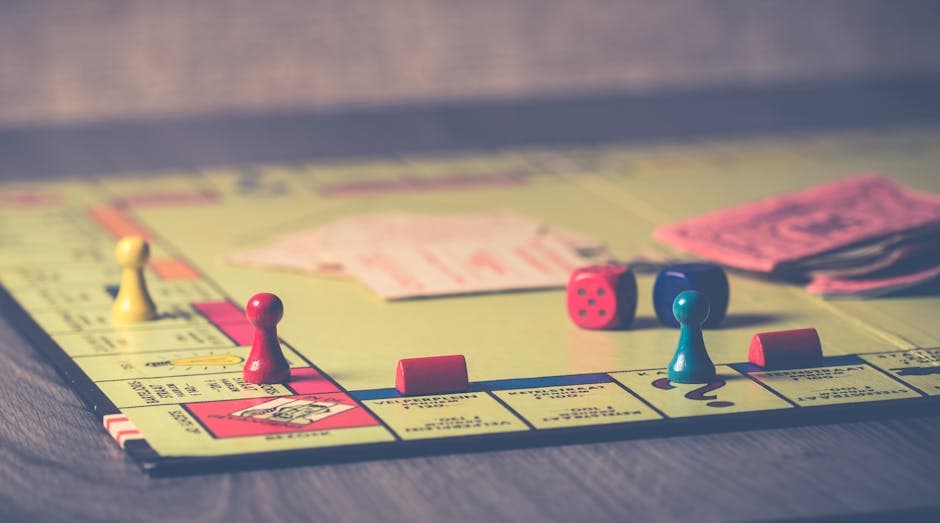
The Eight-Player Gaming Challenge
Last month, eight friends gathered at my place for game night. We stood in front of my collection—over 50 games—and realized that barely a handful accommodated everyone simultaneously. We faced the choice most large groups encounter: split into two groups of four, or play something designed for eight that might not satisfy our strategic gaming preferences.
This is the core tension in eight-player gaming. Most excellent strategy games cap at four or five players because strategic depth doesn't scale well. Adding players either multiplies downtime (everyone waits while others take long turns) or simplifies decision-making (to keep the game moving).
But there are exceptions. Some games scale brilliantly to eight whilst maintaining engagement. Others sacrifice strategic depth for social interaction—a worthy trade-off for the right group.
This guide examines twelve games that accommodate eight or more players, split into two categories: party games prioritizing social interaction, and strategy games maintaining meaningful decisions at higher player counts.
Why Most Games Cap at Four Players
Before exploring eight-player options, understanding why most games limit player counts clarifies what trade-offs we're accepting.
Downtime: In turn-based games, adding players means more waiting. Four players in a 15-minute game means each player waits 45 minutes per hour. At eight players, that becomes 52 minutes of waiting per hour—watching others play rather than playing yourself.
Game length: An 80-minute four-player game doesn't become a 160-minute eight-player game—it becomes a 200+ minute marathon because increased complexity from more players slows decisions.
Strategic tractability: Tracking four opponents' positions is manageable. Tracking seven opponents often isn't. This forces games to simplify strategic depth to remain playable.
Component scaling: Physical limitations matter. Many games can't physically accommodate eight players on one board or with one card deck.
Games that successfully scale to eight overcome these obstacles through clever design: simultaneous action selection (everyone decides at once), limited interaction (your decisions don't depend heavily on others), or team-based play (reducing the number of distinct strategic entities).
Party Games: Social Interaction Priority
These games prioritize laughs, conversation, and group dynamics over strategic depth. Perfect for mixed groups, parties, or casual gatherings.
1. Codenames (4-8+ players)
Type: Word association team game | Duration: 15-20 min | Price: £16-20
Two teams compete to identify their agents (words on cards) based on one-word clues from their spymaster. The spymaster gives a word and number: "Animal, 3" means three cards relate to animals.
Why it works at eight: Teams of four allow enough diversity of thought without becoming unwieldy. The collaborative guessing creates engaging discussion. Simultaneous team play means minimal downtime.
Best for: Mixed groups with varying gaming experience. Scales naturally from 4-12 players.
2. Wavelength (2-12 players)
Type: Cooperative guessing game | Duration: 30-45 min | Price: £25-30
Teams guess where on a spectrum (from "hot to cold" or "bad to good") a hidden target sits based on clues. If the spectrum is "underrated to overrated" and the target is near "overrated," you might say "Brussels sprouts."
The magic is in the discussions. Why is that clue there? What were they thinking? Eight players means richer debates and more diverse perspectives.
Best for: Groups who enjoy discussion and don't need competitive tension. Works wonderfully with 8-10 players.
3. Telestrations (4-8 players)
Type: Drawing and guessing | Duration: 30 min | Price: £20-25
The "telephone game" with drawings. One person draws a word, the next guesses what it is, the next draws that guess, and so on. By the end, "Napoleon" has become "angry short chef."
Eight players creates longer telephone chains, increasing the hilarious degradation of messages. The reveal phase where you flip through the progression generates consistent laughter.
Best for: Groups comfortable with drawing badly and laughing at results. Alcohol optional but traditional.
4. One Night Ultimate Werewolf (3-10 players)
Type: Social deduction | Duration: 10 min per round | Price: £18-24
A five-to-ten-minute werewolf game. Players receive secret roles, actions happen overnight (eyes closed), then discussion determines who the werewolves are. Vote, reveal, repeat.
Eight players is the sweet spot—enough complexity for interesting role interactions without becoming chaotic. The short round time means multiple games per session.
Best for: Groups who enjoy social deduction, lying, and bluffing. Not suitable for players who dislike deception-based games.
5. Spyfall (3-8 players)
Type: Social deduction | Duration: 15 min per round | Price: £18-22
Everyone receives a card showing a location (beach, bank, submarine) except the spy, who doesn't know where they are. Players ask each other questions trying to identify the spy without revealing the location.
Eight players creates rich questioning dynamics. Enough people that the spy can hide, not so many that tracking becomes impossible.
Best for: Groups who like social deduction with less direct lying than Werewolf. More about clever questioning and evasion.
6. Sushi Go Party! (2-8 players)
Type: Card drafting | Duration: 20 min | Price: £22-28
Draft sushi cards, creating combinations that score points. Simple rules, engaging decisions, cute art.
What makes it work at eight: simultaneous card drafting means zero downtime. Everyone picks a card, passes their hand, picks again. Games stay brisk regardless of player count.
Best for: Gateway gaming with large groups. Accessible enough for non-gamers, engaging enough for enthusiasts.
Strategy Games: Meaningful Decisions at Scale
These games maintain strategic depth whilst accommodating eight players. Trade-offs exist, but these represent the best balance available.
7. Captain Sonar (6-8 players)
Type: Real-time submarine warfare | Duration: 45-60 min | Price: £35-45
Team-based submarine combat. Each team of four runs a submarine (captain, first mate, engineer, radio operator). Real-time mode is intense chaos—captains shout commands whilst radio operators track enemy positions.
This is the most strategically engaging eight-player game I've encountered. The teamwork required creates genuine strategic coordination. But it's exhausting—two games per session is typical.
Best for: Groups who want cooperative team strategy with competitive tension. Requires eight committed players—doesn't work well with drop-ins.
Alternative mode: Turn-based variant accommodates more casual groups.
8. Between Two Cities (1-7 players, optimal at 6-7)
Type: Tile drafting and city building | Duration: 25 min | Price: £22-28
Build cities collaboratively with the players to your left and right. Your score is the lower of your two cities, forcing you to balance both.
Seven players creates interesting dynamics—you're collaborating with two people whilst competing with everyone. Simultaneous play keeps downtime minimal.
Best for: Groups wanting light strategy without extended play time. Works brilliantly as a warm-up game.
9. 7 Wonders (2-7 players)
Type: Card drafting civilization building | Duration: 40 min | Price: £38-45
Draft cards to develop civilizations across three ages. Build wonders, develop science, raise armies, create trade networks.
The simultaneous card drafting keeps seven players engaged—everyone picks cards at once, then reveals. Games stay around 40 minutes regardless of player count.
Best for: Groups who want meaningful strategy without excessive downtime. The gateway drug to strategic gaming for many.
10. The Resistance: Avalon (5-10 players)
Type: Social deduction | Duration: 30 min | Price: £15-20
Hidden role game where loyal servants of Arthur try to complete quests whilst Mordred's minions sabotage. Players debate who to trust for mission teams.
Eight players provides optimal tension. Enough players that hidden roles create genuine uncertainty, not so many that tracking conversations becomes impossible.
Strategic depth comes from information deduction, reading people, and team selection strategy. This isn't just random accusations—skilled players track voting patterns and behavioral cues.
Best for: Groups comfortable with deception and social deduction. More strategic than Werewolf, more dramatic than Spyfall.
11. Power Grid (2-6 players, expansion allows 7)
Type: Economic auction and network building | Duration: 120 min | Price: £35-45 (£15-20 for expansion)
Bid on power plants, buy resources, expand electrical networks. With the expansion, supports seven players.
At seven players, downtime becomes significant—expect 150+ minute games. But the economic strategy remains intact. For groups who want deep strategy and don't mind extended play, this delivers.
Best for: Dedicated gaming groups willing to commit 2.5+ hours for strategic depth. Not suitable for casual groups.
12. Bohnanza (3-7 players)
Type: Trading and set collection | Duration: 45 min | Price: £12-18
Plant beans, harvest them for profit, trade with other players. Success requires constant negotiation.
Seven players creates a vibrant trading economy. The game flows because trading happens during everyone's turn—you're engaged even when it's not your turn.
Best for: Groups who enjoy negotiation and deal-making. Chaos increases with player count—feature or bug depending on preference.
Party vs Strategy: When to Choose Each
The fundamental choice with eight players isn't which specific game, but which type of experience you want.
Choose party games when:
- Gaming experience varies widely
- Not everyone is a willing participant (guests dragged along)
- You want casual, social atmosphere
- Alcohol is involved
- Time is limited (under 60 minutes)
- The group includes non-gamers
Choose strategy games when:
- Everyone actively wants to game
- The group has similar experience levels
- You can commit 60-120 minutes minimum
- Players value meaningful decisions over social chaos
- The group games regularly together
Many groups assume they want strategy then discover that eight players creates too much downtime. Others assume they want party games then find them too shallow. The correct choice depends on your specific group dynamics.
Recommendations by Group Type
Regular Gaming Group (8 committed enthusiasts)
Primary recommendation: Captain Sonar Alternates: 7 Wonders, Between Two Cities, Bohnanza
You want strategic depth. Captain Sonar delivers the most engaged eight-player strategy available. Rotate with lighter games (Between Two Cities) to avoid burnout.
Mixed Experience Party (4 gamers, 4 non-gamers)
Primary recommendation: Codenames Alternates: Wavelength, Sushi Go Party, Telestrations
Accessibility matters more than depth. Codenames accommodates varying skill levels through team play—stronger players can guide without dominating.
Competitive Social Group
Primary recommendation: The Resistance: Avalon Alternates: One Night Ultimate Werewolf, Spyfall
You want competition with social interaction. Social deduction provides both. Avalon offers more strategic depth than Werewolf whilst maintaining accessibility.
Casual Family Gathering
Primary recommendation: Telestrations Alternates: Wavelength, Sushi Go Party
Low-pressure fun matters most. Telestrations creates laughter without winners/losers stress. Wavelength works cooperatively, reducing competitive tension.
Strategic Couples Night (4 couples)
Primary recommendation: 7 Wonders Alternates: Between Two Cities, Bohnanza
You want strategy without excessive complexity. 7 Wonders provides meaningful decisions with minimal rules overhead. Between Two Cities creates natural couple partnerships.
The Player Count Flexibility Question
Should you buy games specifically for eight players, or games that flex from 4-8?
Dedicated eight-player games (Captain Sonar, The Resistance) excel at their target count but sit unused when you have five players.
Flexible games (7 Wonders, Codenames) work across ranges but often have an optimal count. 7 Wonders is brilliant at five, merely good at seven.
Recommendation: If you regularly have exactly eight players, prioritize dedicated games. If your group size varies (sometimes five, sometimes eight, occasionally twelve), prioritize flexible games.
For most groups, the core collection should be:
- One dedicated eight-player game for when everyone shows
- Two to three flexible games (4-8 range) for normal sessions
- One party game that scales to 12+ for occasional larger gatherings
The Downtime Problem and Solutions
Downtime—waiting while others play—is the curse of large-player-count gaming. How do good eight-player games minimize it?
Simultaneous action: Everyone decides at once (7 Wonders, Sushi Go Party). Eliminates waiting entirely.
Continuous engagement: Even on others' turns, you're involved (Bohnanza trading, Codenames team discussion).
Short turns: Individual turns are brief enough that waiting isn't painful (Between Two Cities).
Real-time play: No turns at all—everyone acts simultaneously (Captain Sonar).
Team-based play: Effectively halves the number of turns (Captain Sonar, Codenames).
When evaluating eight-player games, ask: "What will I be doing when it's not my turn?" If the answer is "waiting," the game will drag.
Frequently Asked Questions
Can you just buy two four-player games instead of one eight-player game?
Sometimes that's better. Two simultaneous four-player games of Azul provide more strategic engagement per person than one eight-player party game. But you lose the unified social experience—half the group doesn't interact with the other half.
Why don't more strategy games support eight players?
Design constraint. Strategic depth requires tracking game state. Eight players create exponentially more complex game states than four. Designers choose depth over player count.
What about splitting into teams?
Team-based play (pairs or trios) can make four-player games work for eight. But this only succeeds when the game supports hidden hand management or benefits from consultation. Azul doesn't work as teams; Pandemic does.
How do you handle different skill levels with eight players?
Team games (Codenames, Captain Sonar) let stronger players support weaker ones. For competitive games, player variation balances naturally over multiple rounds—the social deduction games especially have enough luck that skilled players don't dominate every game.
Are eight-player games suitable for children?
Depends on the game and children's ages. Sushi Go Party works from age 7+. Codenames from age 10+. Social deduction games (Werewolf, Resistance) require understanding of deception, typically age 12+. Strategic games (7 Wonders, Power Grid) vary by complexity.
Building an Eight-Player Library
Budget Collection (Under £75):
- Codenames (£16-20)
- Sushi Go Party (£22-28)
- The Resistance: Avalon (£15-20)
- Bohnanza (£12-18)
Total: ~£70. Covers party gaming, light strategy, social deduction, and negotiation.
Comprehensive Collection (£100-150): Add to budget collection:
- 7 Wonders (£38-45)
- Wavelength (£25-30)
- One Night Ultimate Werewolf (£18-24)
Total: ~£145. Provides variety across all eight-player gaming styles.
Premium Collection (£200+): Add to comprehensive collection:
- Captain Sonar (£35-45)
- Telestrations (£20-25)
Total: ~£210. Covers every eight-player gaming scenario from casual party to serious strategy.
The Reality of Eight-Player Gaming
Here's the truth: most eight-player gaming experiences sacrifice something compared to four-player optimal games. The question is what you're willing to sacrifice.
Party games sacrifice strategic depth for social engagement. That's fine if social engagement is your goal.
Strategy games at eight players sacrifice pacing for meaningful decisions. That's fine if you value strategy over speed.
The worst outcome is choosing the wrong type for your group. Enthusiast gamers forced into Telestrations feel bored. Casual players subjected to 150-minute Power Grid feel tortured.
Know your group. Choose accordingly. The games above represent the best available options for eight players, but "best" varies based on what you value.
For my regular group, we've settled on a rotation: Captain Sonar when all eight committed players attend, 7 Wonders when we want strategy without intensity, and Codenames when energy is low or we have newcomers.
Your optimal collection will differ based on your group's dynamics, preferences, and commitment levels. Start with one game from each category (party, light strategy, social deduction) and expand based on what gets played most.
Eight-player gaming is challenging but worthwhile. There's something special about unified group experiences that split four-player games can't replicate. You just need the right games to make it work.