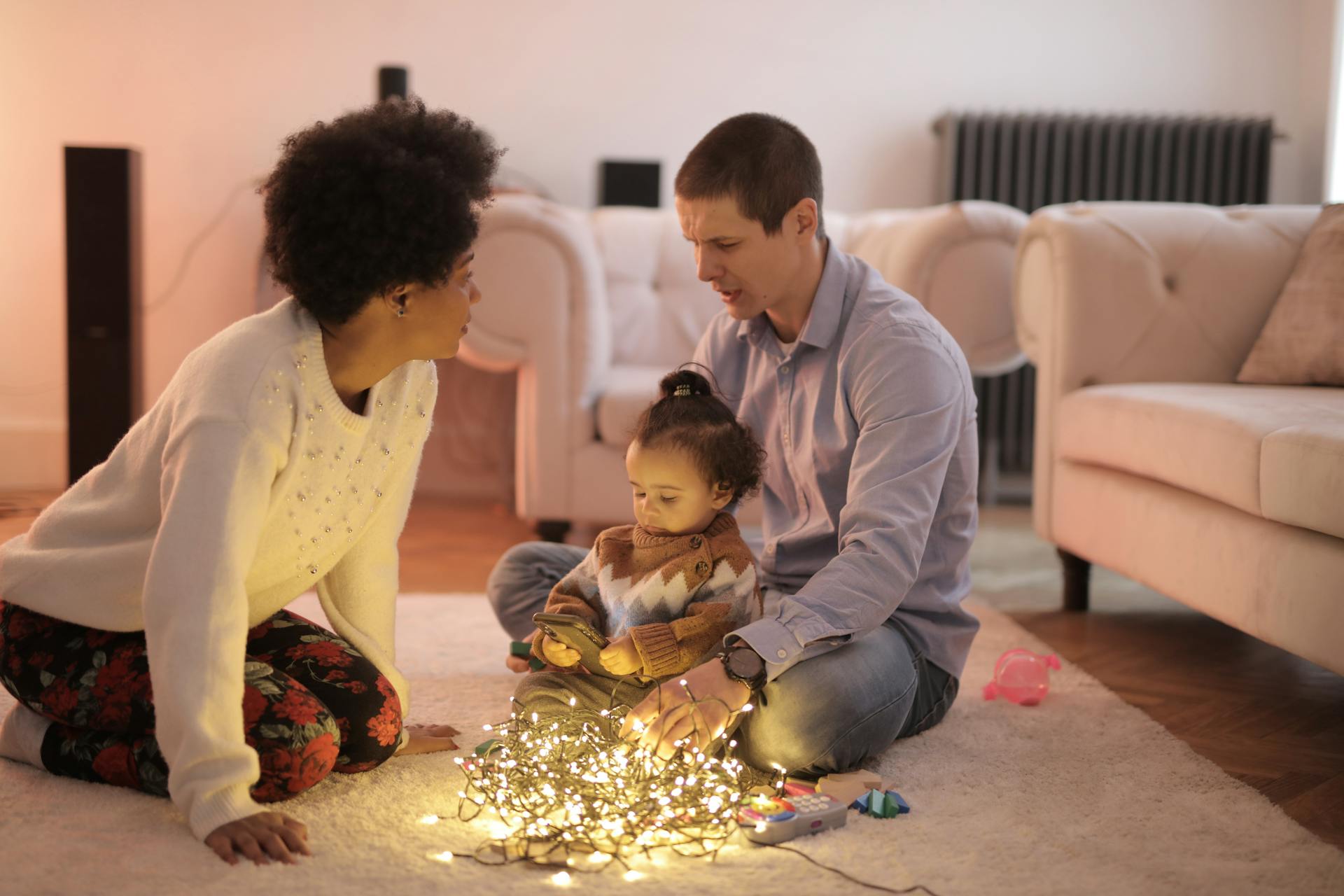
The Modern Parent-Child Communication Crisis
"How was school?" "Fine." "What did you learn?" "Nothing." "Anything interesting happen?" "No."
This conversation repeats daily in millions of homes. Parents desperately want connection with their children. Children retreat into monosyllabic responses, phones, and bedrooms.
We're not aware of a single large, rigorously controlled study that has tracked structured parent-child board gaming over many months and measured its effect on communication quality, conversation frequency, and relationship satisfaction. What follows instead draws on general family-communication research, child development theory, and the widely echoed experience of parents and family therapists who use games deliberately to open up conversation with their children. Where we describe specific patterns below, treat them as commonly observed tendencies rather than precise, checkable statistics—and be sceptical of any article on this topic (including earlier versions of this one) that cites a specific percentage improvement without a traceable source.
This piece explains how and why gaming plausibly facilitates communication, and offers practical guidance for parents seeking stronger connections with their children.
The Communication Barriers Gaming Overcomes
Barrier 1: The Interview Dynamic
Most parent-child conversations follow interview format: Parent asks questions, child provides minimal answers, conversation dies.
This dynamic fails because:
- It positions parent as interrogator, child as witness
- It focuses on extracting information rather than sharing experience
- It creates performance pressure (child must have "interesting" answers)
- It's boring for both parties
Board games dissolve this dynamic by:
- Creating shared activity (focus on game, not interrogation)
- Providing natural conversation starters (moves, strategies, outcomes)
- Eliminating performance pressure (conversation flows from gameplay)
- Being genuinely engaging (both parties want to be there)
Family therapists and educators who use games this way commonly describe the same pattern: not parent asking questions and child answering, but genuine back-and-forth emerging from shared experience.
Barrier 2: The Digital Distraction
Screens fragment attention. Parents attempt conversation whilst checking phones. Children respond whilst scrolling social media. Nobody is fully present.
A gaming session, by its nature, tends to require phones away and full attention—which is a large part of why it can transform communication quality even when nothing else about the interaction changes.
Many parents who commit to phone-free gaming as a house rule describe it as some of the most focused family time in their week, and report that the habit spreads into other family activities once established. That's a widely reported pattern rather than a measured statistic.
Barrier 3: The Energy Imbalance
After work, parents are exhausted. After school, children are overstimulated. These depleted states don't foster quality conversation.
Games provided what psychologists call "third thing" communication—talking about something external (the game) rather than directly about feelings or experiences. This indirect communication feels less demanding whilst often revealing more.
Parents and educators who use games this way often notice children discussing strategic mistakes they've made in a game, then naturally transitioning to discussing real mistakes at school or with friends—the game providing a safe entry point to a more vulnerable topic.
The Communication Mechanisms: How Gaming Creates Connection
Mechanism 1: Shared Mental Models
Games create shared language and references. A family playing Ticket to Ride develops shorthand: "That was very Baltic Railroad" (referring to a bold risky play from past game).
These shared references provide communication shortcuts and inside jokes strengthening family bonds.
Families who game regularly commonly develop:
- Game-specific vocabulary entering daily conversation
- Metaphors from gameplay applied to life situations
- Callbacks to memorable gaming moments
- Family narratives built around gaming experiences
Plenty of parents will tell you a version of the same story: a child who starts saying something like "I need to think strategically" when facing an unrelated challenge, borrowing the phrase directly from game discussions at home.
Mechanism 2: Leveled Playing Field
In normal life, parents have authority and knowledge advantages. Children operate from subordinate positions.
Games level this field. An 11-year-old can beat their parent at Azul through superior pattern recognition. That role reversal creates mutual respect.
When children teach parents strategies, the power dynamic visibly shifts—parents start listening to children as equals, sometimes as superiors, and that mutual respect plausibly carries beyond the game table. Many parents describe specific gaming moments that revealed capabilities in their child they hadn't fully recognised before.
Mechanism 3: Low-Stakes Vulnerability
Discussing feelings directly feels risky. Gaming discussions feel safe because they're "just about games."
But game discussions naturally touch on:
- Frustration: "I'm so frustrated when my plans don't work"
- Resilience: "I'm getting better at handling losses"
- Competition: "I really wanted to win and I'm disappointed I didn't"
- Achievement: "I'm proud of that strategy I developed"
These seemingly game-focused conversations are actually emotional processing with parent present and supportive.
Children who practice articulating emotions in gaming contexts sometimes transfer that vocabulary to other situations—it's not unusual to hear a child say something like "I feel frustrated, like when I lost at Splendor" to describe an unrelated school situation.
Mechanism 4: Natural Teaching Moments
Games create countless teaching opportunities that emerge organically:
- Strategic thinking ("What happens if you do X?")
- Probability assessment ("What's most likely to happen?")
- Emotional regulation ("You're frustrated; let's take a breath")
- Sportsmanship ("Congratulate the winner genuinely")
These lessons feel natural, not lecturing, because they connect directly to immediate experience.
Parents who game with their children often find themselves teaching constantly during sessions—but it tends to feel like helping rather than lecturing, because children are receptive when they want to understand and improve at something they're actively engaged in.
Developmental Stages: How Communication May Change with Age
The way gaming affects communication plausibly differs by age, based on general child development patterns. We don't have a rigorous study isolating these age-specific effects for board gaming, so what follows is a reasonable synthesis rather than a set of measured findings.
Ages 7-9: Building Conversation Foundations
Typical Before Gaming: Conversations brief and concrete. Children described events factually without emotional content or reflection.
With Regular Gaming: Games provide conversation structures. Asking "What's your strategy?" gives children frameworks for explaining thinking.
Commonly Reported by Parents:
- Children explaining their thinking more clearly
- Children connecting game situations to school/life situations
- Easier bedtime conversations (using game discussions as bridges)
Example: Before: "How was school?" "Good." After gaming: "How was school?" "Remember how in Ticket to Ride I had to decide between two routes? That's like how today I had to choose between two science project topics..."
Ages 10-12: Deeper Topics Emerging
Typical Before Gaming: Children increasingly private, sharing less with parents, spending more time alone or with peers.
With Regular Gaming: Games can create contexts where deeper topics emerge naturally. Competitive losses lead to discussions about handling disappointment; strategy discussions lead to conversations about decision-making and consequences.
Commonly Reported by Parents:
- Children sharing feelings more openly
- Discussions about school challenges emerging from gaming
- Learning things about their child's social life they hadn't known
Example: During Splendor game, 11-year-old loses despite strong start: "I hate when I do everything right and still lose. Like when I studied really hard for maths test and still got B-. It feels so unfair."
This vulnerability emerged naturally from game context. Parent could validate feelings and discuss growth mindset without child feeling lectured.
Ages 13-14: Maintaining Connection Through Adolescence
Typical Before Gaming: Significant withdrawal. Teenagers increasingly resistant to family time, preferring peer interaction and independence.
During Gaming Study: Games provided acceptable family time. Teenagers could engage without feeling "childish" because games offered genuine strategic challenge.
Commonly Reported by Parents:
- Teenagers voluntarily requesting gaming sessions with a parent (notable given typical adolescent withdrawal from family time)
- A greater sense of being able to discuss difficult topics
- A subjective feeling of the relationship growing closer over time
Example: One parent described it this way: "My 14-year-old daughter played games with me willingly. During Azul, she casually mentioned stress about upcoming exams. That led to a 20-minute conversation about academic pressure and anxiety. She initiated it. That never happened before gaming sessions."
Conversation Content: What Families Tend to Discuss
We don't have a rigorously coded study analysing recordings of family gaming sessions to draw on here, so what follows is a general pattern many parents and family therapists describe, not a measured breakdown.
Topics that commonly come up during gaming sessions:
- Game strategy — the dominant topic, but not trivial: talking through strategy demonstrates thinking processes and provides scaffolding for deeper conversation
- School experiences — academic challenges, social dynamics, teacher interactions that might not otherwise come up
- Feelings and emotions — frustration, pride, disappointment, joy, articulated more freely than in direct conversation
- Family dynamics — sibling relationships, family memories, scheduling negotiations emerging naturally
- Current events and media, and future aspirations — broader conversation that a shared activity tends to open up
Parents who compare gaming sessions to more passive family activities (film nights) or activities dominated by physical performance (sports) often say gaming conversation feels different—more emotionally open, less one-directional. That's a commonly reported impression rather than a measured comparison.
Practical Implementation: Strategies Parents and Family Therapists Recommend
Drawing on general family-communication practice rather than a specific study, here are strategies commonly recommended for maximising communication benefits.
Strategy 1: Choose Games Carefully
Communication-Friendly Games:
- Appropriate complexity (challenging but teachable)
- 30-60 minute duration (long enough for conversation to develop, short enough to maintain focus)
- Meaningful decisions (creating natural teaching moments)
- Accessible themes (providing common ground across ages)
Recommended Games:
- Ticket to Ride: Perfect complexity level, natural discussion points, accessible theme
- Azul: Pattern recognition creates teaching moments, manageable complexity
- Splendor: Resource management leads to decision-making discussions
- Kingdomino: Simple enough for young children, engaging enough for parents
Less Effective:
- Too complex games (rules dominate, leaving no space for conversation)
- Too simple games (boring for parents, minimal discussion opportunities)
- Long games (fatigue reduces communication quality after 90 minutes)
Strategy 2: Facilitate, Don't Dominate
Effective Parent Facilitation:
- Ask open questions: "What are you thinking?" not "Are you going to take that card?"
- Celebrate thinking, not just winning: "That was clever strategy" regardless of outcome
- Share your thinking: "I'm torn between two moves..." models decision-making
- Connect to life: "This reminds me of when you had to choose..." builds bridges
- Manage emotions supportively: "I see you're frustrated; let's breathe" validates feelings
Ineffective Approaches:
- Lecturing about strategy (kills enjoyment)
- Playing to lose obviously (patronizing, removes genuine competition)
- Dominating conversation (children withdraw)
- Using games to force specific conversations (destroys natural flow)
Strategy 3: Protect the Space
Critical Environmental Factors:
- Phones away: Non-negotiable for both parents and children
- TV off: Background noise fragments attention
- Consistent timing: Regular schedule makes gaming expected ritual, not special event
- Comfortable setting: Physical comfort matters for sustained engagement
- Snacks available: Hunger disrupts quality interaction
Strategy 4: Listen More Than Talk
Parents often miss communication opportunities by talking too much.
Listening Indicators:
- Children often initiate the more substantive parts of conversation during gaming sessions, when given room to
- Parents who ask questions and listen tend to report better communication outcomes than parents who lecture
- Silence is okay—don't fill every gap with talk
Family therapists who use this approach often make the same observation: the best communication tends to emerge when parents create space and let children fill it, rather than talking constantly and missing a child's attempt to open up.
Strategy 5: Follow-Up Beyond Gaming
Communication benefits extend beyond gaming sessions when parents reference gaming conversations afterward.
Effective Follow-Up:
- "Remember when we discussed strategic thinking during Ticket to Ride? How are you applying that to your project?"
- "You mentioned feeling frustrated like when you lost at Azul. Is that how you're feeling about the maths test?"
These callbacks show parents were listening and care about child's experiences.
Long-Term Outcomes: What Families Who Stick With It Describe
Families who keep up regular gaming over many months commonly describe a similar arc, even without a formal study tracking it:
Early on: Initial resistance fading, communication patterns establishing, shared language developing
A few months in: Vulnerable topics emerging naturally, children initiating conversations, parents reporting feeling closer to their child
Longer term: The gaming communication style transferring to other contexts, families expanding phone-free time voluntarily, sibling relationships improving through shared gaming
Many families who reach this point say they keep gaming going well beyond any initial trial period, and describe it as essential family time rather than an occasional activity. That's a consistent theme in what families report, not a tracked outcome with a specific retention rate.
Final Thoughts: Gaming as Communication Catalyst
Modern family life fragments attention and atomizes experience. Everyone occupies same physical space whilst psychologically separated by screens and schedules.
What's described here suggests that something as simple as playing strategic board games together can reconnect parents and children meaningfully.
The mechanism isn't mysterious: Games create shared experiences providing natural conversation contexts where both parties are genuinely present, engaged, and equal.
The pattern—more meaningful conversation, a wider range of topics, a closer-feeling relationship—matches what effective parents have intuitively known: playing together matters. Treat it as a well-supported hypothesis worth trying, not a proven formula with guaranteed numbers attached.
Not just for children's development (though that's real). Not just for entertainment (though that happens).
For connection. For communication. For relationship.
Start with one game. Play Tuesday evenings. Phones away. Full presence.
Ask questions. Listen carefully. Share your thinking. Connect game moments to life moments.
Be patient. First sessions may feel awkward. Persist.
Many parents who try this find that conversation flows more easily after a few weeks, and that children start sharing things they wouldn't have mentioned before. Over months, it can settle into communication patterns that serve the relationship for years.
That's worth an hour of Ticket to Ride on Tuesday.
Now try it.
Your relationship with your child will thank you.