Most parents buying a board game for family night want more than an hour of noise around the table. They want their children to leave slightly sharper than they arrived - better at weighing options, reading people, or handling a setback. The trouble is that "board game" covers two very different experiences. Some games are almost entirely chance. Others put a real decision in front of you every single turn.
Decision making board games are the second kind. They do not guarantee wisdom, and no single game session rewires a brain. But games that consistently ask players to choose, under pressure, with incomplete information, give players repeated practice at exactly the kind of judgement adult life demands. This piece explains the difference, shows where popular games sit on that spectrum, and looks honestly at what these games can and cannot claim to teach.
TL;DR
- "Decision density" is the real measure of a strategy game, not theme or box size - it is how often a turn requires a genuine choice rather than a chance outcome.
- Pure luck games like Snakes and Ladders offer no transferable judgement practice; games like Catan, Power Grid, and Smoothie Wars force tradeoffs under uncertainty almost every turn.
- The specific skills at work are tradeoff evaluation, reading other players, delayed gratification, and risk assessment - each has a clear in-game example.
- None of this is a substitute for formal education, but repeated, low-stakes practice at weighing options appears to build confidence and pattern recognition over time.
Decision-dense versus luck-dense: what is the actual difference
Picture Snakes and Ladders. You roll a die, you move the number shown, and a ladder or a snake decides your fate. There is no point in the game where a player considers two options and picks one. Every turn is identical: roll, move, wait. It is a fine early-years game for teaching turn-taking and counting, but it offers nothing in the way of judgement practice, because there is no judgement to practise.
Now picture Catan. Each turn, a player might choose whether to trade wheat for ore, whether to build a settlement that blocks an opponent's expansion, or whether to hold resources back in case a robber move takes them anyway. Every choice has a cost and an upside, and the "right" answer depends on what everyone else at the table is doing. That is a decision-dense game.
Power Grid pushes this further. Players bid for power plants, buy resources in a shared market where prices rise as they are bought, and choose which cities to connect - all while watching rivals do the same with limited capital. There is no dice roll softening a bad call. Every turn is a live tradeoff.
Smoothie Wars sits firmly in the decision-dense camp too. Each day of the imaginary week, players choose where to sell, how to price against rivals already at that location, and whether to bluff about their plans or their remaining cash. There is no random event card overriding a good plan. The game rewards reading the table and adjusting, turn after turn.
The lesson is not "avoid luck entirely." A little randomness keeps games fresh and stops the strongest player from winning by rote. The lesson is that if a game's outcome is decided mostly by the dice, no amount of practice will make a player better at it - and no amount of playing it will build judgement that carries into a classroom, a budget, or a negotiation.
The cognitive skills actually being practised
Weighing tradeoffs under uncertainty
In Power Grid, a player deciding whether to bid on a power plant does not know what the other bidders will do next round. In Smoothie Wars, a player deciding whether to undercut a rival's smoothie price does not know if that rival will retaliate the next day or quietly relocate. Both situations force a player to compare an uncertain gain against a certain cost - the same basic structure as deciding whether to accept a lower-paid job with better hours, or whether to spend savings now versus later.
Reading opponents
Games with bluffing or hidden information - poker being the extreme example, Smoothie Wars a family-friendly one - require players to notice patterns in behaviour: hesitation, overconfidence, a sudden change in strategy. A child who has spent a dozen sessions trying to work out whether a sibling is bluffing about their cash reserves is getting low-stakes practice at reading people, a skill with obvious use well beyond the game table.
Delayed gratification
Catan players often face a choice between grabbing a small resource now or saving for a bigger settlement later. Smoothie Wars asks something similar: take a smaller, safer profit today, or hold back stock for a location that might pay off better in two days' time, with the risk that a rival gets there first. This is the same muscle involved in choosing to save rather than spend, or to study rather than relax the night before an exam.
Risk assessment
Any game with an auction or an investment mechanic - Power Grid again, or the stock-market elements in some economic games - asks players to size a risk against their current position. Someone with a healthy cash buffer can afford a gamble that would sink a player running close to empty. Smoothie Wars mirrors this directly: a player low on funds who overextends on a risky location can be knocked out of contention within a turn or two, exactly as an under-capitalised business can be by one bad quarter.
Decision density across well-known games
| Game | Decision density | Why |
|---|---|---|
| Snakes and Ladders | Low | Outcome is entirely dice-driven; no choices exist |
| Ludo | Low | Movement is forced by the dice roll with minimal choice |
| Monopoly | Medium | Property and trade choices matter, but dice movement and chance cards limit control |
| Catan | High | Trading, building, and blocking decisions every turn |
| Power Grid | High | Auction, resource-buying, and network decisions with no luck buffer |
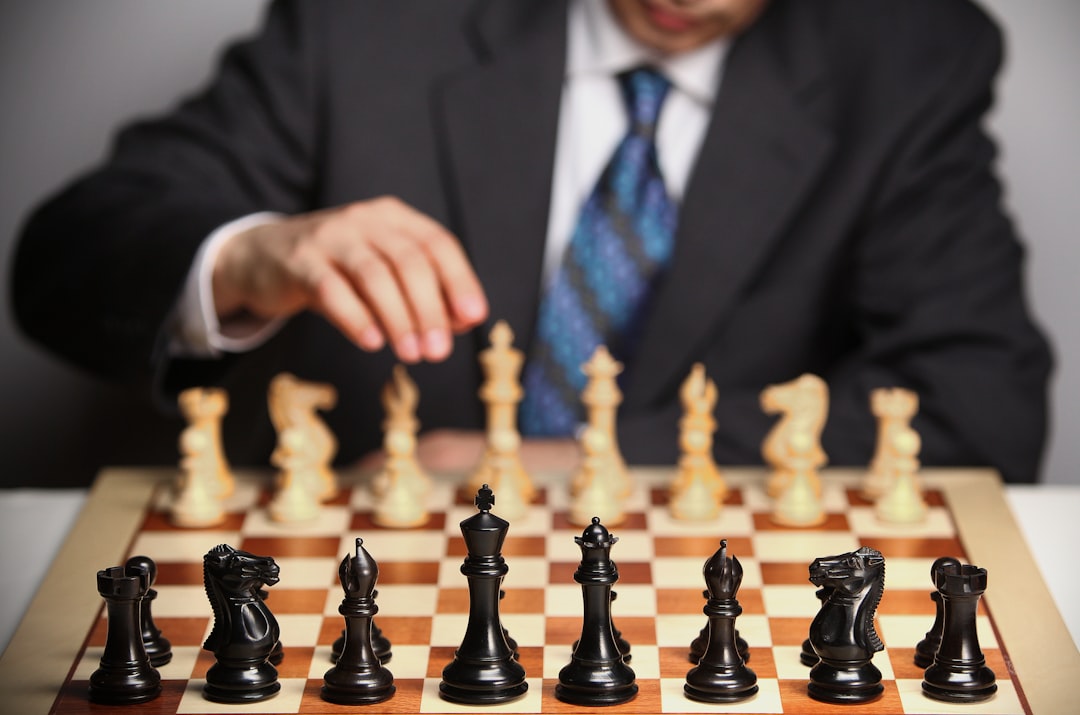
| Chess | High | Every move is a deliberate choice with full information |
| Smoothie Wars | High | Pricing, location, and bluffing decisions each in-game day |
| Poker | High | Betting and bluffing decisions under incomplete information |
We don't have a verified, named teacher account to quote directly here, so we won't invent one. But the kind of shift teachers who use trading games in the classroom often describe informally is a group of children moving from grabbing to negotiating over a term of regular play, and starting to explain their reasoning out loud before making a trade. That's not proof of anything scientific, but it lines up with the general pattern decision-dense games are designed to encourage.
A similar pattern showed up in one family's living room over a school summer. A father in Hampshire described his eleven-year-old daughter's first few sessions of a location-and-pricing game as impulsive - she picked whichever spot looked busiest and rarely adjusted. By the sixth or seventh session, she was tracking which locations her brother favoured and deliberately avoiding direct competition with him, even when it meant a smaller guaranteed profit. That is an anecdote, not a study, but it is exactly the kind of behavioural shift decision-dense games are designed to encourage: noticing a pattern, adjusting a plan, and accepting a smaller sure thing over a riskier fight.
Do board games improve decision making?
The honest answer is that they can provide repeated, low-stakes practice at the mechanics of decision-making - weighing costs, reading signals, tolerating uncertainty - without claiming to be a substitute for lived experience or formal teaching. Psychologists studying decision-making broadly point to repeated practice with feedback as one of the more reliable ways people sharpen judgement, and a well-designed game supplies exactly that loop in miniature: choose, see the result, choose again next turn. The British Psychological Society publishes ongoing research into how structured practice environments shape judgement, and games with genuine choice architecture fit that description far better than games of pure chance.
What skills do strategy games teach?
Beyond the four covered above, decision-dense games often build negotiation (trading in Catan), basic probability intuition (calculating the odds of a die roll or a card draw), and composure under pressure (staying calm when a plan falls apart mid-game). The underlying discipline connecting all of these is close to what economists and mathematicians call game theory - reasoning about outcomes when your result depends on what someone else chooses to do, not just on your own move.
How can I tell if a game will build these skills before buying it?
Look at the turn structure. If a turn is "roll a die, move a piece," decision density is low regardless of theme or price. If a turn requires choosing between at least two meaningfully different actions with different costs and risks, decision density is high. Reading a game's rulebook summary or a short review before buying is usually enough to tell which category it falls into.
🔑 Key Takeaways
FAQs
Are decision making board games suitable for children under ten? Many are, provided the rules are simplified appropriately. Look for games with clear, limited choices per turn rather than open-ended complexity, so younger players can grasp the tradeoffs without feeling overwhelmed.
Is Monopoly a good decision-dense game? It sits in the middle. Property and negotiation choices matter, but dice-driven movement and Chance cards remove control at key moments, which dilutes the decision-making practice compared with games like Catan or Power Grid.
Do decision-dense games take longer to learn than luck-based ones? Usually, yes. Games with real choices tend to have a steeper first-session learning curve, though most families find the rules click by the second play.
Can decision-dense games replace teaching financial literacy? No. They are a supplement, not a substitute. They give practice at the shape of financial decisions - tradeoffs, risk, delayed reward - but explicit teaching and real experience still matter far more.
What is the best number of players for practising these skills? More players generally means more opponents to read and more competing plans to react to, which increases the decision load. Games built for six to eight players, such as Smoothie Wars, tend to offer denser practice than two-player-only formats.
For more on what separates a genuinely engaging strategy game from one that just occupies time, see our piece on what makes a board game truly interactive, and for a closer look at how economic mechanics hold up under scrutiny, read economic board games tested for teaching value. Families building a broader collection of judgement-focused games may also want our resource management games guide and our roundup of entrepreneur board games and business skills.
If you are looking for a game that puts a genuine decision in front of every player on every turn - no dice softening the blow, no chance card rescuing a bad plan - Smoothie Wars was built around exactly that principle. Up to eight players compete over an imaginary week of smoothie sales, each turn demanding a real read on pricing, location, and rivals' next move. It is a strategy game in the fullest sense, and a decision-dense one in every sense that matters.