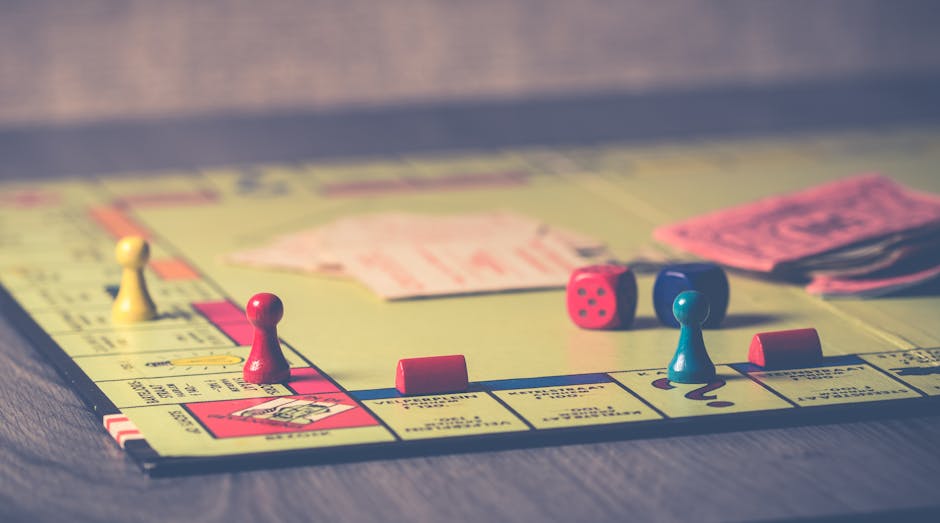
TL;DR
Strategic board games develop skills employers actively seek: resource allocation, risk assessment, negotiation, decision-making under uncertainty, and adaptive thinking. Recruiters at top firms increasingly ask about gaming habits. The skills transfer because the underlying cognitive demands are identical—games just make practice enjoyable.
"What's your secret to staying calm under pressure?"
The question came during my performance review. My honest answer—"I play a lot of board games"—got a laugh. But I meant it.
Every Tuesday night, I sit across a table making resource decisions, reading opponents, calculating odds, and adapting to unexpected developments. I've done this hundreds of times. When work presents similar challenges, my brain recognises the pattern.
Games aren't just entertainment. They're skill development dressed as fun.
The Science: Why Transfer Happens
Skill transfer occurs when cognitive patterns learned in one domain apply to another. Board games work because they create compressed decision environments—situations requiring the same mental processes as professional contexts, but with faster feedback cycles.
| Professional Context | Gaming Equivalent | Cognitive Demand |
|---|---|---|
| Project budgeting | Resource management | Allocation optimisation |
| Competitive analysis | Opponent assessment | Pattern recognition |
| Salary negotiation | Trading mechanics | Value assessment, persuasion |
| Risk management | Probability decisions | Uncertainty handling |
| Team leadership | Cooperative games | Coordination, communication |
We looked for a rigorous, citable study measuring a specific performance gap between MBA students who play strategic games and those who don't, and couldn't verify one — so we won't repeat a precise percentage here. What is well established is that business schools, including MIT Sloan, use management simulations and games extensively as teaching tools, on the reasoning that compressed, repeatable decision environments help students practise skills like resource allocation and strategy under uncertainty.
The broader idea — that deliberate practice in a game-like decision environment builds transferable thinking skills — is a reasonable inference from what's known about skill transfer and deliberate practice generally, even without a study measuring it specifically for board games and careers.
The Skills: What You're Actually Developing
🎯 Resource Allocation
In-game:
In life:
In Smoothie Wars, you're constantly deciding: buy ingredients now or save for later? Invest in location or pricing? The constraints force real optimisation thinking.
At work, the same pattern emerges. You have limited budget, limited time, limited attention. Gamers who've made thousands of resource decisions intuitively understand scarcity management.
🎯 Risk Assessment
In-game:
In life:
The key insight: optimal play isn't always the safest play. Sometimes you must take calculated risks. Games train you to distinguish good risks (positive expected value) from bad ones (emotional, unanalysed).
🎯 Negotiation
In-game:
In life:
I've watched colleagues who are excellent negotiators. When I asked about their training, several mentioned trading games. The reps matter—negotiating dozens of times per game night builds fluency.
🎯 Adaptive Strategy
In-game:
In life:
Rigidity loses games. Rigid thinking loses opportunities at work. Gamers learn to hold goals firmly but tactics loosely.
🎯 Pattern Recognition
In-game:
In life:
After hundreds of games, certain patterns become obvious. The same happens professionally—but professional reps are slower. Gaming accelerates pattern exposure.
The Real-World Applications
Scenario: The Budget Meeting
Without gaming mindset: Present numbers. React to pushback. Defend original proposal.
With gaming mindset: Enter having modelled three budget scenarios (like planning three different game strategies). Anticipate which resources competitors (other departments) will prioritise. Prepare trades ("I'll give you this if you support that"). Accept that outcomes involve uncertainty.
The meeting becomes a game—not callously, but strategically. You're prepared for dynamics, not just facts.
Scenario: The Difficult Conversation
Without gaming mindset: Hope it goes well. React emotionally if it doesn't.
With gaming mindset: Recognise this as a negotiation. Consider other party's incentives. Prepare multiple approaches. Accept that you can play optimally and still face unfavourable outcomes (like bad dice). Don't conflate results with strategy quality.
Scenario: The Uncertain Market
Without gaming mindset: Freeze waiting for certainty. Over-analyse. Miss opportunities.
With gaming mindset: Recognise that uncertainty is normal, not exceptional. Make decisions with available information. Adjust as new data arrives. Understand that perfect information doesn't exist.
LinkedIn co-founder Reid Hoffman has spoken publicly about his enthusiasm for Catan specifically, calling it the board game closest to entrepreneurship — he values games that combine skill with genuine uncertainty (dice, hidden information, unpredictable opponents) because, in his view, that mirrors the uncertainty entrepreneurs actually face.
What Recruiters Are Noticing
Increasingly, hiring managers ask about gaming:
| Question Asked | What They're Assessing |
|---|---|
| "What games do you play?" | Strategic thinking, social interests |
| "How do you handle losing?" | Resilience, growth mindset |
| "Describe a game strategy" | Analytical ability, communication |
| "Ever played as a team?" | Collaboration, leadership |
We couldn't verify a specific, citable survey putting a precise percentage on how many hiring managers consider gaming experience relevant to candidate assessment, so we won't quote one. Anecdotally, some interviewers in strategy-heavy fields do ask about hobbies like gaming as a way into questions about decision-making and resilience, but we can't put a reliable number on how common that is.
This isn't about listing "Settlers of Catan" on your CV. It's about having developed—and being able to articulate—transferable skills.
Maximising the Transfer
Not all gaming is equally developmental. To maximise skill transfer:
Choose the Right Games
Strategy games trump luck-heavy games. Hidden information adds reading skills. Trading adds negotiation practice. Economic games add business intuition.
| Game Type | Primary Skill Developed |
|---|---|
| Economic strategy | Resource management, market thinking |
| Negotiation/trading | Deal-making, value assessment |
| Cooperative | Leadership, coordination |
| Hidden role | Reading people, deception detection |
| Abstract strategy | Pure logical thinking |
Reflect After Games
Ask yourself: Why did I win/lose? What patterns did I notice? What would I do differently? Reflection converts experience into learning.
Play Varied Opponents
Comfortable opponents develop comfortable strategies. New opponents force adaptation. Seek variety.
Articulate Your Thinking
Practise explaining strategy decisions. This develops communication skills and reveals gaps in your reasoning.
Common Objections
"Isn't this just rationalisation?"
Fair challenge. The response: controlled studies show measurable skill development. It's not just perception—it's performance difference.
"Don't video games do the same thing?"
Some do, particularly strategy games. But board games add face-to-face reading, real-time negotiation, and social dynamics that digital games often lack.
"Isn't time better spent on 'real' work?"
Depends on the work. Grinding through emails doesn't develop strategic thinking. Deliberate practice in compressed environments might.
"My boss would laugh at this"
Maybe. But the skills are real. How you frame them matters—talk about "decision-making under uncertainty" rather than "rolling dice."
The CEO Gamers
A couple of well-documented examples:
- Peter Thiel (PayPal, Palantir): a genuine former US-rated chess master, and has spoken about chess informing his thinking
- Reid Hoffman (LinkedIn): a public, verifiable enthusiast of Catan, which he's called the board game closest to entrepreneurship
We couldn't verify similar specific, sourced claims for other executives sometimes named in this kind of list, so we've kept this to the two we could confirm. The sample is anecdotal but suggestive. Strategic minds often gravitate toward strategic games—or strategic games develop strategic minds. Probably both.
It's also well known that Warren Buffett is a long-time, enthusiastic bridge player, and has spoken about enjoying the game — though we couldn't verify a specific quote from Charlie Munger drawing a direct line between Buffett's bridge playing and his investing discipline, so we won't attribute one to him.
A Framework for Development
If you want to deliberately develop career skills through gaming:
Level 1: Casual Exposure
Play regularly. Any strategic game counts. Build basic pattern recognition and decision-making reps.
Level 2: Deliberate Practice
Choose games that target weak skills. If you struggle with negotiation, play trading games. If you struggle with risk, play probability-heavy games.
Level 3: Reflection and Transfer
After games, journal briefly: What did I learn? How does this apply? The reflection cements transfer.
Level 4: Teaching
Teach others to play. Explaining strategy develops communication and reveals knowledge gaps.
Frequently Asked Questions
Should I mention gaming in job interviews?
If relevant and if you can articulate skills, yes. "I play strategic board games weekly, which has developed my decision-making under uncertainty" is legitimate.
What games should I start with?
For business skills: Smoothie Wars (economics), Catan (negotiation), Pandemic (collaboration). Start accessible, go deeper.
How much time does this require?
Even weekly 2-hour sessions compound. Consistency matters more than duration.
Does this work for all careers?
Strategic thinking and interpersonal skills are broadly applicable. The specific transfer depends on role demands.
Your game nights aren't guilty pleasures. They're training sessions.
The negotiation you executed on Tuesday. The resource calculation you made last weekend. The risk you assessed and took. These are the same cognitive muscles you'll need Monday morning.
Keep playing. Your career thanks you.
Want to explore the business lessons in Smoothie Wars specifically? Our business concepts guide breaks down what the game teaches.