TL;DR
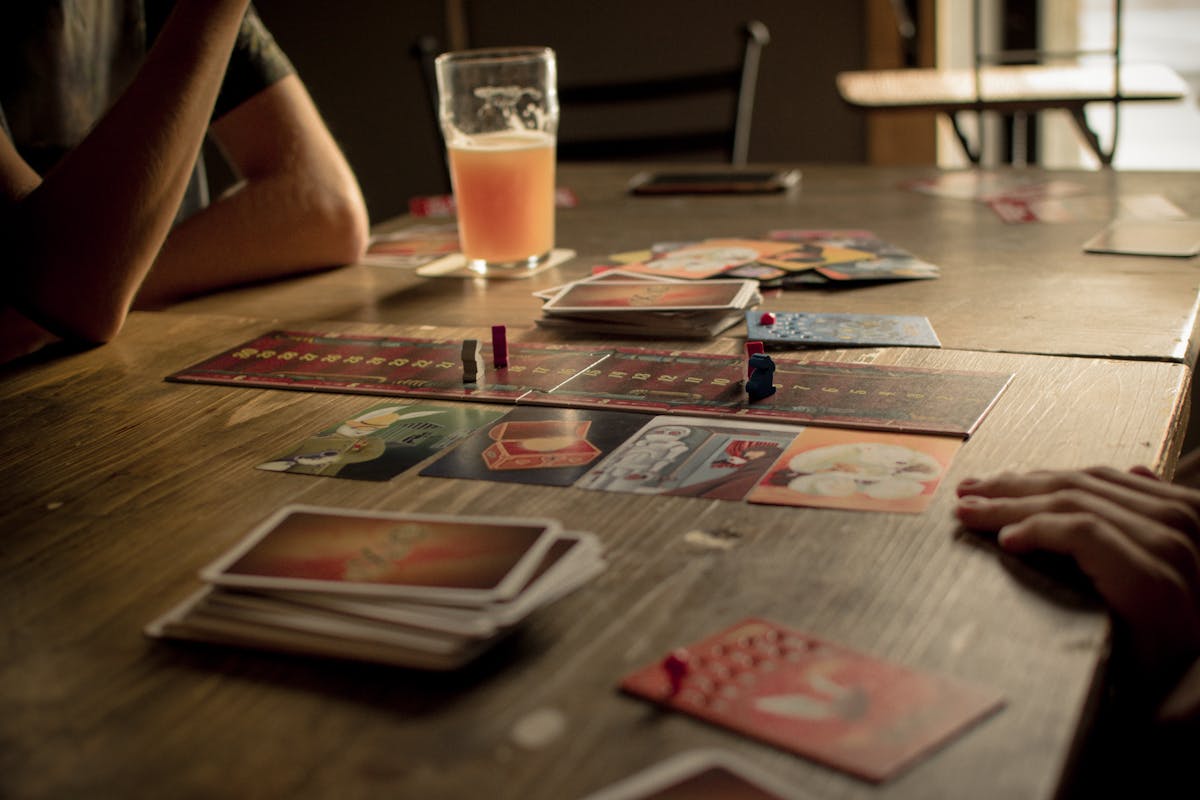
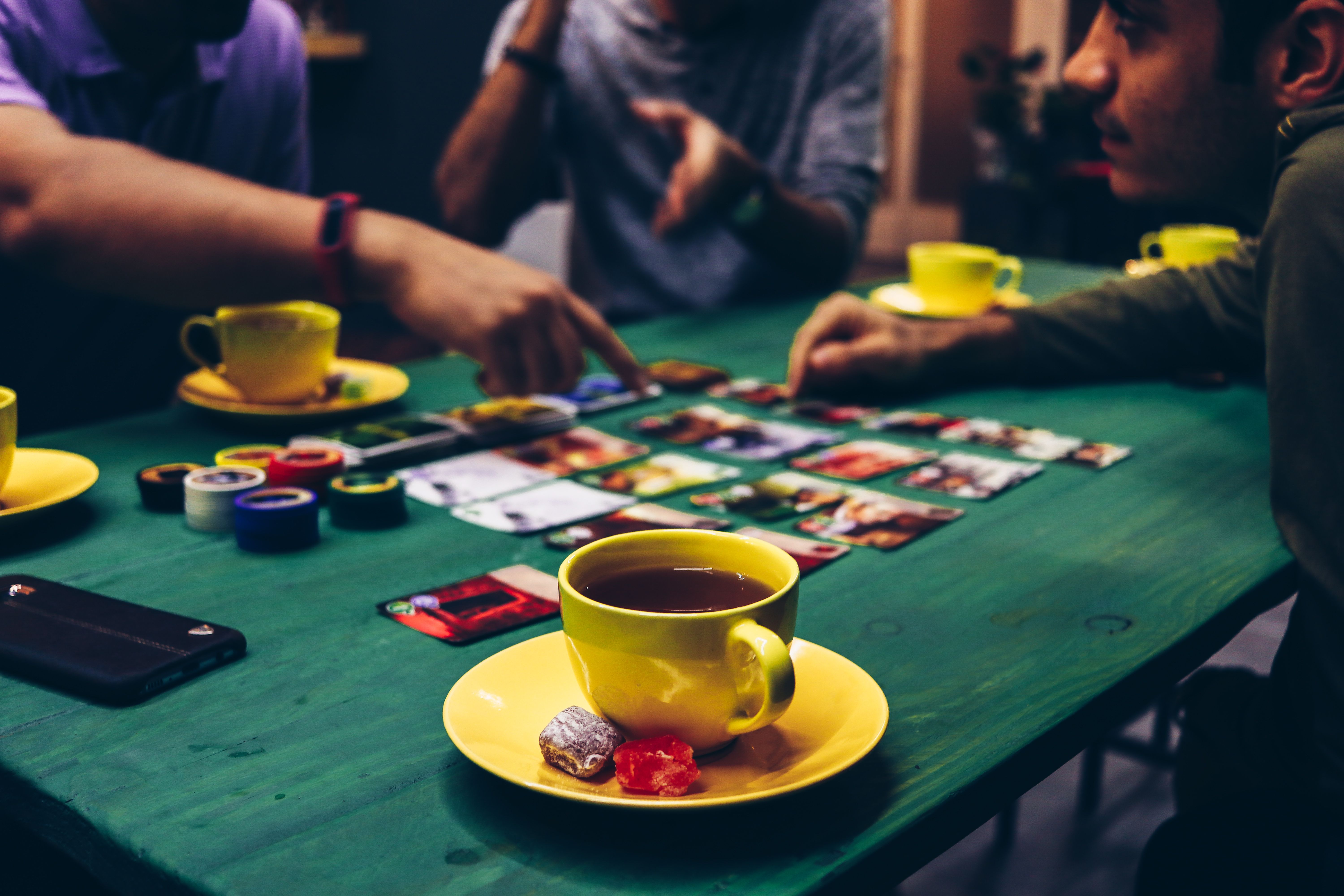
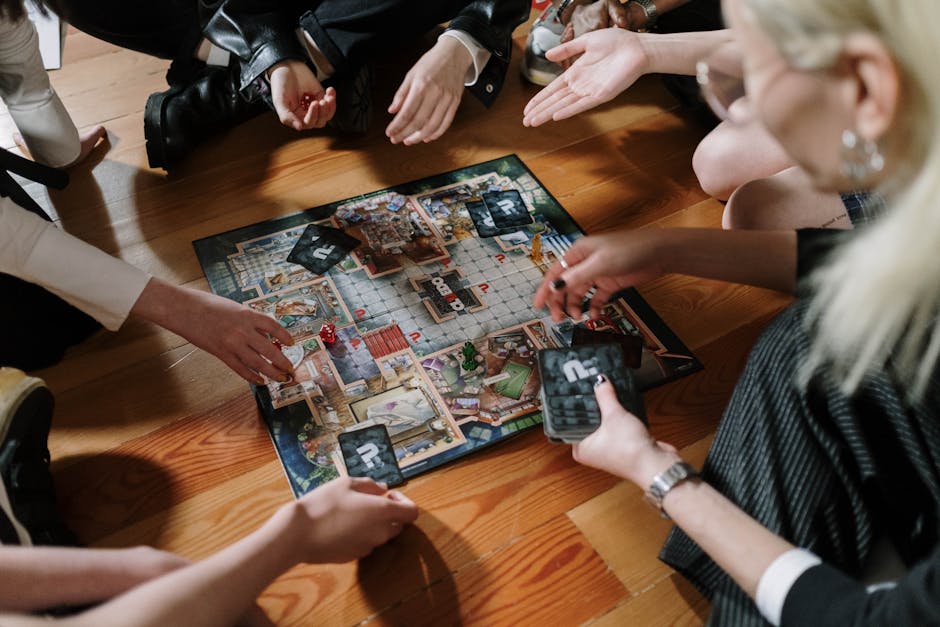
Five players is the sweet spot nobody talks about — large enough for genuine coalition dynamics and player interactions, small enough that everyone stays involved every single turn. The games that shine here: Smoothie Wars (competitive economics, 3–8 players), Catan (classic but genuinely excellent at five with the expansion), Ticket to Ride (works beautifully, map fills up nicely), Sushi Go Party (quick, chaotic, perfect warm-up), and Root (asymmetric strategy masterpiece). Pick based on how long you want to play and how cutthroat your group is.
Five is an awkward number. Ask anyone who's ever tried to book a restaurant table for it.
Board games aren't usually any different. Most strategy games say they support "2–4 players," which really means "2–4 players, but honestly 3 is ideal." Party games say "4–10 players," which means "the more the messier." Five sits in the gap: too many for a tight two-player-style battle, too few for the chaotic energy of a big group.
Here's the thing, though — five is actually brilliant, once you find the right games. With five players, alliances form and fracture. Runaway leaders get ganged up on. Someone always knows someone else's plan. The table politics are richer than any four-player game, and the analysis paralysis of six-plus players is nowhere to be seen.
The problem is knowing which games unlock that potential. So we've done the testing. Below are 14 games that genuinely work at five — including a few surprises and one game that was arguably designed with this group size in mind.
What Makes a Great 5-Player Board Game?
Before the list, it's worth knowing what to look for — because not all games that say they support five players actually deliver.
Turn downtime is the main culprit. In a poorly designed five-player game, you spend 20 minutes watching others take their turns for every 4 minutes of actual play. Great five-player games keep turn resolution fast, give you information or decisions to process on others' turns, or have mechanics that involve everyone simultaneously.
The leader problem. At higher player counts, runaway leaders tend to dominate — once someone's ahead, the gap only widens. The best five-player games have natural catch-up mechanics, kingmaking opportunities, or competitive markets that self-correct.
Interaction density. Two-player games live or die on direct confrontation. Party games spread thin and rely on chaos. Five-player games need meaningful player interaction — trading, blocking, negotiating, competing for shared resources — without becoming a free-for-all.
With those criteria in mind, here's what actually works.
The 14 Best Board Games for 5 Players
1. Smoothie Wars (45–60 minutes, Ages 12+, 3–8 players)
Let's start here, because Smoothie Wars was built for exactly this sort of group. Five players competing as smoothie entrepreneurs on a tropical island creates the perfect tension: each player has enough space to build their own strategy, but the shared market means everyone's decisions ripple outward.
With five players, the ingredient market gets genuinely competitive. Locations fill up. Prices shift meaningfully. Bluffing about where you're heading becomes a real meta-game — "I'm definitely not going to the Marina" is often the surest sign that someone's going straight there.
Why it works at five: The market mechanics scale beautifully. More players means more price volatility, more opportunities to read opponents' buying patterns, and more negotiation around shared locations. The 45–60 minute play time means five turns each, which is enough to build a genuine strategy and adapt it mid-game.
Competitive edge: This is the one on this list where business-thinking adults will find themselves genuinely engaged. You're not just rolling dice — you're pricing products, managing cash flow, and reading competitors. A 2025 review by The Board Game Dad called Smoothie Wars "the best business education disguised as a family game," noting it worked especially well at "five or six players where the market really starts to breathe."
Price: £34 direct from smoothiewars.com or specialist retailers.
2. Catan (with 5–6 Player Extension) (75–90 minutes, Ages 10+, 5–6 players with expansion)
The elephant in the room. Catan is many people's first serious board game, and it's excellent — but you need the 5–6 player extension. The base game caps at four. With the extension, the board expands, the build phase after each player's turn allows everyone to stay somewhat active, and the trading dynamics become genuinely interesting.
Why it works at five: Trading is Catan's heart, and with five players, the negotiation is significantly more complex. More players competing for the same resource clusters creates genuine tension over placement. Someone's always got what you need, and they know it.
Honest note: Games can run long with five players who aren't familiar with the rules. If your group is new to Catan, budget 90–120 minutes your first time. Once everyone knows the mechanics, 75 minutes is realistic.
Price: £45 (base game) + £25 (5–6 player extension). Widely available in Waterstones, Smyths Toys, and online.
3. Ticket to Ride (60–75 minutes, Ages 8+, 2–5 players)
Ticket to Ride is one of the rare games where five players actually improves the experience. At two players, the map feels spacious and unchallenging. At five, the routes get contested, forcing smarter routing decisions and occasionally beautiful acts of spite.
Why it works at five: The route-claiming mechanic creates natural interaction without aggression — you're not directly attacking anyone, you're just claiming the route they needed first. This makes it ideal for mixed groups where some players prefer friendly competition over confrontation.
Pro tip: The Europe map is better than the USA map for five players — the tunnel mechanic adds variance that stops the game becoming too deterministic, and the longer routes reward strategic planning even under pressure.
Price: £35–45 depending on variant. Available almost everywhere.
4. Sushi Go Party! (20–30 minutes, Ages 8+, 2–8 players)
Your warm-up game. Sushi Go Party takes the card-drafting mechanic of the original Sushi Go and expands it with a modular menu system — you choose which cards to include each session from a larger set. Five players is genuinely its best player count: the draft moves quickly, the turn order stays tight enough to matter, and the chaos is fun rather than overwhelming.
Why it works at five: Card-drafting games need enough players that the "hand" of cards feels genuinely different by the time it cycles around. At three, you see every card. At eight, the hand is incomprehensible. Five is the sweet spot — enough players to make your passing decisions feel consequential, not enough to lose track.
As a session opener: Sushi Go Party takes 25 minutes, requires zero strategic commitment, and gets everyone at the table and laughing before you bring out the main event. Do it first.
Price: £20–25. Excellent value.
5. 7 Wonders (30–40 minutes, Ages 10+, 2–7 players)
7 Wonders is one of the genuine design achievements in modern board gaming — a civilisation-building game that plays in under 40 minutes regardless of player count. That's because everyone plays simultaneously: you draft a card, pass your hand, take an action. No waiting for five people to take their turns.
Why it works at five: Seven Wonders is essentially immune to player count problems, which makes it uniquely reliable. Five players adds exactly the right amount of civilisation diversity — you're always playing to your neighbours' weaknesses, and with five different wonders in play, the strategic interaction becomes pleasingly complex.
Who it's best for: Groups who want strategic depth without long play times. Also excellent as a first "proper" board game for people graduating from Ticket to Ride.
Price: £30–40. The Duel two-player version is different — make sure you're buying the standard version.
6. Wingspan (60–80 minutes, Ages 10+, 1–5 players)
Wingspan is stunning — both visually (the bird artwork is genuinely exceptional) and mechanically. You're building an engine of birds in three habitat rows, each generating resources and points in different ways. It's competitive in that everyone's racing toward the same point goals, but the interaction is indirect — you can't block another player's birds or steal their resources.
Why it works at five: The low-conflict nature of Wingspan makes it ideal for groups where some players find direct competition stressful. At five, the goal tracker and round-end objectives create competitive pressure without confrontation. There's also something satisfying about five completely different bird engines all doing different things.
Honest caveat: Setup is substantial, and the solo mode isn't relevant here. Allow 20 minutes for setup and rules explanation on a first play.
Price: £50–60. Worth every penny for groups who'll play it repeatedly.
7. Root (90–120 minutes, Ages 12+, 2–6 players)
Root is deliberately strange. Each player controls a completely different faction with asymmetric rules, different objectives, and different victory paths. The Marquise de Cat builds infrastructure and collects taxes. The Eyrie Dynasties fly around the board in programmed movements. The Woodland Alliance foments sympathy among the population. It makes no sense until it suddenly makes complete sense, and then it's extraordinary.
Why it works at five: Root at five is where the game's political complexity really flowers. Alliances shift. Someone always needs to slow down the leader. The interaction between different faction abilities creates emergent strategies that no rulebook could predict.
Who it's best for: Experienced gamers who are comfortable with a steep rules cliff. First-timers will spend 30 minutes confused and another 60 minutes fascinated. It's worth it.
Price: £55–65. There are also several expansions with additional factions — worth exploring once you know the base game.
8. Pandemic (45–60 minutes, Ages 8+, 2–4 players... or 5 with a twist)
A cooperative classic — you're not playing against each other but against the game, trying to cure four diseases before they overwhelm the world. Pandemic technically plays 2–4, but with five players you can run a "seat-warmer" variant where one player acts as the Operations Expert without a fixed role card, or use the On the Brink expansion which adds a fifth role.
Why it works at five: Cooperative games change character dramatically at higher player counts — more perspectives means better collective decisions, but also more "quarterbacking" (one dominant player telling everyone what to do). With a group that communicates well and shares decisions, five-player Pandemic is genuinely exciting.
Caveat: If your group has one dominant personality who struggles to let others make their own moves, cooperative games become frustrating. Know your group.
Price: £35–40 for the base game.
9. Codenames (15–20 minutes, Ages 10+, 4–8+ players)
Codenames is a party game that somehow rewards genuine intelligence. Two teams compete to identify their secret agents from a grid of words using one-word clues from their Spymaster. Five players means uneven teams (3 vs 2 or 2 vs 2 with one rotating Spymaster), but that asymmetry can actually work in the smaller team's favour if they're sharp.
Why it works at five: It's fast, it requires no setup beyond laying out cards, and it generates genuine moments of collective delight (and despair) when a clue lands perfectly or catastrophically. Brilliant as a post-dinner palate cleanser before the main event, or as a standalone when you want a lighter evening.
Best variant for five: Three-person team vs two-person team with the bigger team taking slightly harder clues. Or play teams of 2-2 and have the fifth player be a rotating observer who scores which team was closer on each round.
Price: £20–25.
10. Azul (30–45 minutes, Ages 8+, 2–4 players)
Azul is technically 2–4, but plays beautifully as a five-player game with the Summer Pavilion expansion, which extends the player count. The base mechanic — drafting tiles from a central pool to complete patterns on your personal board — scales elegantly. More players means the tile factory fills more frantically and your carefully planned draft gets disrupted more frequently.
Why it works at five: The pattern-completion mechanic rewards spatial reasoning and planning, but with five players taking tiles, the "I was going to take those blues" moment happens every single turn. It's a game that generates quiet, focused competition — perfect for groups where some players prefer thinking to talking.
Price: £30–35 (base game). The Summer Pavilion variant is worth getting directly if you're buying for five.
11. Splendor (30 minutes, Ages 10+, 2–4 players)
Splendor is a gem-trading engine-builder that plays in under 30 minutes and generates almost no downtime. You collect gem tokens, purchase development cards, and attract nobles — all building a more efficient gem-generating engine. At four players it's excellent. At five, there's no official support — but the game runs perfectly with a simple house rule: add one extra gem token of each colour to the supply.
Why it works at five with house rules: The gem economy tightens appropriately with the additional tokens, and five players brings enough competition for the face-up cards that every reservation decision matters. Turn time stays fast — Splendor is one of the few games where a complete turn can be under 10 seconds.
Price: £20–25.
12. Skull (20–30 minutes, Ages 10+, 3–6 players)
Skull is perhaps the purest bluffing game ever designed. Each player has four coasters — three flowers and one skull. You place coasters face-down, others add to stacks, then someone bids how many flowers they can flip without hitting a skull. It's part poker, part psychology, entirely brilliant.
Why it works at five: More players means more coasters, more uncertainty, more reads to make, and more catastrophic skull-flips. The bluffing dynamics at five are genuinely complex — you're not just reading one opponent but four. A master bluffer can control an entire table of five players with nothing but confident posture.
Price: £15–20. One of the best value games in existence.
13. The Mind (15–20 minutes, Ages 8+, 2–4 players)
The Mind is almost indescribable. Players have numbered cards in their hands. You must play them in ascending order across the table — without speaking, signalling, or communicating. You just stare at each other and try to feel when to play. It sounds like nonsense. It generates one of the most focused, oddly tense group experiences in board gaming.
Why it works at five: The Mind technically plays 2–4, but with five players it's even more interesting — more cards in play, longer runs before someone has to trust their instinct, more opportunities for near-simultaneous perfect plays that produce genuine group euphoria. Run the base game for 3–4 players and one observer who rotates in each level if you want to stick to rules.
Price: £10–15. Remarkable value.
14. Coup (15 minutes, Ages 10+, 2–6 players)
Coup is a deduction-bluffing game in the tradition of Skull but with a specific skill set: you're a government official with two secret role cards, and you can claim the ability of any character in the game — whether you have it or not. Call someone's bluff wrong and you lose influence. Lose both influence cards and you're out.
Why it works at five: Coup is a game about reading people, and with five players it becomes a genuinely complex social exercise. You have to track who's been challenged before, who habitually lies about which role, and who tends to overclaim the Captain (who lets you steal coins). Five players keeps the game fast — rounds rarely last longer than 15 minutes — whilst giving the social dynamics room to breathe.
Price: £10–15.
How to Choose: A Quick Decision Guide
| If you want... | Best pick at 5 |
|---|---|
| Genuine business strategy + economics | Smoothie Wars |
| A classic everyone knows | Catan + extension |
| Friendly competition, no confrontation | Ticket to Ride |
| Fast warm-up (under 30 min) | Sushi Go Party or Skull |
| Deep asymmetric strategy | Root |
| Bluffing and psychology | Skull, Coup, or The Mind |
| Cooperative challenge | Pandemic |
| Visual + spatial thinking | Azul or Wingspan |
What the Research Says About Group Size and Game Enjoyment
There's actually good data on this. A 2023 study published in the Journal of Leisure Research by Rogerson et al. found that tabletop gaming groups of 4–6 players reported the highest levels of social satisfaction and engagement, outscoring both smaller groups (2–3) and larger ones (7+). The sweet spot, the researchers noted, was "large enough for coalition dynamics and emergent social complexity, small enough for everyone to remain actively invested in each turn."
BoardGameGeek's annual survey of over 120,000 players consistently ranks five-player sessions among the highest-rated gaming experiences, particularly for strategy games where player count significantly affects market competition and negotiation opportunities.
The practical implication: choosing the right game for your five-person group matters more than any other factor. A great four-player game played with five people is often a frustrating experience. A game designed to scale to five or above — with appropriate market depth, resource competition, and turn management — is where the research-backed "sweet spot" becomes a real evening.
Getting the Most Out of 5-Player Games
A few things we've learned from running hundreds of five-player sessions:
Set a time expectation before you start. Five players means more turns, more decisions, more table talk. A game that says "60 minutes" will likely take 80–90 the first time. Tell people before you open the box.
Deal with downtime deliberately. In games with genuine waiting between turns, keep everyone engaged: in Smoothie Wars, you're watching the market and planning your moves. In Catan, you're negotiating. In Root, you're tracking what the other factions are building. If you find yourself bored between turns, you're probably not watching closely enough.
The five-player runaway problem. With five players, a runaway leader often gets naturally corrected — other players gang up on the leader, block their routes, undercut their prices. This is a feature, not a bug. Embrace it. It teaches a genuine skill: in business, as in board games, the leader is never safe.
Play standing up occasionally. This sounds odd, but for games under 30 minutes (Skull, Coup, Sushi Go Party), standing around a table creates a completely different energy — more party, less formal. Try it.
FAQs
Which is the best board game for exactly 5 players?
Smoothie Wars, Ticket to Ride, and 7 Wonders are the top three for reliably great five-player experiences. Smoothie Wars wins on player interaction and strategic depth; Ticket to Ride wins on accessibility and accessibility for mixed-experience groups; 7 Wonders wins on play speed and simultaneous action. Pick based on your group's experience and how long you want to play.
Do you need expansions to play Catan with 5 players?
Yes — the Catan 5–6 Player Extension is essential. The base game physically cannot accommodate five players. The extension adds extra hexes, resource cards, and building pieces. It also adds the "Special Build Phase," which lets players build between turns to keep everyone engaged. Budget around £25 for the extension on top of the base game.
Are there any 5-player board games that work for mixed ages?
Ticket to Ride works from around age 8. Sushi Go Party is accessible from age 8 and plays fast enough that younger attention spans aren't tested. Smoothie Wars is excellent from age 12 — it's specifically designed to be learnable in one play-through, which means a 12-year-old and a 45-year-old can compete meaningfully on the same table without either being patronised or overwhelmed.
How do you stop one player dominating at 5 players?
The natural corrective in most five-player games is collective action: when one player pulls ahead, the other four tend to adjust. In Smoothie Wars this happens through pricing pressure and location competition. In Catan through blocking and trade refusals. In Ticket to Ride through route-blocking. The key is making sure all players understand the runaway leader mechanic — it only works as a corrective if people notice and respond to it.
How long do 5-player board games typically take?
Add 20–30% to any listed play time for five players versus the minimum player count. A game listed as "45–60 minutes" with three players will typically run 60–80 minutes with five. First games always run longer. After two or three plays with the same group, you'll hit the listed time reliably.
Closing Thoughts
Five players is the group size that rewards the right game most dramatically. With a poor choice, you get 90 minutes of waiting and frustration. With the right one, you get a genuinely memorable evening — coalition drama, late market swings, bluffs that backfire beautifully.
The games on this list have all earned their place through repeated testing with real groups. If you're building a collection specifically for five, start with Smoothie Wars for strategic depth, Ticket to Ride for accessibility, and Skull for a quick-fire finisher. Those three alone will cover most evenings.
If you want to explore the wider landscape, 7 Wonders and Root are worth your time for experienced groups; Sushi Go Party and Coup work brilliantly as session openers. And if you haven't played The Mind, do it at least once — there's nothing quite like it.
Five players. The sweet spot nobody talks about. Now you know how to fill it.
Keep reading:
- Board Games for 3 Players: The 16 Best Games for Trios
- Best Board Games for 8 Players: Large Group Guide
- May Bank Holidays: The Ultimate Board Games Family Guide for 2026
- Fun Strategy Board Games: Why Strategic Depth Doesn't Mean Boring
- Best Family Board Games 2026: Complete Guide
The Smoothie Wars Content Team researches, plays, and writes about board games with a focus on the intersection of strategy, education, and family fun. Smoothie Wars is available at smoothiewars.com/shop.