TL;DR
Run a 2-hour party with 8-12 guests using a tournament format: 20-minute games across 3-4 tables, rotating players between rounds. Set up tropical decorations, serve fruit-based snacks, and award prizes for multiple categories (not just winning). Budget approximately £15-25 per head including food and favours.
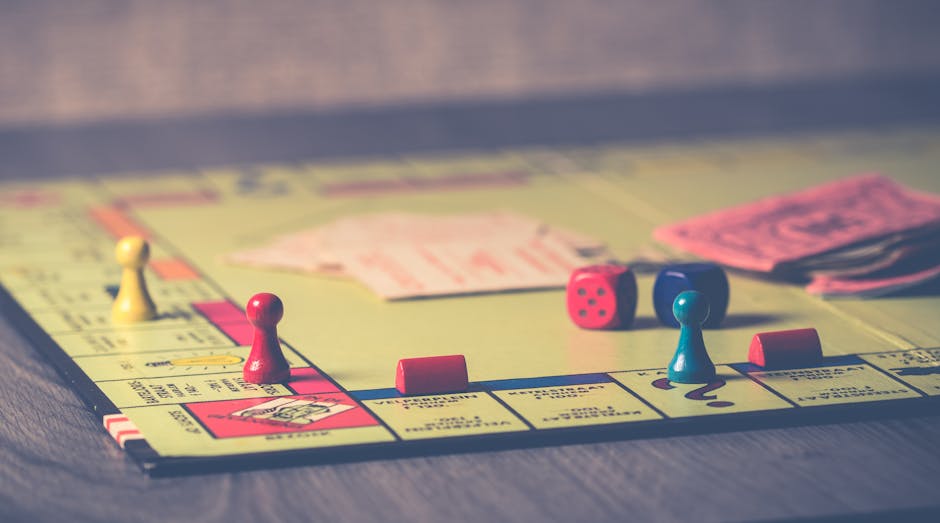
When my daughter turned nine, she asked for "not a boring party." No soft play centre. No laser tag. No magician with suspicious balloon animals. She wanted a board game party.
I panicked. Then I planned. Then I hosted what twelve kids unanimously voted "the best party ever" (admittedly, their sample size was limited). Here's exactly how I did it—and how you can too.
Why Board Game Parties Work
Before diving into logistics, understand why this format succeeds:
It's different. Most parties follow the same script: venue, food, cake, party bags, home. A board game party stands out in children's memories precisely because it breaks the pattern.
Everyone participates. Unlike pass-the-parcel, where most children watch most of the time, board games keep everyone engaged simultaneously.
It's skill-agnostic. You don't need to be sporty, artistic, or outgoing. Board games level the playing field between different personality types.
It's manageable. Contained activities at tables are easier to supervise than children ricocheting around soft play equipment.
Many parents report being drawn to "unique" party experiences that their children's friends haven't already attended, even at a premium over the standard soft-play or entertainer-at-home options. A well-executed game party qualifies.
| Party Type | Average Cost | Uniqueness Rating | Parental Stress | Child Enjoyment |
|---|---|---|---|---|
| Soft play centre | £12-18/head | Low | Medium | High |
| Home party (games) | £15-25/head | High | Medium-High | Very High |
| Venue hire (bowling etc.) | £20-30/head | Medium | Low | High |
| Entertainer at home | £200-400 flat | Medium | Low | Variable |
Estimates for UK market, 8-12 guests, 2024 prices
The Timeline: A Two-Hour Template
Here's the structure that worked for us:
| Time | Activity | Duration |
|---|---|---|
| 0:00 | Arrival & free play | 15 mins |
| 0:15 | Rules explanation & team formation | 15 mins |
| 0:30 | Round 1 | 25 mins |
| 0:55 | Snack break | 15 mins |
| 1:10 | Round 2 | 25 mins |
| 1:35 | Final & trophy ceremony | 15 mins |
| 1:50 | Cake & singing | 10 mins |
| 2:00 | Party bags & pickup | - |
This timing is tight but achievable. Build in 5-minute buffers where you can.
Arrival & Free Play (15 minutes)
Never start the main activity immediately. Children arrive at different times, and you need buffer for late parents. Set up a "free play zone" with:
- Colouring sheets (tropical/smoothie themed)
- A simple card game (Uno works well)
- Stacking games (Jenga, etc.)
This keeps early arrivers entertained without adults needing constant attention.
Rules Explanation (15 minutes)
This is critical. A bad rules explanation derails everything.
🎉 Party Tip
Explain rules to all children simultaneously, even if you're running multiple tables. Use a demonstration board where everyone can see. Explain once, clearly, with visual pointing. Then ask: "Show me with your hand what you do first on your turn."
For Smoothie Wars specifically:
- Goal: Make the most money selling smoothies
- Turn: Buy stuff → Pick where → Sell stuff
- Win: Most money after 7 days
That's genuinely all they need. Answer questions as they arise during play.
Tournament Rounds (25 minutes each)
With 8-12 guests, you can't play one massive game. Split into groups:
8-9 guests: Three tables of 3 players 10-12 guests: Three tables of 4 players (or four tables of 3)
Each table plays a shortened game (5 days instead of 7). Winners from each table advance to a "finals" table in Round 2.
Those who didn't win play a consolation round, ensuring everyone plays twice.
A common piece of advice among party planners is that the biggest mistake parents make is running one long game. Children's attention tends to fragment after 25-30 minutes, so multiple short games with movement between tables helps maintain energy and prevents disputes.
Snack Break (15 minutes)
Position snack break between rounds. It provides:
- Physical movement (stretch legs)
- Mental reset
- Conversation time
- Opportunity to address any issues quietly
More on food below.
Finals & Trophy Ceremony (15 minutes)
The final table should be visible to spectators. Create a sense of occasion:
- Ring a bell to start
- Announce plays dramatically
- Build suspense during scoring
Then: trophy ceremony. More on prizes below.
Decorations: Tropical Vibes on a Budget
Smoothie Wars's island theme provides rich decoration opportunities:
Essential (under £30):
- Green and yellow balloons
- Paper palm leaves (printable online)
- Tropical tablecloths (poundshops)
- Fruit bunting (paper or real)
Nice-to-have (£30-60):
- Inflatable palm trees
- Hawaiian leis for each guest
- Tropical backdrop for photos
- Custom banner with child's name
Premium (£60+):
- Artificial grass table runners
- Mini umbrella cocktail decorations
- Personalised Smoothie Wars scorecards
- Professional balloon arch
We went with the "Essential + a few Nice-to-haves" tier for about £45 total. The inflatable palm tree was the surprise hit—kids kept posing with it.
Food: Theme-Appropriate Snacking
The Obvious: Actual Smoothies
Set up a "Smoothie Bar" with pre-blended options:
- Strawberry banana (pink, kid favourite)
- Mango coconut (orange, tropical)
- Blueberry vanilla (purple, antioxidant flex for parents)
Serve in clear cups so colours show. Paper straws add tropical vibes.
Cost: Approximately £2 per head for smoothie ingredients.
Fruit Skewers
Pre-made skewers with:
- Strawberries
- Grapes
- Pineapple chunks
- Melon balls
Call them "Smoothie Ingredients." Children can "choose their ingredients" just like in the game.
Cost: Approximately £1.50 per head.
Savoury Options
Not everything needs to match the theme. Reliable party standards work:
- Mini sandwiches
- Pizza slices
- Cheese and crackers
- Vegetable sticks (someone will eat them, maybe)
The Cake
A tropical-themed cake ties everything together. Options:
| Style | Complexity | Cost (homemade/bought) |
|---|---|---|
| Round cake with fruit topper | Easy | £15 / £35 |
| Layered "sunset" ombré | Medium | £25 / £50 |
| Smoothie glass shaped cake | Hard | £40 / £70 |
| Cupcakes with palm tree toppers | Easy | £20 / £30 |
We did cupcakes with cocktail umbrella toppers. Cheaper, easier to serve, and every child got their own.
Prizes: Beyond First Place
Here's where many game parties go wrong: one prize for the winner, everyone else leaves empty-handed. This creates tears.
Instead, award multiple prizes:
The Champion: Overall winner (trophy or medal) The Comeback Kid: Best recovery from a bad start The Smoothie Mogul: Highest single-turn profit The Risk Taker: Boldest move (judged by adults) The Strategist: Best explained decision The Sportsperson: Best loser (graceful, encouraging)
Suddenly, nearly every child has a chance at something. Prizes don't need to be expensive:
- Certificates (printable, free)
- Small trophies (£2-5 each from Amazon)
- Chocolate medals
- Themed erasers/stickers
🎉 Party Tip
Prepare prize categories in advance but decide recipients during the party based on actual behaviour. This lets you quietly reward children who might otherwise leave disappointed.
Party Bags: Game-Adjacent Goodies
Continue the theme:
- Mini card game (Uno, Dobble)
- Tropical sweets
- Fruit-scented erasers or pencils
- A "winner" badge (everyone's a winner)
- Bubble mixture (beach vibes)
Cost: Approximately £3-5 per bag.
Managing Chaos: Adult Ratios and Roles
For 8-12 children, you need minimum 3 adults:
| Role | Responsibilities |
|---|---|
| Lead Parent | Rules explanation, finals table, ceremony |
| Table Monitor 1 | Supervises 1-2 tables, answers questions |
| Table Monitor 2 | Supervises 1-2 tables, manages snacks |
Brief your helpers beforehand. They need to know:
- Basic rules (enough to answer questions)
- How to handle disputes (call Lead Parent)
- When to intervene (rarely) vs. let play continue
Ideally, recruit parents who themselves enjoy board games. They'll engage rather than just supervise.
Potential Problems and Solutions
Problem: Not Enough Games
Solution: Buy or borrow multiple copies. For 12 guests across 3 tables, you need 3 copies. Ask if friends own the game—gaming families often do.
Problem: Child Refuses to Play
Solution: Offer an alternative role: banker, scorekeeper, "official photographer." Some children prefer observing. Don't force participation.
Problem: Crying Loser
Solution: Separate briefly. Acknowledge feelings ("It's disappointing to lose"). Remind them of the consolation round and multiple prize categories. Redirect to food.
Problem: Cheating Accusations
Solution: This is why adults monitor tables. If witnessed, a quiet correction. If alleged without evidence, "benefit of the doubt, let's keep playing." Post-game, have a private word if needed.
Problem: Game Takes Too Long
Solution: Use the 5-day variant instead of 7. At the 20-minute mark, announce "last day" regardless of game state.
Invitations: Setting Expectations
Your invitation should communicate:
- The board game theme
- That it's an active, playing party (not a sitting party)
- The tropical dress code (optional, but fun)
- Duration and pickup time (essential)
Sample text:
[Child's Name] is turning [Age]!
Join us for a BOARD GAME BIRTHDAY BASH
We'll be playing tropical-themed strategy games, sipping smoothies, and crowning champions!
Dress code: Tropical colours welcome 🌴
Date: [Date] Time: 2:00–4:00pm Location: [Address]
RSVP: [Contact] by [Date]
Post-Party: Building on Success
If the party goes well, you've planted a seed. Children may:
- Ask for their own copy of the game
- Request "another game party" next year
- Start a gaming club at school
Capitalise on this by:
- Sending a "highlights" message to parents with photos
- Offering to host a smaller "gaming playdate" in a few weeks
- Suggesting the game as a gift for upcoming birthdays
Frequently Asked Questions
What age group works best?
8-12 years old is the sweet spot for Smoothie Wars. Younger children need more simplified rules; teenagers might want more complex games.
How many copies of the game do I need?
One per table. For 8-12 guests, typically 3 copies.
Can I run this at a venue instead of home?
Yes—village halls, community centres, and even some game cafés offer private hire. You gain space but lose some home comforts.
What if it rains? (Planning for indoor/outdoor)
Plan for indoors regardless. If you have garden space as backup, lovely—but never rely on British weather.
How do I handle food allergies?
Collect allergy information at RSVP stage. Label all food clearly. Have safe alternatives for common allergens.
A board game birthday party takes more planning than booking a soft play slot. But the result—engaged children, manageable chaos, and a genuinely memorable experience—is worth every minute of preparation.
Your child will still be talking about it next birthday.
Planning a more competitive event? Our tournament hosting guide covers league formats, scoring systems, and competitive rule sets.