TL;DR
This is a practical framework, not a formal research study: patterns noticed across years of timed board games — Smoothie Wars, Blokus, speed chess, Splendor — about how people decide under a ticking clock. Five patterns keep showing up: decision quality tends to peak somewhere in the middle of the available time, not right at the deadline; performance tends to fall off once you're juggling more than a handful of variables at once; having a pre-built rule for a recurring decision makes you both faster and calmer; pressure tends to amplify certain well-documented biases like status quo bias and loss aversion; and practising decisions under time pressure seems to build a transferable skill. Each pattern is paired with the real decision-science concept it draws on and a business application you can use today.
Table of Contents
- Where This Framework Comes From
- Pattern #1: The Diminishing-Returns Zone
- Pattern #2: The Cognitive Load Cliff
- Pattern #3: Pre-Decision Frameworks Speed Things Up
- Pattern #4: Pressure Amplifies Predictable Biases
- Pattern #5: Practice Under Pressure Seems to Transfer
- Practical Techniques for Better Decisions Under Pressure
- Business Applications: From Boardroom to Board Games
- FAQs
"You have 45 seconds. Decide."
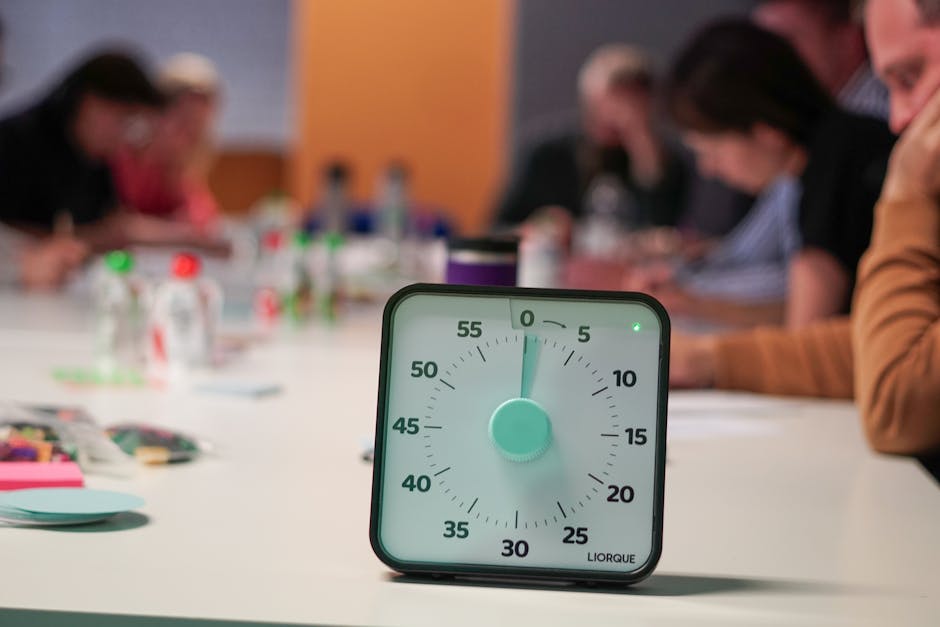
That's the kind of line that gets said at a Smoothie Wars table when the clock's running. Watch enough of these moments and you'll see it: someone who clearly knows the strategy freezes anyway. Not because they don't understand the board — because time pressure short-circuits analytical thinking.
We've all been there in business too. The investor call where you have to answer a pricing question on the spot. The client meeting where they ask if you can deliver by an impossible deadline. The competitive bid where hesitation costs you the contract.
What follows isn't a peer-reviewed study — it's a practical framework built from watching a lot of people make a lot of timed decisions in games, cross-checked against decision-science research that already exists and is genuinely well established. Treat it as a useful mental model, not a statistically proven result.
Where This Framework Comes From
There's no formal dataset behind this piece, and it would be dishonest to present one as if there were. What it draws on instead:
- Direct observation: years of running and playing timed rounds of Smoothie Wars and other strategy games, watching where people speed up, slow down, freeze, or visibly relax once they commit to a choice.
- Established decision science: concepts like Herbert Simon's bounded rationality and satisficing (the idea that people search for a "good enough" option rather than the theoretically optimal one, especially under constraints), George Miller's classic finding on the limits of working memory ("The Magical Number Seven, Plus or Minus Two"), Daniel Kahneman and Amos Tversky's prospect theory (loss aversion, framing effects), and Gary Klein's naturalistic decision-making research on how experienced professionals — firefighters, ER clinicians, military commanders — make fast, good decisions under real pressure by recognising patterns rather than calculating from scratch.
None of what follows should be read as "our data proves X." It's closer to "here's a pattern worth testing for yourself, and here's the real research that plausibly explains why it happens."
Pattern #1: The Diminishing-Returns Zone
The pattern: decision quality often seems to peak somewhere in the middle-to-latter part of the available time, not right at the deadline — and definitely not the instant an option becomes available.
Why This Tracks With What We Know
Deciding the moment an option appears usually means you haven't processed enough information yet. But using every last second of available time doesn't reliably help either — often it just adds stress without adding much insight, because most of the useful information was already available earlier.
This lines up with the broader idea of satisficing from bounded rationality research: once you've gathered "good enough" information to clear a reasonable bar, additional deliberation tends to have rapidly diminishing returns, and can even introduce new problems (second-guessing, decision fatigue, anxiety about whether you've used the time "correctly"). It also echoes a point associated with choice researchers like Columbia's Sheena Iyengar: the paradox of choice can apply to time as well as to options. More time doesn't inherently produce a better decision — past a certain point it can just produce anxiety about whether you've used that time optimally.
Business Application
In business contexts, a simple habit worth trying:
- If you have 1 hour for a decision: aim to decide with a meaningful buffer left, rather than right at the wire — that buffer is for second-order thinking ("what will the other side do in response?"), not for more first-order analysis.
- If you have a week: leave the last day or two for execution planning, not for continuing to deliberate.
- In a meeting: when someone says "let's circle back," that's often a sign the group is stalling past the point where more discussion is adding value.
Deliberately constraining your decision time — reserving genuine analysis for most of the window, then forcing commitment before the deadline — tends to produce faster decisions without an obvious quality cost.
Pattern #2: The Cognitive Load Cliff
The pattern: decision quality tends to drop off noticeably once a player has to juggle more than a handful of variables at once — location choice, inventory, pricing, competitor positioning, cash reserves, turn number, and so on.
Why This Happens
This is one of the better-established findings in cognitive psychology: working memory can reliably hold only a small number of "chunks" of information at once — historically cited as "seven, plus or minus two" from George Miller's 1956 paper, though later work (e.g. Nelson Cowan's research) suggests the real practical limit under active processing is often closer to three or four. Beyond that limit, people are either dropping variables (incomplete analysis), cycling through them sequentially (slow and error-prone), or freezing entirely.
The players who seem to handle complex decisions best usually aren't relying on unusually large working memory — they're chunking variables into higher-order patterns. Instead of tracking "Beach A traffic, Beach B traffic, Beach C traffic" as three separate variables, they think "beach cluster demand" as one. Instead of three separate competitor cash totals, they think "my competitive cash position" — am I ahead or behind, in general.
Business Application
When facing complex decisions:
- Chunk related variables: group interdependent factors (e.g. "customer acquisition cost + lifetime value + churn" becomes "unit economics").
- Eliminate low-impact variables: most decisions have a small number of variables that matter a lot, and a long tail that matters very little. Drop the noise.
- Externalise complexity: use decision matrices, spreadsheets, or written frameworks to offload cognitive burden rather than holding it all in your head.
- Sequence decisions: don't decide everything at once — settle the big variable first, then nested variables.
📚 Research
Anecdotally, and in line with broader decision-science thinking on cognitive load, people who externalise decision variables — whiteboards, structured frameworks, written-out matrices — tend to report making fewer errors on complex strategic decisions than those who try to "think it through" entirely in their heads. We haven't found a specific, verifiable study that quantifies this precisely for business decision-making, so treat it as a well-supported general pattern rather than a hard number.
Pattern #3: Pre-Decision Frameworks Speed Things Up
The pattern: players who build a reusable rule for a recurring situation before time pressure hits tend to decide noticeably faster in that situation, without an obvious drop in quality.
What Are Pre-Decision Frameworks?
Think of them as mental shortcuts — not lazy heuristics, but pre-tested rules for common situations. This is close to what decision researchers like Gerd Gigerenzer call "fast and frugal heuristics": simple rules that perform surprisingly well precisely because they don't require re-deriving a decision from scratch every time.
Example from Smoothie Wars:
- Framework: "If cash is more than double the average competitor's, and a premium location is available, claim it. Otherwise, claim a volume location."
- Without a framework: a player has to weigh cash, competitor positions, location values, and demand forecasts from scratch each time — slow, and easy to freeze on.
- With a framework: the player checks two conditions and applies the rule — much faster, and with a clear head.
The framework player isn't thinking less. They've pre-thought the common scenarios and cached the decision logic, so the in-the-moment cognitive load is far lower.
Business Application
Build decision frameworks for recurring choices:
Example: pricing new features
- Framework: "If a feature saves the customer more than £500/year, charge roughly 30% of the savings. If less, bundle it into a tier upgrade."
- Without a framework: ad-hoc pricing discussions, competitor analysis, gut feel — can drag on for days or weeks.
- With a framework: apply the rule, sanity-check with two or three customer calls — hours, not weeks.
Example: hiring decisions
- Framework: "If a candidate clears the bar on role-specific skills and cultural fit, and passes reference checks, make an offer within 48 hours."
- Without a framework: endless deliberation, candidates going elsewhere, lost talent.
- With a framework: faster, more consistent hiring.
The key: frameworks aren't rigid. They're default decisions you can override with a good reason. But having a default massively reduces decision friction.
Pattern #4: Pressure Amplifies Predictable Biases
The pattern: under time pressure, certain well-documented cognitive biases seem to show up more, and more strongly.
The Bias Patterns
Two biases in particular seem to intensify under a ticking clock:
Status quo bias — the tendency to stick with the current approach — appears to spike under pressure, plausibly because changing course requires more cognitive effort than continuing, and effortful re-evaluation is exactly what time pressure squeezes out. This is a well-studied bias in its own right (Samuelson and Zeckhauser's foundational 1988 paper on status quo bias is the classic reference).
Loss aversion — weighting potential losses more heavily than equivalent gains — is one of the best-replicated findings from Kahneman and Tversky's prospect theory. Under time pressure, threat assessment tends to dominate opportunity assessment; a plausible (if not fully proven) explanation is that quickly registering a potential loss is an older, faster cognitive process than weighing an equivalent potential gain.
What This Means
Status quo bias shows up as defaulting to "keep doing what we're doing" under pressure, even when that's not actually the best option — just the path of least cognitive resistance.
Loss aversion shows up as overweighting downside risk relative to upside potential when a decision has to be made fast.
Business Application
When making decisions under pressure, it's worth explicitly auditing for both:
- Status quo bias: "Am I choosing this because it's genuinely best, or because it's easiest?"
- Loss aversion: "Am I overweighting downside risk relative to upside potential? What would this look like if I framed it as the opportunity cost of not acting?"
A simple technique: flip the default. If your instinct is "keep the current strategy," force yourself to articulate why changing would be worse. Often you'll find you don't have a good reason — you're just defaulting.
Pattern #5: Practice Under Pressure Seems to Transfer
The pattern: people who've spent real time practising decisions under a ticking clock seem to carry that composure into unrelated high-pressure situations, business ones included.
Why Transfer Plausibly Happens
We don't have a controlled study of our own to point to here, so this section is deliberately more hedged than the others. But it's consistent with two well-established bodies of research:
- Deliberate practice research (most associated with Anders Ericsson) shows that structured, effortful practice with feedback reliably improves performance on a skill over time — and decision-making under pressure behaves like a trainable skill rather than a fixed trait.
- Naturalistic decision-making research, particularly Gary Klein's work on expert intuition, suggests experienced professionals — firefighters, ER doctors, military commanders — don't make faster, better decisions under pressure because they're smarter. They've simply encountered more patterns under stress, so they recognise a workable option quickly instead of calculating one from first principles each time.
Games arguably offer a low-stakes way to compress a version of that repeated exposure — plausible, and consistent with the research above, but not something we've tested rigorously ourselves.
Business Application
Build decision fitness by deliberately practising:
- Pre-mortems under time pressure: "We have 10 minutes to list everything that could go wrong with this strategy. Go."
- Rapid strategy sessions: "15 minutes to brainstorm responses to a competitor's product launch."
- Simulated crises: role-play high-pressure scenarios (a customer threatening to churn, a major bug in production).
The goal isn't realism — it's building the habit of deciding well under stress, so that real pressure eventually feels less pressured.
Practical Techniques for Better Decisions Under Pressure
Here are eight techniques worth trying:
1. Reserve, Don't Exhaust, Your Time
Aim to decide with a meaningful buffer left before your deadline, rather than right at the wire.
2. Cognitive Load Reduction
Try not to hold more than three or four variables in your head at once. Chunk, eliminate, or externalise the rest.
3. Pre-Built Frameworks
For any decision you make more than a few times a year, build a framework. Start with simple "if X, then Y" rules.
4. Bias Audits
Before committing under pressure, ask:
- "Am I defaulting to the status quo because it's easier?"
- "Am I overweighting losses versus gains?"
5. The Pause Technique
When you feel rushed, pause for three deep breaths. It sounds trivial, but slowing your breathing is a well-documented way to reduce physiological arousal, which supports clearer thinking under stress.
6. Scenario Pre-Solving
Before pressure hits, pre-solve likely scenarios. "If the customer asks for a 50% discount, I'll counter with 20% plus extended terms."
7. Deliberate Practice
Spend some time each week practising timed decisions in low-stakes settings — games, simulations, hypotheticals.
8. Decision Journals
After a pressure decision, spend five minutes journaling: What was the decision? How long did I take? What biases did I notice? How did it turn out?
Over time, patterns in your own decision-making tend to become visible — and easier to correct.
Business Applications: From Boardroom to Board Games
Scenario 1: Investor Q&A
Situation: an investor asks about your burn rate and runway on an earnings call. You have roughly 30 seconds before the silence gets awkward.
Application:
- Pre-decision framework: have stock answers ready for common investor questions.
- Reserve time: answer with buffer left, not right at the edge of comfortable silence.
- Cognitive load reduction: focus on the one number that matters (months of runway), not detailed line items.
Scenario 2: Competitive Bid Response
Situation: a client says "a competitor offered £X — can you match it?" and wants an answer on the call.
Application:
- Pre-solved scenario: before sales calls, decide your floor price and walk-away conditions in advance.
- Bias audit: is the instinct to match driven by loss aversion (fear of losing the deal) or by rational economics?
- Pause technique: "Let me just pull up our pricing structure quickly" — buying a few seconds to think.
Scenario 3: Product Pivot Decision
Situation: feature adoption is well below projection. Leadership wants a decision this week: pivot or persist?
Application:
- Reserve time: if there are seven days, aim to decide by day four or five, leaving room for execution planning.
- Cognitive load reduction: focus on a small number of metrics — adoption trend, customer feedback sentiment, cost to pivot.
- Decision journal: document the reasoning so it's possible to learn from the outcome later.
FAQs
Does this mean I should always decide quickly?
No. It means optimising time usage rather than maximising it. For decisions with large stakes and long horizons — mergers, major pivots — take the time you genuinely need. But for the bulk of everyday decisions, over-deliberating is the more common failure mode, and reserving rather than exhausting your available time tends to help.
What if I genuinely need more information to decide?
Then the real decision isn't "what should I do?" — it's "what information do I need, and how quickly can I get it?" Deciding what information you actually need is itself a decision, and often it's the real bottleneck.
Can games really improve real-world decision-making?
There's reasonable evidence — from deliberate practice research and naturalistic decision-making research — that structured, repeated practice under pressure builds transferable skill. We haven't run a formal study proving this specifically for board games, so treat it as plausible and well-supported rather than proven. Games work, if they work, because they offer low-stakes, high-iteration practice — but you need to play with intent to improve, reflecting on decisions and testing what works, not just play to win.
How do I know which biases I'm prone to?
Decision journaling is a good starting point. After a few dozen logged decisions, patterns tend to emerge. Free cognitive bias assessments exist online too, and asking colleagues for honest feedback on your decision patterns can surface blind spots you won't notice yourself.
Is there a downside to deciding too quickly?
Yes — deciding the instant an option appears, before gathering enough information, tends to produce worse outcomes than waiting a bit. The aim is a middle zone: fast enough to avoid overthinking, slow enough to think clearly.
Closing Thoughts: Pressure Is a Teacher, Not an Enemy
The pattern worth taking away from watching a lot of people decide under pressure, in games and in business alike: the best decision-makers don't avoid pressure — they prepare for it.
They build frameworks. They practise deliberately. They audit their biases. They externalise complexity. They reserve time rather than exhausting it.
And when pressure inevitably arrives — the investor call, the competitive bid, the crisis meeting — they don't freeze. They execute a decision process they've rehearsed, even informally, many times before.
So the next time you're playing Smoothie Wars under a timer — or sitting in a high-stakes business meeting with the clock ticking — it's worth treating it as practice, not just performance.
Next Steps:
- Read: Strategic Thinking Frameworks from Board Games
- Explore how Smoothie Wars puts real time pressure into a strategy game you can practise this framework with
The Smoothie Wars Content Team writes about the overlap between game strategy and business decision-making, drawn from running Smoothie Wars game nights and tournaments over several years.