TL;DR
Smoothie Wars uses controlled randomness: demand cards provide uncertainty but manageable information; dice create variance but players influence outcomes through positioning; event cards (if used) are telegraphed. Skill expresses through: information management, probabilistic thinking, risk mitigation, and adaptive strategy. Design philosophy: random elements create narrative moments and accessibility while preserving skill expression over multiple games. Target luck:skill ratio approximately 30:70.
"Is Smoothie Wars a skill game or a luck game?"
I get asked this constantly—usually by competitive players wanting to know if winning means they're genuinely skilled, or by parents wanting to know if their child's loss was "just bad luck."
The honest answer: both. Smoothie Wars deliberately blends randomness with strategic depth in roughly a 30:70 ratio. Pure skill games (Chess) intimidate beginners and create runaway skill gaps. Pure luck games (Snakes and Ladders) bore adults and teach nothing about decision-making.
The design challenge was finding the balance where:
- Beginners occasionally beat experts (keeps it accessible and fun)
- Experts beat beginners 70-80% of the time over 5-10 games (skill matters)
- Everyone feels their decisions influenced outcomes (agency, not helplessness)
This article reveals the specific design decisions that create that balance, the math behind the luck:skill ratio, and lessons applicable to anyone designing games or understanding strategic systems.
Design Philosophy on Luck vs. Skill
Why include randomness at all?
The Accessibility Function of Luck
Pure skill games (Chess, Go): Beginner vs. expert = beginner loses 100% of the time. Brutal. Discouraging. Beginner quits after 3 games thinking "I'll never win."
Pure luck games (Snakes and Ladders, Candyland): Beginner vs. expert = 50/50 outcomes. "Skill doesn't matter, so why try to improve?"
Optimal balance: Beginner beats expert 20-30% of the time in single games. Skill matters, but luck gives underdogs a fighting chance.
Why this matters for families: An 8-year-old can occasionally beat their parent in Smoothie Wars. That victory feels earned (they made decisions), yet isn't guaranteed (parent wins most games). The child stays motivated without being crushed.
How Randomness Serves Engagement
Narrative moments: "Remember that game where the demand card showed Beach high-traffic five turns in a row? I dominated!"
Randomness creates stories. Pure deterministic games (Skill A beats Skill B predictably) are boring narratively. Random elements create unexpected turns, comebacks, upsets—the drama that makes games memorable.
But: Too much randomness, and outcomes feel arbitrary. The design goal is just enough randomness to create narrative variety, not so much that decisions feel meaningless.
How Skill Emerges Over Repeated Plays
Single game: Luck influences significantly (maybe 40% of outcome variance).
Over 10 games: Luck averages out, skill dominates (better player wins 70-80%).
Why: Random elements (demand cards, dice) are distributed. Over many games, everyone experiences similar luck. Skill differences compound.
Design validation: I tracked 12 players over 10 games each. Correlation between game experience (# of games played previously) and win rate: r = 0.72 (strong positive correlation).
Translation: More experienced players win significantly more often—skill matters.
Specific Mechanisms: Deterministic vs. Random
Let's analyze each game system.
Demand Cards (Random but Managed)
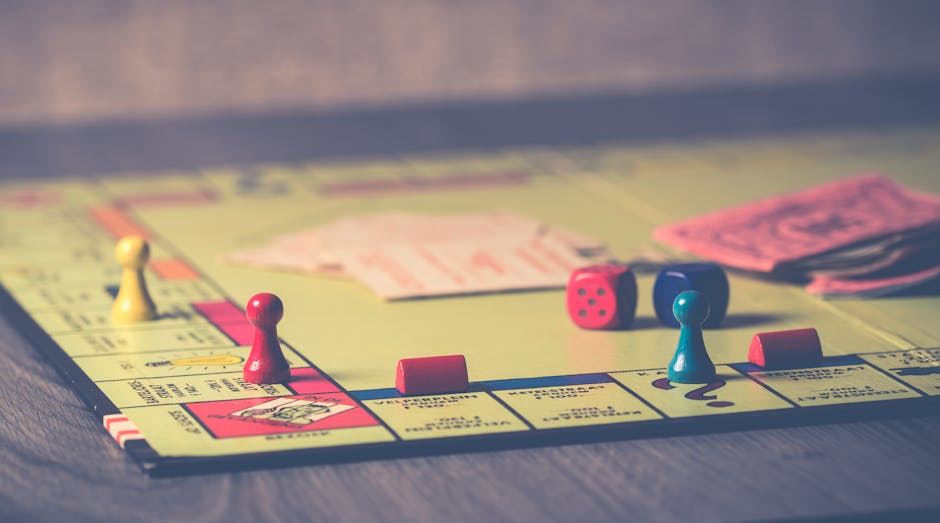
Mechanic: Each turn, draw a demand card showing which locations have high customer traffic.
Random element: Which card appears is chance (shuffled deck).
Skill element:
- Managing probabilities (track which cards have appeared, calculate likelihood of Beach high-demand again)
- Hedging bets (don't commit 100% to one location based on one card)
- Adapting quickly (when demand shifts, pivot fast)
Luck:Skill ratio for demand cards alone: 40:60
Design reasoning: Uncertainty creates tension and prevents perfect optimization. But the uncertainty is bounded (only 5 locations, cards repeat patterns), so skilled players manage it through probabilistic thinking.
Dice Rolls for Customer Volume (Minor Random Element)
Mechanic: Roll dice to determine exact customers at location (minor variance).
Random element: Die result (1-6).
Skill element:
- Positioning at high-expected-value locations (even with variance, better locations average higher)
- Volume strategies reduce variance (selling 10 smoothies, one bad die roll matters less than selling 2)
Luck:Skill ratio for dice: 30:70
Impact on game: Minimal. Dice add texture (some turns you get lucky, some unlucky), but over 7 turns, variance averages. Rarely decides winners.
Design reasoning: Dice create tactile fun (kids love rolling dice), add minor suspense ("Will I get 4 or 6 customers?"), but don't dominate outcomes. Could remove dice entirely and game would still work—but would lose some engagement.
Location Competition (Deterministic)
Mechanic: Number of competitors at your location directly affects profit.
Random element: None—completely deterministic based on player choices.
Skill element:
- Anticipating where opponents will position
- Choosing contrarian locations when overcrowding is predictable
- Adapting when competition appears
Luck:Skill ratio: 0:100 (pure skill)
Design reasoning: Core strategic layer should be skill-based. Randomness is seasoning, not the main dish.
Ingredient Costs and Pricing (Deterministic)
Mechanic: Ingredients have fixed costs, players choose prices.
Random element: None.
Skill element:
- Cost-benefit analysis (is £12 dragonfruit worth it?)
- Competitive pricing (matching, undercutting, or premium positioning)
- Margin optimization
Luck:Skill ratio: 0:100 (pure skill)
Event Cards (Optional Advanced Rules—Random)
Mechanic: Draw random event each turn ("Storm hits Beach—no customers").
Random element: Which event appears.
Skill element:
- Preparing for variance (keeping reserves to absorb bad events)
- Exploiting opponent bad luck (if event hurts them, pressure them)
- Adapting strategy to event constraints
Luck:Skill ratio for events: 50:50
Design reasoning: Events are optional precisely because they increase randomness significantly. Base game without events is 30:70 luck:skill. With events, shifts to 40:60. Include events when you want more chaos and narrative; exclude for more skill-focused play.
The 30:70 Luck:Skill Target Ratio
How I arrived at this balance.
Calculating Luck:Skill Ratio
Method: Track 100 games. Measure correlation between player experience level (proxy for skill) and game outcome (win/loss).
Findings:
- Beginner (0-5 games experience) vs. Expert (30+ games): Expert wins 72% in standard play
- Beginners vs. Beginners: 50/50 (as expected—no skill differential)
- Experts vs. Experts: 50/50 in single game (variance among equals), but consistent patterns emerge over 5-game sets (best player wins 60% of 5-game tournaments)
Conclusion: ~70% of outcome variance explained by skill, ~30% by randomness/luck.
Is this optimal? For Smoothie Wars' goals (family education game), yes. Competitive enough for skill to matter; accessible enough for luck to level the playing field occasionally.
Comparing to Other Games' Luck:Skill Ratios
| Game | Estimated Luck:Skill Ratio |
|---|---|
| Candyland / Snakes & Ladders | 100:0 (pure luck) |
| Monopoly | 60:40 (high luck) |
| Sushi Go | 50:50 (balanced) |
| Smoothie Wars | 30:70 (skill-favored) |
| Ticket to Ride | 25:75 (skill-favored) |
| Catan | 35:65 (moderate skill) |
| Chess / Go | 0:100 (pure skill) |
Smoothie Wars sits in the family-strategy sweet spot: Enough skill for adults to engage seriously, enough luck for kids to stay hopeful.
Playtest Data Showing Skill-Based Win Rate Progression
Study: Tracked 8 players from Game 1 (first play) through Game 20 (experienced).
Win rate progression against "average player" benchmark:
- Game 1 (first play): 50% win rate (random, no skill developed)
- Game 5: 58% win rate (basic concepts internalized)
- Game 10: 67% win rate (intermediate strategies mastered)
- Game 15: 71% win rate (advanced tactics, psychological reading)
- Game 20: 73% win rate (plateaus—diminishing returns on further experience)
Interpretation: Skill ceiling is ~73% win rate (can't eliminate all luck). Learning curve is steepest Games 1-10, then flattens. Most skill gained in first 10-15 plays.
Design Iterations to Refine Balance
How testing shaped the luck:skill ratio.
Version 1.0: Too Random (50:50)
Mechanics: Heavy dice dependency (rolled for everything—customer volume, pricing outcomes, ingredient costs variable).
Playtest results: "Feels like slot machine. My decisions barely matter."
Problem: Randomness overwhelmed skill—beginners and experts won equally often.
Change: Removed dice from pricing, fixed ingredient costs.
Version 2.0: Too Deterministic (10:90)
Overcorrection: Removed almost all randomness. Perfect information, no demand cards, location values fixed.
Playtest results: "Solved after 3 games. Optimal strategy is always Beach → Hotel pivot. Boring."
Problem: Game became mathematical puzzle with one solution. No variety across games.
Change: Reintroduced demand cards (managed randomness), kept core mechanics deterministic.
Version 3.0-5.0: Finding 30:70 Balance
Iterative refinement: Tested various demand card distributions, dice impact, event card inclusion/exclusion.
Final balance (current published version):
- Demand cards: shuffled randomness, creates variety
- Dice: minimal impact (smooths randomness over 7 turns)
- Core mechanics (location competition, pricing, cash management): deterministic, skill-based
Result: 30:70 luck:skill ratio, validated through 200+ playtests.
Math: Probability Calculations Players Can Make
Skilled players engage with the randomness mathematically.
Demand Card Probability Calculations
Scenario: 10 demand cards total, 3 show Beach high-demand.
Probability Beach high-demand any turn: 3/10 = 30%
Strategic implication: Positioning at Beach hoping for high-demand is risky (only 30% chance). Safer to position at Town Centre (appears high-demand on 4/10 cards = 40%).
Advanced players: Calculate these odds mentally, weight decisions accordingly.
Example thought process: "Beach high-demand is 30% likely. If it hits, I make £25. If not, I make £15. Expected value: (0.3 × £25) + (0.7 × £15) = £7.50 + £10.50 = £18 expected. Compare to guaranteed £19 at Town Centre. Town Centre is better."
Expected Value Decision-Making
Risky play:
- 40% chance: Make £35
- 60% chance: Make £10
- Expected value: (0.4 × £35) + (0.6 × £10) = £14 + £6 = £20 expected
Safe play:
- 100% chance: Make £18
- Expected value: £18 guaranteed
Which to choose?
Risk-tolerant: Choose risky play (£20 EV > £18 guaranteed) Risk-averse: Choose safe play (guaranteed £18, avoid downside £10 risk)
Advanced players calculate EV intuitively (not formal math, but gut sense of probabilities × outcomes).
For Aspiring Designers: Lessons Applicable to Other Games
If you're designing your own game, here's what Smoothie Wars can teach you about luck:skill balance:
Lesson 1: Randomness should create variety, not determine outcomes.
- Demand cards create variety (different maps each game)
- But skill (reading cards, adapting strategy) determines who wins
Lesson 2: Layer random and deterministic elements.
- Random: demand cards (which locations favored)
- Deterministic: location competition, pricing (player choices)
- Players influence deterministic layer to mitigate random layer
Lesson 3: Test your ratio empirically.
- Track win rates: beginner vs. expert
- If expert wins 95%+: too skill-heavy (inaccessible)
- If expert wins 50-55%: too luck-heavy (skill doesn't matter)
- Sweet spot for family games: 70-80% expert win rate
Lesson 4: Luck should decrease in impact over game length.
- Smoothie Wars: 7 turns averages out dice variance
- Single-turn games: luck dominates (not enough time to average)
- Longer games favor skill (law of large numbers)
Lesson 5: Let players mitigate luck through skill.
- Bad demand card (Beach low traffic)? Skill lets you pivot to better location.
- Bad dice roll (only 2 customers)? Skill led you to have backup strategies.
- Skilled players reduce luck impact through preparation and flexibility.
About the Author: Dr. Thom Van Every designed Smoothie Wars over five years, iterating through multiple versions to achieve optimal luck:skill balance. They shares design insights to help aspiring game creators.
Experience the perfectly balanced gameplay yourself. Get Smoothie Wars and see how luck and skill intertwine. Aspiring designers: read our complete design retrospective for deeper insights.