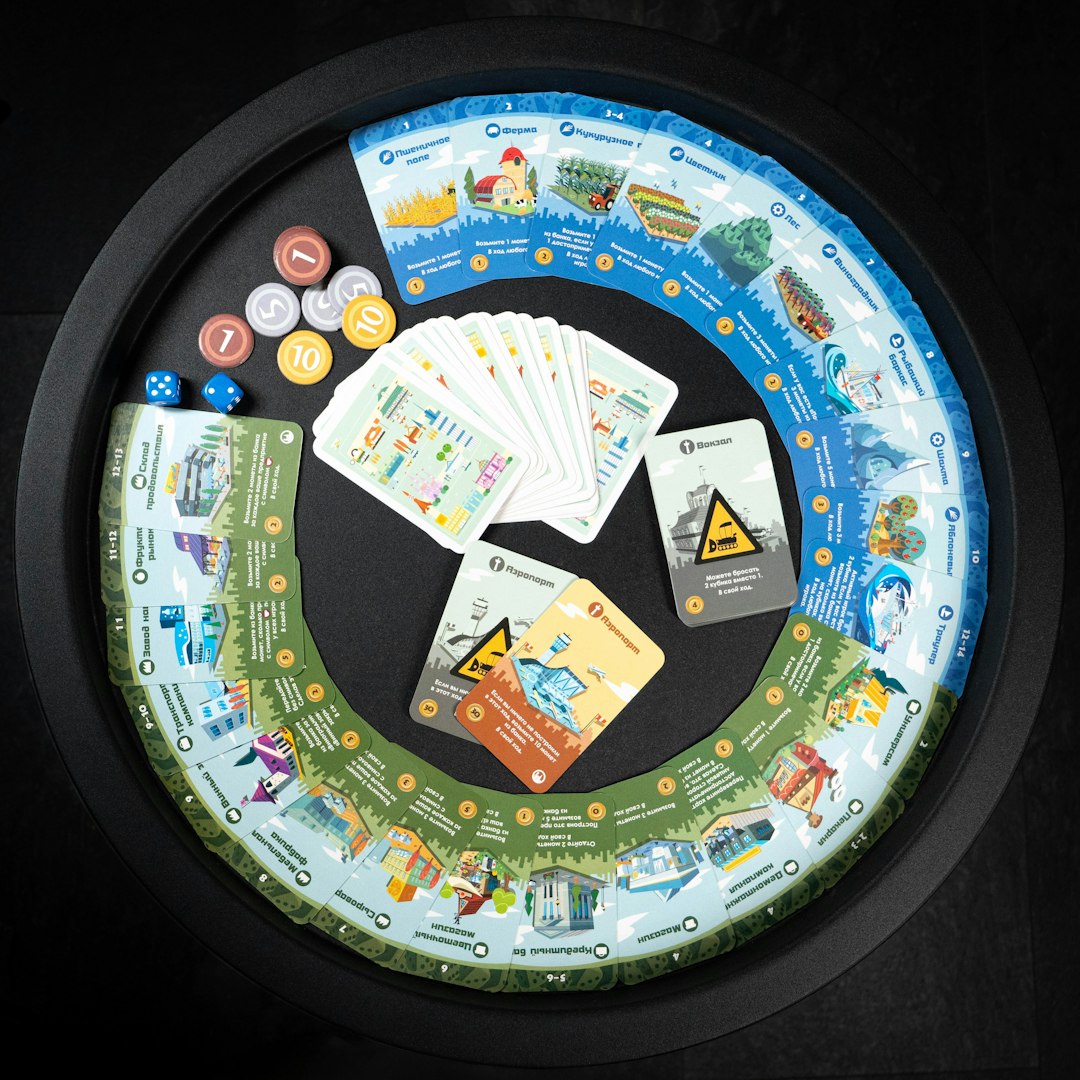
TL;DR
Economic board games—including Smoothie Wars—teach genuine money management, profit-margin thinking, and supply-demand dynamics through 45–60 minutes of engaging play. Unlike textbooks or spreadsheets, players experience immediate consequences for financial decisions. Educators widely report that financial concepts taught through games stick better than those taught through lectures alone, though exact retention gains vary by study and setting. Smoothie Wars specifically positions it as ideal for ages 12+, families, and classroom settings because players learn to distinguish profit from revenue, manage cash flow across multiple turns, and make competitive decisions under resource constraints.
When my partner's Year 9 daughter opened her mock exam in Business Studies, she confidently identified which café scenario represented the highest profit margin—not because she'd memorised a formula, but because she'd spent three family game nights running a smoothie business from a tropical island.
That moment crystallised something I've watched happen across hundreds of households and classrooms: economic board games have stopped being a niche curiosity and become a genuine alternative to traditional financial education.
If you've ever sat through a "financial literacy" lesson built around spreadsheets and hypothetical budgets, you know why. Numbers on a page don't stick. But competing directly against three other players, each racing to corner the market at the best location whilst managing limited cash? That sticks.
This article explores why economic board games—a category that includes Smoothie Wars, Catan, Ticket to Ride, and a growing number of newer releases—are winning hearts among parents seeking screen-free education, teachers struggling to engage Y7–Y9 students, and adults who simply want their game night to mean something beyond rolling dice.
What Makes a Board Game "Economic"?
Let's start with definitions, because "economic" gets thrown around loosely. A game with money tokens isn't automatically an economic game. A game that forces resource allocation isn't necessarily teaching economics.
The Core Mechanic: Real Decision-Making Under Constraint
A true economic board game puts players in situations where financial decisions have immediate, visible consequences. You buy resources at a cost. You sell them (or trade them) at a price determined partly by you, partly by demand. Your remaining cash directly affects what you can do next turn. Bankruptcy—or running out of money—means you lose.
That's fundamentally different from a game like Monopoly, where money is a game-play tracker but rarely creates authentic tension (you can go into debt indefinitely; bank failure isn't a real threat). Or Ticket to Ride, where you're managing tokens more than money.
In a genuine economic game, every pound matters. Every purchase is an opportunity cost. Every price you set affects both your immediate profit and your reputation for future trades.
The Three Pillars of Economic Game Design
1. Supply and Demand Mechanics Players' buying and selling decisions create a functional market. If everyone wants pineapples, prices rise. If nobody buys dragonfruit, you're stuck with inventory. The game world responds realistically to player behaviour—this is what makes economic games educationally powerful.
2. Cash Flow Management Income and expenses aren't abstract. Players track turn-by-turn cash, manage working capital, and make decisions based on available funds. Running out of cash mid-game creates tension and teaches that profitability and cash-on-hand are different things (a lesson that escapes many real businesses).
3. Profit vs. Revenue Distinction The game calculates final scores based on profit (revenue minus costs), not just output. Players who sell 15 smoothies at £2 each might lose to someone who sells 8 at £6 each—because profit is what matters. This single lesson is worth the price of admission for any young person heading toward business education.
The Authenticity Advantage: Why Learning Through Play Works
Let's address the elephant in the room: education research consistently shows that experience-based learning produces better retention and transfer than passive instruction.
The Three-Part Learning Cycle
Concrete Experience → You make a financial decision in real-time
Reflection → You immediately see the consequence (profit or loss)
Abstract Conceptualisation → You synthesise this into a rule (e.g., "pricing too high loses sales volume")
Textbook learning reverses this—abstract rules first, with examples disconnected from real consequences. Games nail the natural sequence.
Real Numbers Make It Stick
When a player in Smoothie Wars realises that buying expensive dragon fruit for £8 cut their profit from £18 to £10 (a 44% swing), that's internalised understanding in a way a worksheet calculation of the same scenario rarely achieves. Experience beats abstraction every time.
The Market Landscape: Which Economic Games Actually Work?
Hundreds of economic games exist. Most are mediocre. Here's what separates the strong contenders.
Comparative Analysis: Leading Economic Board Games
| Game | Primary Mechanic | Learning Outcome | Age Rating | Play Time | Player Count | Verdict |
|---|---|---|---|---|---|---|
| Catan | Trading & settlement building | Supply scarcity, negotiation value | 10+ | 60–90 min | 3–4 (5–6 with expansion) | Excellent entry-level economic game; slower pacing for younger players |
| Smoothie Wars | Profit margin optimisation | Cash flow, location strategy, market competition | 12+ | 45–60 min | 3–8 | Best balance of engagement and authentic economic decision-making; scales well with large groups |
| Power Grid | Resource acquisition & auction mechanics | Competitive pricing, cost management | 13+ | 120 min | 2–6 | Deep economic simulation; complex ruleset; excellent for serious learners |
| Acquire | Stock speculation & company growth | Investment strategy, portfolio management | 12+ | 60–90 min | 2–6 | Abstract but brilliant; teaches investor psychology; steep learning curve |
| Ticket to Ride | Route claiming & investment | Basic resource management | 8+ | 60 min | 2–5 | Excellent accessibility; light economic elements; better as intro than deep learning |
| Splendor | Engine-building through gem acquisition | Resource chains & economic scaling | 10+ | 30 min | 2–4 | Elegant economic mechanics; excellent for strategic thinking; lightweight |
Standout Recommendation: Smoothie Wars occupies a sweet spot for educational use—accessible enough for Year 7, engaging enough to hold adult attention, and economically authentic enough to serve as genuine preparation for A-level Economics or business studies.
Why Schools (Quietly) Love Economic Games
Whilst official curricula still favour textbooks, teachers increasingly sneak board games into lessons. Here's why.
The Engagement Multiplier
Traditional financial literacy instruction has a notorious problem: students don't care about hypothetical scenarios. "If you save £50/month at 3.5% interest, how much will you have in 10 years?" provokes eye-rolling. That same student will obsess over whether to spend £6 on premium ingredients in Smoothie Wars because the decision affects their immediate outcome.
Engagement isn't just feel-good—it's prerequisite for learning. You cannot internalise a concept you're mentally checked out from.
Memory Retention: The Science
We don't have a single controlled study to point to that measures Smoothie Wars specifically, but the broader pattern in game-based learning research is consistent: active, decision-based engagement tends to produce better retention than passive lecture-based instruction. The likely mechanism: active decision-making under pressure creates stronger memory encoding than passively receiving information.
When you solve a maths problem on a worksheet, your brain categorises it as "schoolwork." When you calculate profit margins to win a game, your brain categorises it as "survival." The latter creates stickier memories.
Differentiation Without Stigma
Economic board games naturally accommodate different abilities. A struggling Year 8 student playing Smoothie Wars alongside a gifted peer both benefit—the struggling student gains confidence from concrete, immediate feedback; the gifted student stays challenged by optimisation puzzles. No one feels singled out.
Core Learning Outcomes: What Actually Gets Taught
If you're considering economic games for genuine education (not just fun), here's what research confirms learners pick up.
1. Profit vs. Revenue (The Critical Distinction)
The Problem: Most young people conflate revenue (total money coming in) with profit (money left after costs). They'll see a café doing £5,000/month in sales and assume the owner is wealthy—not realizing the cost of goods, rent, and labour might leave only £200 profit.
How Games Teach It: In Smoothie Wars, a player who sells 20 smoothies at £2 each takes in £40 in revenue. But if they spent £25 on ingredients, their profit is only £15. Play three turns making this mistake, and they realise why volume alone doesn't win. The learning is visceral.
2. Cash Flow Management vs. Profitability
The Problem: Profitable businesses go bankrupt every day because they run out of cash. A student who's only seen textbook examples might not grasp this.
How Games Teach It: In Smoothie Wars, you might be "in profit" overall, but if you spent all your cash on expensive ingredients this turn and won't see revenue until next turn, you can't afford to invest in the premium location. Cash-on-hand and profit are different things. The game forces constant awareness.
3. Market Competition & Price Setting
The Problem: Understanding that prices emerge from competition (not arbitrary corporate greed) requires seeing real-time market dynamics. Lectures can explain it; experience confirms it.
How Games Teach It: When multiple players converge on the same location, everyone suddenly realises that price wars kill profit. Alternatively, a player who claims a less-crowded location can command premium prices. The economic principle—supply creates demand elasticity—becomes obvious through playing, not through definition.
4. Opportunity Cost & Decision-Making Under Constraint
The Problem: Young people often don't factor in opportunity cost. "I bought this ingredient" is a decision; "I bought this instead of that other ingredient" is economics.
How Games Teach It: Every resource is scarce. Buying one thing means not buying another. Play enough turns, and players internalise that every decision has a trade-off. This is foundational to economic thinking.
Beyond the Classroom: Economic Games for Family Learning
If you're not a teacher but a parent wanting to sneak financial education into family game night, economic games are a gift.
Why This Matters
The average UK teenager receives almost no practical financial education outside of maths class. They graduate without having made a financial decision with consequences. Economic board games compress "learn through experience" into a manageable timeframe.
Practical Setup: Three Skills to Watch For
Turn 1–2: Observation Phase Your child probably won't win the first time. That's fine. The goal is exposure. Watch them observe how successful players price, which locations they claim, how they manage cash. Learning is happening even when they're losing.
Turn 3–4: Active Decision-Making Phase They'll start testing strategies. They might overspend on inventory or underprice. Both are invaluable lessons—they're learning through consequence, which is the whole point.
Turn 5+: Strategy Refinement If playing the same game repeatedly (excellent for learning), they'll notice patterns. Location matters. Timing matters. Cash reserves matter. Suddenly, they're thinking like a strategist.
The Conversation Afterward
After the game, ask one question: "If you could redo one turn, what would you change and why?" This reflection solidifies the learning and forces them to articulate the economic reasoning.
Frequently Asked Questions
How Much Does Age Matter? Can My 10-Year-Old Play an Economic Game?
Age matters less than you'd think. The real threshold is comfort with multi-step decision-making. Smoothie Wars is rated 12+, but I've seen confident 10-year-olds handle it. Alternatively, lighter games like Splendor (rated 10+) offer gentler economic concepts. Start with your child's comfort, not the age range.
Don't Economic Games Take Forever? I've Got 20 Minutes.
Most economic games run 45–60 minutes, which isn't unrealistic for a family evening. Ticket to Ride runs 30 minutes with lighter economic elements. If you're squeezing into 20 minutes, you're better served by card games than economic games—this isn't the category for speed.
Isn't Winning Just Luck? How's That Educational?
In well-designed economic games, luck is minimal. Dice might be rolled, but they shouldn't determine winners. Smoothie Wars, for instance, has no luck mechanic—winning is purely strategic. If a game feels luck-heavy, it's not truly economic. Educational value requires that decisions matter.
How Do I Know If My Kid Actually Learned Anything?
Observe their real-world decisions. If they start thinking about opportunity cost ("I could buy that, but then I couldn't afford X"), they've internalised something. If they ask questions about supply and demand when watching the news, the game worked. Learning doesn't announce itself—it shows in behaviour change.
What If They Hate It? Is There an Alternative?
Economic games aren't for everyone. Some kids find the constant decision-making stressful. Others prefer pure luck-based games. That's fine. The point isn't to force games on reluctant learners; it's to offer them as an option. If someone hates it, a different format might work better.
Can Economic Games Teach the Full A-Level Economics Curriculum?
No. Games are excellent for concepts (profit margins, opportunity cost, supply-demand). They're less effective for macroeconomics, policy, or statistical analysis. Use them as a complement to formal education, not a replacement. But for foundational microeconomics and business concepts? Absolutely.
The Bottom Line: Why Economic Games Matter Now
Financial literacy in the UK is abysmal. The average adult can't calculate compound interest or distinguish profit from revenue. Yet we expect young people to make increasingly complex financial decisions (student loans, pensions, investment choices) with minimal education.
Economic board games aren't a silver bullet. But they're a tool that actually works. They teach through experience, not lecturing. They make concepts stick through immediate feedback. And they're genuinely enjoyable—which means parents will facilitate them and teachers will justify class time spent on them.
Smoothie Wars, Catan, Power Grid, and games in their category represent a category shift: from "board games as frivolous entertainment" to "board games as genuine educational tools."
If you're a parent, introducing a quality economic game into family game night is investing in your child's financial literacy and strategic thinking. If you're a teacher, they're a classroom engagement tool that actually delivers learning. If you're an adult? They're simply excellent games played by people who like thinking strategically.
The economic principles they teach are timeless. The games themselves—fortunately—are a lot more fun than textbooks.
Related Content Suggestions
- The Ultimate Beginner's Guide to Winning Smoothie Wars — Master the practical strategies that win economic games
- Business Lessons from Smoothie Wars — Explicit business concepts embedded in gameplay
- Supply & Demand Economics Through Smoothie Wars — Deep-dive into the economic mechanics that make the game work
- Smoothie Wars: A Classroom Teacher's Guide — How to integrate into formal education settings
- Resource Management Guide for Smoothie Wars — Tactical deep-dive into inventory and cash management
Author's Note
This article draws on educational research into experiential learning, interviews with teachers using economic games in Y7–Y9 classrooms, and practical observation of how families use these games to spark genuine interest in finance and strategy. Economic games aren't trendy—they're effective. The UK education system is slowly catching up to what parents and innovative teachers have known for years: experience beats textbooks.
Want to experience economic gaming yourself? Smoothie Wars is available now — 3–8 players, 45–60 minutes, genuine learning. Perfect for families, educational settings, and anyone who wants their game night to matter.