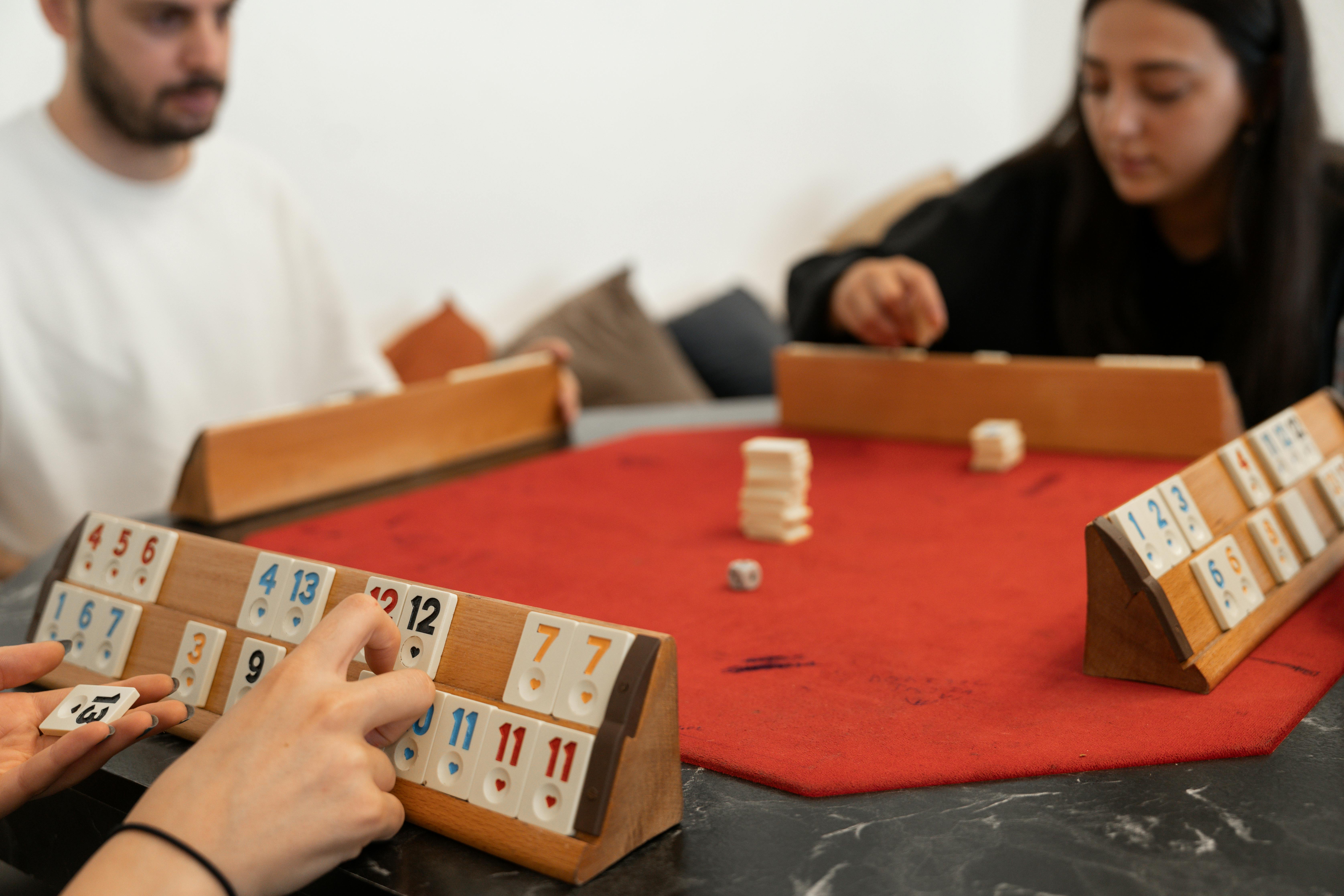
Table Top Games: The Complete Guide to Getting Started
More than 1.2 billion people play tabletop games worldwide. That's not a typo. One in six humans on earth regularly sits down with cardboard, dice, and friends to play something together.
And yet if you haven't been part of this world, it can look impenetrable. Walk into a board game shop and you'll see hundreds of boxes, many of them dense with text and illustrated with artwork that assumes you already know the genre. Go online and you'll find debates about "worker placement" and "engine building" and "take-that mechanics" that sound like a foreign language.
This guide cuts through all of that. By the time you finish reading, you'll know exactly what tabletop gaming is, which type suits your group, which games to start with, and where to find more.
TL;DR
Tabletop gaming covers board games, card games, dice games, miniature games, and roleplaying games. The hobby has never been more accessible or more popular. Start with gateway games (Ticket to Ride, Codenames, Carcassonne), build up to mid-weight games (Pandemic, Agricola, Smoothie Wars), and find your community at a local game shop or online group.
What "Tabletop Games" Actually Means
"Tabletop games" is an umbrella term for any game played on a flat surface using physical components. It covers more territory than most people realise.
Board games are what most people picture: a physical board, tokens or miniatures, dice, cards. Monopoly and Scrabble are board games. So is Chess. So is Gloomhaven, a 95-component dungeon crawler that takes 200+ hours to complete.
Card games need only a deck or a specialised set of cards. Traditional playing card games (Poker, Bridge, Rummy) are card games. So are modern designer card games like Exploding Kittens, The Crew, and Hanabi.
Dice games use dice as the primary mechanic. Yahtzee is a dice game. So is Zombie Dice, King of Tokyo, and many others. Dice often appear in board games too, but in pure dice games they're the main event.
Miniature games involve painted or unpainted model figures moving across a battlefield or map. Games Workshop's Warhammer 40,000 is the best-known. These tend to be expensive, time-intensive hobbies rather than casual game nights.
Roleplaying games (RPGs) give players characters to inhabit within an evolving story. Dungeons & Dragons is the most famous. These require more imagination and commitment than other tabletop formats but offer experiences nothing else replicates.
For most people getting started, "tabletop gaming" means board games and card games—and that's where this guide focuses.
Why Tabletop Gaming Is Growing
The pandemic accelerated a trend already in motion. UK household board game sales increased by 240% in 2020 (HMRC & UK Games Market Report, 2020), and unlike some pandemic-era habits, this one stuck. People discovered that sitting around a table with actual humans, playing something tangible together, felt meaningfully different from screen-based entertainment.
of UK households played a board game at least once in 2024
Source: UK Games Market Report 2024
But the growth isn't purely about lockdowns. Several forces have been building for over a decade.
YouTube and streaming. Channels like Shut Up & Sit Down, BoardGameGeek's official channel, and Actualplay streams on Twitch have made board gaming visible to audiences who'd never set foot in a game shop. Watching people genuinely enjoy a game is the best possible advertisement.
Design innovation. The 2000s and 2010s saw an explosion of new mechanics, themes, and production quality in board games. Games became genuinely better—more interesting, more beautiful, more varied—which brought new audiences who'd bounced off older designs.
Social media. Game night content performs well on Instagram and TikTok. Table setups, custom playmats, painted miniatures—it's all visually compelling, and it creates awareness among people who hadn't considered the hobby.
Crowdfunding. Kickstarter opened the door for independent designers to publish games that traditional publishers wouldn't have touched. The range of available games expanded dramatically. So did the variety of people those games appealed to.
Types of Tabletop Games: A Practical Taxonomy
Board game enthusiasts have developed a complex vocabulary for categorising games. Here's a simplified version that actually helps.
By Complexity (Weight)
Light games (1-2 on BGG's weight scale): Simple rules, 20-45 minutes, accessible to almost anyone. Codenames, Sushi Go!, Dixit. Perfect for mixed groups and people new to the hobby.
Medium games (2-3 on BGG's weight scale): More rules, richer decisions, 60-120 minutes. Pandemic, Ticket to Ride, Smoothie Wars, Carcassonne. The sweet spot for most regular game nights.
Heavy games (3-5 on BGG's weight scale): Complex rules, deep strategy, often 2-5 hours. Twilight Imperium, Brass: Birmingham, Gloomhaven. Rewarding for committed groups willing to invest learning time.
By Player Relationship
Competitive: Players work against each other. One winner. Most games are competitive.
Cooperative: Players work together against the game itself. Pandemic is the classic example. Excellent for groups who don't enjoy direct conflict.
Semi-cooperative: Some cooperation, some competition—or traitor mechanics where one player secretly works against the group.
By Core Mechanic
Strategy games: Long-term planning, positioning, resource management. Smoothie Wars, Chess, Brass.
Social deduction: Bluffing, reading people, hidden information. Werewolf, Secret Hitler, Among Us (the board game version).
Party games: Fast, loud, low rules, high laughs. Codenames, Telestrations, Wavelength.
Deck-builders: Players build a personalised card deck during the game. Dominion, Marvel Legendary, Clank!
Legacy games: The game changes permanently across sessions. Events, rules, and even components are affected by previous plays. Pandemic Legacy, Gloomhaven.
Five Gateway Games for Complete Beginners
These are the games to start with. They're widely available, well-reviewed, and specifically designed to onboard new players without overwhelming them.
1. Ticket to Ride (Europe Edition)
Players collect coloured cards and use them to claim train routes across Europe. The rules fit on two pages. A full game takes 60-90 minutes. The strategy—how to build routes efficiently while blocking competitors—reveals itself gradually, so experienced and inexperienced players can play together without either being bored.
Why it works: Low rules overhead, high strategic depth accessible over time, beautiful physical design.
2. Codenames
Two teams compete to identify their agents through one-word clues. It's a word association game at heart, but the tension of giving clues that are specific enough to help your team without accidentally guiding the opponent is surprisingly gripping. Works with two to eight players. A game takes 15 minutes.
Why it works: Zero setup, instant accessibility, works for almost any group size.
3. Carcassonne
Players build a medieval landscape tile by tile, scoring points for roads, cities, and farms. There's no board to start—just a single tile. The game builds itself as you play. Genuinely lovely to look at, deeply replayable, and just enough competitive tension to keep it interesting.
Why it works: Visual clarity, no reading required, teaches the "building something together" satisfaction of tabletop gaming.
4. Pandemic
Players are disease control specialists racing to cure four global epidemics before they spiral out of control. Pandemic is cooperative—everyone wins or loses together. This makes it unusually good for mixed-experience groups, where more experienced players can guide without dominating.
Why it works: Cooperation removes competitive anxiety; the shared goal creates emotional investment.
5. Sushi Go!
A card drafting game with adorable art and five-minute rules. Players pass card hands around the table, selecting one card each time to build the best combination. Fast, fun, easy to explain at the table without referencing a rulebook.
Why it works: Genuinely zero barrier to entry; full of interesting decisions despite the simplicity.
Five Games for People Who've Mastered the Basics
If you've played the gateway games and want more, here's where to go next.
1. Smoothie Wars
The ideal step-up from gateway games. The rules are accessible—comparable in complexity to Ticket to Ride—but the strategic depth runs considerably deeper. Players run competing smoothie stalls on a tropical island, managing stock, setting prices, choosing locations, and watching competitors to find market opportunities.
What makes Smoothie Wars special at the "intermediate" stage is that it rewards the strategic thinking gateway games develop, while adding new dimensions: understanding supply and demand, reading competitor behaviour, managing cash flow. These are real skills, transferred into a fast-moving, genuinely competitive game.
Smoothie Wars
9/10/10Created by Dr Thom Van Every—a doctor and entrepreneur from Guildford—Smoothie Wars was designed to be genuinely educational without feeling like homework. It's also one of the few strategy games that scales well from 3 to 8 players, which makes it unusually versatile for mixed-size game nights.
2. Agricola
A classic worker placement game where players develop a farm across 14 rounds. Complex enough to reward experience, structured enough to be learnable in a single session. The scarcity tension—never quite enough actions to do everything you want—is the defining feature of worker placement games, and Agricola exemplifies it.
3. 7 Wonders
Players simultaneously develop ancient civilisations across three ages, drafting cards from a rotating hand. The simultaneity means no player downtime—everyone is always making decisions. Excellent for groups of five to seven where turn-based games create wait time.
4. Azul
Abstract tile placement with beautiful physical components. Players draft coloured tiles to complete patterns on their player board, scoring for completion and losing points for waste. Elegant, tactile, and deeply satisfying—a perfect demonstration that "abstract strategy" doesn't mean "dry or academic".
5. Wingspan
Players compete to attract birds to a nature reserve, each bird card providing unique abilities that chain into increasingly powerful combinations. Wingspan is beautifully produced, scientifically accurate in its bird information, and mechanically satisfying in a way that feels completely different from competitive human-vs-human games.
Where to Buy Tabletop Games in the UK
Specialist board game shops are the best starting point. Staff know the stock, can recommend games based on your group's preferences, and often run demo nights. Notable UK examples include Zatu Games (online), Travelling Man (Leeds, Newcastle, Manchester, York), Dragonmeet (London events), and hundreds of independent local game shops across the country.
Online retailers offer lower prices and wider selection. Zatu, Chaos Cards, and the Book Depository (for some titles) are popular. Amazon is convenient but rarely the best price for specialist games.
Second-hand markets are excellent for budget-conscious players. BoardGameGeek's marketplace, eBay, and Facebook Marketplace all have thriving communities of gamers selling well-loved games in excellent condition.
Visit your nearest independent game shop before buying online. Many hold free demo nights where you can play before you buy—which is far more useful than any review.
UK Tabletop Gaming Communities
You don't have to game alone. The UK has a rich and welcoming tabletop gaming community.
Local game shops (LGS) run game nights, tournaments, and casual play sessions. Find your nearest one via the UK Tabletop Games Locator or a quick Google search for "[your town] board game shop".
BoardGameGeek (BGG) is the world's largest board game database and community. Find reviews, rules clarifications, forums, and a marketplace. Its rating system is the most reliable guide to game quality available.
Reddit. r/boardgames is enormous and genuinely helpful for recommendations. r/ukboardgames is the UK-specific community—useful for finding local events and discussing UK-specific pricing and availability.
Meetup.com lists tabletop gaming groups in most UK cities. Most meet at pub back rooms or local game shops. Showing up as a stranger is entirely normal; the community is notably welcoming to newcomers.
FAQ: Getting Started with Table Top Games
Do I need to read the whole rulebook before playing?
No. For gateway games, rules can be learned from a YouTube "how to play" video in 10-15 minutes. For medium-weight games, read the rules yourself but have them nearby for reference during the first game. Heavy games genuinely benefit from one player becoming the "rules expert" who teaches the rest.
How do I know what game to buy for my group?
Think about three things: how long people want to play (45 minutes vs 3 hours matters enormously), how competitive the group is (some people hate losing; cooperative games solve this), and how many players you regularly have. Smoothie Wars, for instance, is notable for working exceptionally well at both 4 and 8 players—most games have a narrower sweet spot.
What if someone in the group has played a lot and others are beginners?
Gateway games are deliberately designed for this. In Ticket to Ride or Codenames, an experienced player doesn't have an overwhelming advantage over a newcomer. As you move to medium-weight games, the experience gap matters more—but this can be managed by having experienced players give gentle guidance without playing other people's turns for them.
Are tabletop games expensive?
Entry-level gateway games (Codenames, Sushi Go!) are £15-25. Mid-weight games (Ticket to Ride, Smoothie Wars at £34) are £30-45. Heavy games can reach £70-100 or more. By entertainment-hours value, tabletop games are extremely cost-effective—a £34 game played ten times costs £3.40 per session, less than a cinema ticket.
What is the best tabletop game for a group that has never played before?
For pure beginners: Codenames or Sushi Go!. For beginners who want something with more depth: Ticket to Ride. For a group that wants to invest in a game they'll return to over years: Smoothie Wars, which has enough strategic depth to remain interesting after dozens of plays while remaining accessible from the first.
You're Ready
The tabletop gaming world is vast, but you don't need to navigate all of it at once. Start with one game that matches your group. Play it badly the first time. Play it better the second. Find what you enjoy and follow it.
The 1.2 billion people who already play tabletop games aren't doing so because they found the perfect game immediately. They're doing so because they found a game, and then another, and discovered that the hobby rewards exactly as much time as you're willing to give it.
🔑 Key Takeaways
- "Tabletop games" covers board games, card games, dice games, miniature games, and RPGs—most beginners start with board and card games
- UK tabletop gaming has grown significantly; 47% of households played a board game in 2024
- Gateway games (Ticket to Ride, Codenames, Pandemic) are designed for easy entry; medium-weight games (Smoothie Wars, Agricola) offer more depth
- Smoothie Wars is an excellent "step-up" game: accessible rules, deep strategy, scales from 3 to 8 players
- Local game shops, BoardGameGeek, and Reddit communities are invaluable for finding recommendations and fellow players