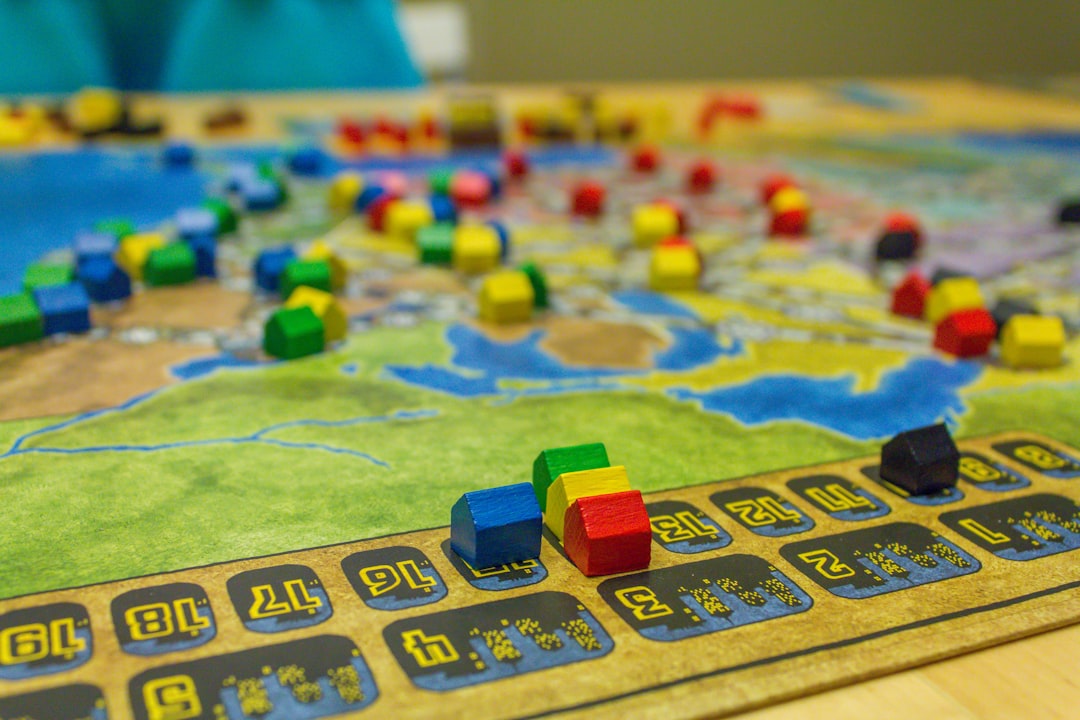
Board Games With High Replayability: What to Look For and Buy
TL;DR
Replayability is the single most important long-term factor in board game value. A game that produces a meaningfully different experience on the tenth play than on the first is worth buying. A game that feels identical every session is not. This guide explains what drives replayability and recommends the most replayable games across different categories.
The graveyard of board game purchases is enormous. Games that seemed brilliant at the shop, produced an enjoyable first session, then never appeared again—sitting on shelves, boxes slightly warped, returning to charity shops or car boot sales within a year or two.
The difference between those games and the ones that get played dozens of times often comes down to one word: replayability. Understanding what creates it makes buying decisions significantly better.
What Drives Replayability?
Multiple Viable Strategies
Games with one dominant strategy—the "correct" path that experienced players discover and then exploit every session—exhaust their interest quickly. Players who discover the optimal strategy feel clever briefly, then bored.
High-replayability games offer multiple paths to victory, each with genuine trade-offs. Choosing between strategies feels meaningful because any of them might work, and the right choice depends on what your opponents are doing.
Variable Setup
Games where the starting conditions change each session produce different challenges by default. Random tile placement, shuffled card orders, asymmetric starting positions—these mechanisms ensure that even if you used the same strategy last time, you can't simply repeat it.
Player-Dependent Outcomes
The most replayable games are those where the specific players at the table—their tendencies, their experience, their relationships with each other—determine the character of the game. A game that plays differently with competitive friends versus relaxed family members, versus a mixed group of new and experienced players, has essentially unlimited replay potential.
Emergent Complexity
Some games are mechanically simple but produce complex situations through interaction. Chess has limited rules but effectively infinite positions. Well-designed modern strategy games achieve similar emergent complexity: simple systems that interact to produce unexpected situations.
💡 Replayability versus randomness
Replayability is not about randomness—a game where outcomes are entirely random is infinitely variable but not replayable in any meaningful sense. True replayability comes from the combination of multiple viable strategies, variable conditions, and the unpredictability of other human beings.
The Replayability Factors: A Framework
Replayability factors and how different games deliver them
| Replayability Factor | Smoothie Wars | Catan | Wingspan | 7 Wonders | Dominion |
|---|---|---|---|---|---|
| Multiple viable strategies | ★★★★★ | ★★★★ | ★★★★ | ★★★★★ | ★★★★★ |
| Variable setup | ★★★ | ★★★★ | ★★★★ | ★★★★ | ★★★★★ |
| Player-dependent outcomes | ★★★★★ | ★★★★ | ★★★ | ★★★ | ★★★ |
| Emergent complexity | ★★★★ | ★★★★ | ★★★★ | ★★★★ | ★★★★ |
| Asymmetric play | ★★★ | ★★ | ★★★ | ★★★★ | ★★★★ |
| Overall replayability | ★★★★★ | ★★★★ | ★★★★ | ★★★★★ | ★★★★★ |
Most Replayable Board Games by Category
Strategy Games
Smoothie Wars achieves its high replayability primarily through player-dependent dynamics. Because the game models a competitive market—players as smoothie entrepreneurs on a tropical island, competing through pricing decisions, location choices, and resource allocation—the character of each game depends entirely on who's playing and how.
An aggressive pricing strategy that worked brilliantly against a particular opponent fails against a different one. Location decisions that were optimal in one session become traps in the next because other players have learned from previous play. The bluffing and verbal agreement system means that experience with the players at the table matters enormously—and that experience itself evolves.
Created by Dr Thom Van Every, the game was deliberately designed to feel different on the tenth play than on the first: not because the rules change, but because players' understanding of the market dynamics, competitive positioning, and timing deepens through experience.
7 Wonders achieves exceptional replayability through its enormous card pool and the requirement to draft from whatever is available rather than selecting from a known hand. No two games produce the same card availability, meaning the optimal strategy is never fixed.
Dominion is the original deck-building game and still one of the most replayable: each game uses only 10 of the available 130+ kingdom cards, producing a different economic engine every session.
Social and Deduction Games
Codenames is essentially infinitely replayable. The word cards rotate, the teams change, and the specific interpretations of clues depend entirely on the people playing. A game that played quickly becomes slow, depending on who's giving clues and who's guessing.
Resistance: Avalon is a social deduction game where hidden traitors try to sabotage missions while the loyal team tries to identify and exclude them. With different player configurations, the dynamics shift entirely. With the same regular group, the meta-game of reputation and history adds layers that accumulate over dozens of sessions.
Family Games
Catan sustains replayability across hundreds of sessions for many families, primarily through the variable board setup and trading dynamics. No two boards produce the same resource distribution; no two sessions produce the same negotiation dynamics.
Ticket to Ride replayability comes from the combination of variable destination tickets and opponents' route choices. The same destination ticket can be fulfilled multiple ways; opponents blocking certain routes forces improvisation.
Signs a Board Game Has Low Replayability
Certain design patterns indicate that a game will feel stale quickly:
A single dominant strategy. If experienced players consistently use the same approach and win, the game has a solved state. Once discovered, it removes genuine decision-making.
Predictable outcomes. Games where the person who establishes an early lead almost always wins have low replayability because the result feels determined before the final rounds.
Limited player count flexibility. Games that only work well with a specific number of players get played less often—opportunities to play require assembling exactly the right group.
Luck dependency. Games where dice rolls or random draws determine most outcomes feel random rather than replayable. High luck can produce variety, but it's not the same as genuine replayability.
Building a Replayable Game Library
The most practical advice for building a collection that stays relevant:
Buy fewer, better games. Resist the temptation to collect. Five genuinely excellent games that get played consistently are worth more than twenty games that each get played twice.
Prioritise games your specific group enjoys. Replayability is partially subjective. A group that loves negotiation will replay Catan endlessly. A group that prefers spatial reasoning will replay Azul instead. Know your group.
Consider expansions. Some games (Catan, Wingspan, Dominion) have expansion sets that significantly extend variety. If you know a game will see frequent play, the investment in expansions adds considerable value.
Rotate rather than replace. Regular rotation—even a month's break from a favourite—resets the freshness. Games that get played weekly for a year often feel stale; the same game played fortnightly can sustain interest for a decade.
FAQs: Board Games With High Replayability
What makes a board game replayable? Multiple viable strategies, variable setup, player-dependent outcomes, and emergent complexity. The more of these a game delivers, the more replayable it tends to be.
What is the most replayable board game? Chess is the ultimate high-replayability game. In the modern board game market, Dominion, 7 Wonders, and Smoothie Wars consistently score highest for replay potential across different player groups.
How do you know if a board game will be replayable before buying? Read BoardGameGeek reviews specifically for mentions of replayability. Check how many expansion sets the publisher has produced—games with multiple expansions have clearly demonstrated sustained interest.
Are co-operative board games replayable? Generally less replayable than competitive games, because the group's shared decisions converge towards similar strategies over time. Pandemic Legacy is a specific exception—it's designed to be played exactly once per campaign, with permanent consequences.
Is Smoothie Wars worth buying for replayability? Yes. The combination of market dynamics, player interaction, and strategy depth means the game plays meaningfully differently depending on who's at the table and what they've learned from previous sessions.
🔑 Key Takeaways
- Replayability comes from multiple viable strategies, variable setup, and player-dependent outcomes—not just randomness
- Smoothie Wars achieves high replayability through market dynamics that respond to specific players' strategies and histories
- 7 Wonders and Dominion offer exceptional replayability through enormous card pools that produce different games every session
- Low replayability warning signs include single dominant strategies, predictable outcomes, and high luck dependency
- A library of five genuinely replayable games is more valuable than twenty games each played twice