Fun Board Games: What Actually Makes a Game Enjoyable
"Fun" is a vague word. People use it to describe everything from throwing dice at a casino to assembling flat-pack furniture. But when someone says a board game is genuinely fun—the kind of fun that makes you forget what time it is, the kind where you're mid-game and already planning when you can play again—they mean something specific.
That specific thing is engineerable. The best board game designers know exactly what they're doing when they make a game feel alive. They're not hoping for fun; they're constructing it, mechanic by mechanic, decision by decision.
This guide unpacks what that looks like.
The Psychology of Fun in Board Games
Fun is not a single emotion. It's a cluster of overlapping psychological experiences that game designers deliberately combine in different proportions.
Tension. The feeling that something uncertain and significant is about to happen. Will your opponent take the resource you need? Can you hold on long enough? Board games create tension through uncertainty—unknown outcomes, hidden information, the proximity of failure or success.
Release. The relief and satisfaction when tension resolves. Every round in a well-designed game should end with a micro-release: "I survived that." Or "Yes, that worked." The anticipation-release cycle is so fundamental to enjoyment that its absence is the primary reason "nothing games"—those without meaningful stakes—feel boring.
Meaningful choices. This is the one that separates good games from great ones. A meaningful choice is one where options are roughly equal but genuinely different—where choosing A instead of B produces a different outcome, and where you're not sure which is better. Games full of obvious best moves aren't fun; they're tedious. Games with no good moves are frustrating. The sweet spot is a game that constantly offers interesting decisions.
Competence. Humans enjoy feeling capable. Games that reward skill—where understanding the system gives you a genuine advantage—produce a satisfaction that pure-luck games cannot. The moment you realise you've outsmarted an opponent, or executed a plan perfectly, produces a disproportionate emotional reward.
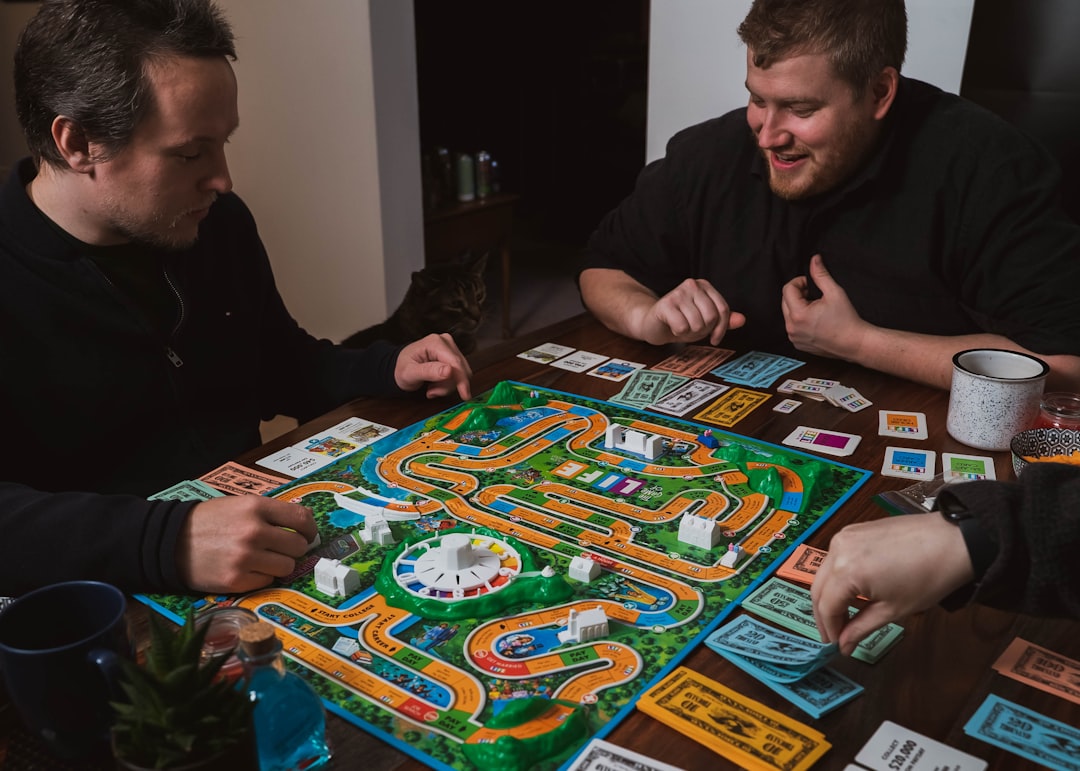
Social dynamics. Most board games are inherently social. The bluff that fails spectacularly. The alliance that collapses. The last-minute betrayal that redefines the session. These moments are retold for years. They're fun not because of game mechanics but because of what the game allows humans to do to each other—in a context where no real harm is done.
💡 Why stories outlast scores
The games people remember most fondly are rarely the ones they won. They're the ones with the best stories—the moments that could only have happened at that specific table with those specific people. Designers who understand this build for social memory, not just tactical satisfaction.
What Game Designers Mean by "Fun"
Raph Koster, a game designer whose work influenced some of the most commercially successful games of the last two decades, argued that fun is fundamentally about learning. Specifically, it's the pleasure of pattern recognition—the moment you understand how a system works and can use that understanding to achieve something.
By this view, games that are "too hard" fail because there's no successful pattern recognition—just frustration. Games that are "too easy" fail because you've already learned the system and there's nothing left to discover. The games that remain fun after dozens of plays are those that contain enough complexity to keep offering new patterns to recognise.
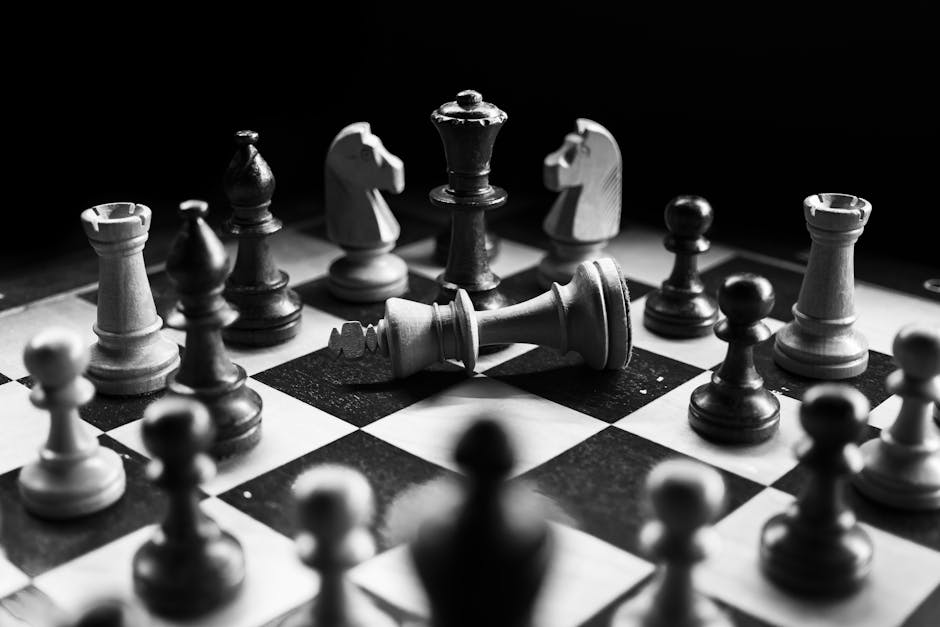
This is why simple-seeming games like Chess and Go have sustained player communities for centuries. The rules fit on a page, but the patterns take a lifetime to exhaust.
Most modern board games aim for something between these extremes: accessible enough to learn in a session, deep enough to reward dozens of plays. Smoothie Wars, for instance, is designed to feel different on the tenth play than on the first—not because rules change, but because players' understanding of the market dynamics, competitive positioning, and timing deepens with experience.
The Taxonomy of Board Game Fun
Different games produce different kinds of fun. Understanding which kind suits your group changes everything about your game selection.
Competitive Fun
Players directly oppose each other. The pleasure here is partly tactical—outmanoeuvring a specific person—and partly social—the ribbing, the comebacks, the groaning. Games like Smoothie Wars, Chess, and Splendor create competitive fun.
Best for groups who enjoy direct rivalry and have relatively similar experience levels.
Cooperative Fun
Everyone wins or loses together. The pleasure is in shared problem-solving, communication, and the relief of collective success. Pandemic is the canonical example. Forbidden Island, Spirit Island, The Crew.
Best for groups that include competitive-averse players, or where significant experience gaps would make competitive games lopsided.
Creative Fun
The game is a vehicle for expression. Dixit, where players create associations between surreal artwork and cryptic clues. Mysterium, where a ghost communicates through dream imagery. Wavelength, which generates laughing discussions about where something falls on a conceptual spectrum.
Best for groups who want to talk and laugh more than they want to strategise.
Chaotic Fun
High randomness, high drama, often deliberately unfair. Exploding Kittens. Munchkin. Uno (genuinely). The fun comes from the chaos itself—the unexpected reversals, the comically bad luck, the wildness of it.
Best for large groups, children, or any occasion where the social atmosphere matters more than competitive integrity.
12 Genuinely Fun Board Games
1. Smoothie Wars
The combination that makes Smoothie Wars genuinely fun—as distinct from merely "good"—is the way it layered competitive fun onto a shared economic simulation. Every player is trying to do the same thing (make money), using the same tools (smoothies, locations, pricing), but the strategies diverge dramatically.
The tension comes from watching competitors. Did they just stock coconut when you went mango? Are they moving to your location? The release comes at the end of each round when positions are revealed. The meaningful choices are constant—where to trade, what to stock, how to price, when to copy a competitor and when to differentiate.
What keeps it fun over many plays is that the competitive dynamics change entirely with different player counts and different human personalities at the table. A cautious player group and an aggressive one play completely different games.
Smoothie Wars
9/10/102. Codenames
Pure social fun. Two teams, a 5x5 grid of words, a spymaster trying to get teammates to guess their agents using one-word clues. The joy is in the near-misses and the "how could you possibly think that meant library?" The game produces excellent stories.
3. Pandemic
Cooperative fun at its most refined. Four diseases are spreading across the world. You and your teammates must cure all four before they overwhelm you. The tension is extraordinary—even experienced players regularly lose. The release when you cure the last disease with one action spare is genuinely euphoric.
4. Ticket to Ride
Reliably fun across an enormous range of ages and experience levels. Collecting cards, claiming routes, watching a competitor block your path—the frustration is just frustrating enough to be funny rather than genuinely upsetting. The Europe version adds tunnels and ferries that create extra negotiation and uncertainty.
5. Wavelength
Players give clues to place a hidden target on a conceptual spectrum—from "hot to cold", "good to evil", "humble to arrogant". The discussions that arise ("Wait, you think Mozart is more chaotic than Beethoven?") are the actual game. The rules serve as a pretext for fascinating conversations. Excellent for groups who want to talk.
6. Coup
Fifteen cards. Two to six players. Everyone has two hidden roles and claims to use their powers. Everyone is probably lying about at least one of them. Players are eliminated when both their roles are exposed. Coup is brutal, fast (fifteen minutes), and generates more table drama per minute than almost any other game in existence.
7. Splendor
A gem-collecting engine-building game that sounds dry and plays beautifully. Players collect gem tokens to buy development cards that reduce future costs and score points. Simple enough to explain in three minutes, interesting enough to reward dozens of plays. The "almost got there" tension of watching a competitor claim the noble you needed is endlessly entertaining.
8. Dixit
Cards illustrated with surreal, dream-like artwork. Players give cryptic one or two word clues; others choose which card they think the clue refers to from their own hands. The scoring system is designed to reward clues that are neither too obvious nor too obscure. Produces beautiful, strange, revealing conversations about how different people think.
9. Catan
Listed here not from reflexive inclusion—Catan is genuinely fun, particularly for new groups. The trading mechanic creates social alliances that inevitably collapse. The robber creates moments of gleeful cruelty. The tension of watching someone else build toward five points before you find your sixth is exactly the right amount of agonising.
10. Escape Room: The Game
Cooperative puzzle-solving with a ticking timer. Players work simultaneously to solve interlocking puzzles before time runs out. The fun here is entirely different from anything else on this list—it's the adrenaline of a real clock, the teamwork of dividing labour, the satisfaction of a puzzle clicking into place under pressure.
11. The Crew: Mission Deep Sea
A cooperative trick-taking card game. Players must complete specific missions—"I need to win the trick with the green 7"—without communicating which cards they hold. Communication is strictly limited. The satisfaction of reading your teammates' signals and pulling off a mission through collective deduction is uniquely satisfying.
12. Azul
Abstract tile placement. Players draft coloured tiles to fill their player board, scoring for completed sets and losing points for leftovers. Azul is fun in a specific, meditative way—it's tactile (the tiles are genuinely lovely to handle), visually satisfying, and constantly offering interesting decisions. The "blocking" element, where taking tiles your opponent needs is strategically valid, creates a quiet ruthlessness.
How to Match Fun Type to Your Group
The most common reason a game night fails isn't a bad game—it's a good game played with the wrong group.
A few practical rules:
Never play a heavy game with more than two players who haven't read the rules. The learning overhead of a three-hour game falls entirely on whoever knows the rules, and it makes everyone else feel inadequate. Start lighter; level up together.
Watch for the engagement gap. If one player is significantly more experienced than the others, competitive games become demonstrations rather than contests. Either choose a game that minimises the skill gap (party games, luck-heavy designs) or let the experienced player play a handicapped or teaching role.
Short games are underrated. A 20-minute game played three times produces more fun than a 60-minute game played once, in most casual groups. The second and third plays are when people hit their stride.
Why Play Matters for Adults
There's a persistent cultural assumption that play is for children. It's worth being direct about why this is wrong.
📊 Research:
Source:
Board games are one of the most accessible forms of adult play. They have rules (which give structure), they have stakes (which give tension), and they happen in physical social space with other humans (which is, essentially, irreplaceable for wellbeing).
Smoothie Wars is a good example of this working at multiple levels simultaneously. On the surface, it's a competitive game about smoothie stalls. One level down, it's an education in market economics. One level further down, it's a context for spending meaningful time with people you like, doing something genuinely engaging together.
That combination—entertainment, learning, and connection—is what the best board games offer. It's why the hobby keeps growing.
FAQ: Fun Board Games
What makes a board game more fun than others?
The most consistently fun games share three qualities: meaningful decisions (no obvious best move), appropriate tension (high enough stakes to care, low enough that losing doesn't sting too much), and good social dynamics (something to talk about, argue about, or laugh about). Smoothie Wars ticks all three.
What are the most fun board games for a group that rarely plays?
Start with games that can be explained in five minutes: Codenames, Sushi Go!, Coup. If the group wants something with more depth, Smoothie Wars is unusually accessible despite its strategic richness—most groups understand it within the first round.
Can the same game be fun for both children and adults?
Yes, and the best family games are designed with this in mind. Smoothie Wars (12+) works precisely because its strategy rewards adult experience while its theme and pace remain engaging for younger players. Ticket to Ride and Carcassonne work similarly from about age 8.
Why do some board games stop being fun after a few plays?
Usually because the game doesn't contain enough decision complexity to keep offering new patterns. Games with a dominant strategy—where one approach is almost always correct once discovered—become boring quickly. The games that remain fun indefinitely are those where different player combinations, different starting conditions, and improved skill continue to create new experiences.
The Point of It All
Board games are, ultimately, voluntary complications. You accept artificial rules and constraints in exchange for a specific set of experiences—tension, release, meaningful choices, social dynamics—that real life doesn't reliably provide on demand.
The best ones do this beautifully. They make an hour feel like twenty minutes. They turn people who've known each other for years into rivals, allies, and occasional enemies—and then back into friends at the end.
That's what fun actually is: the feeling that the time you just spent was worth more than what it cost.
🔑 Key Takeaways
- Fun in board games comes from specific psychological mechanisms: tension, release, meaningful choices, competence, and social dynamics
- Different games produce different types of fun: competitive, cooperative, creative, and chaotic—match the type to your group
- The most fun games are those with enough decision complexity to keep offering new patterns after repeated plays
- Smoothie Wars combines competitive strategy, economic decision-making, and direct market competition in a format that scales from 3 to 8 players
- Play matters for adults: regular play in adulthood produces measurable benefits to creativity, adaptability, and emotional resilience