Everyone thinks they know what makes a board game fun. Colourful artwork, clever components, a theme that sounds exciting on the box. And then the game hits the table and nobody laughs once, someone checks their phone after forty minutes, and the evening quietly deflates.
The truth is that adult fun in board games is surprisingly specific. It has almost nothing to do with production quality. It has almost everything to do with human psychology.
Why Adults Are Actually Hard to Entertain
Children find novelty delightful on its own. Adults have seen a lot. We have mortgages, opinions, and an instinctive radar for anything that feels like a waste of an evening.
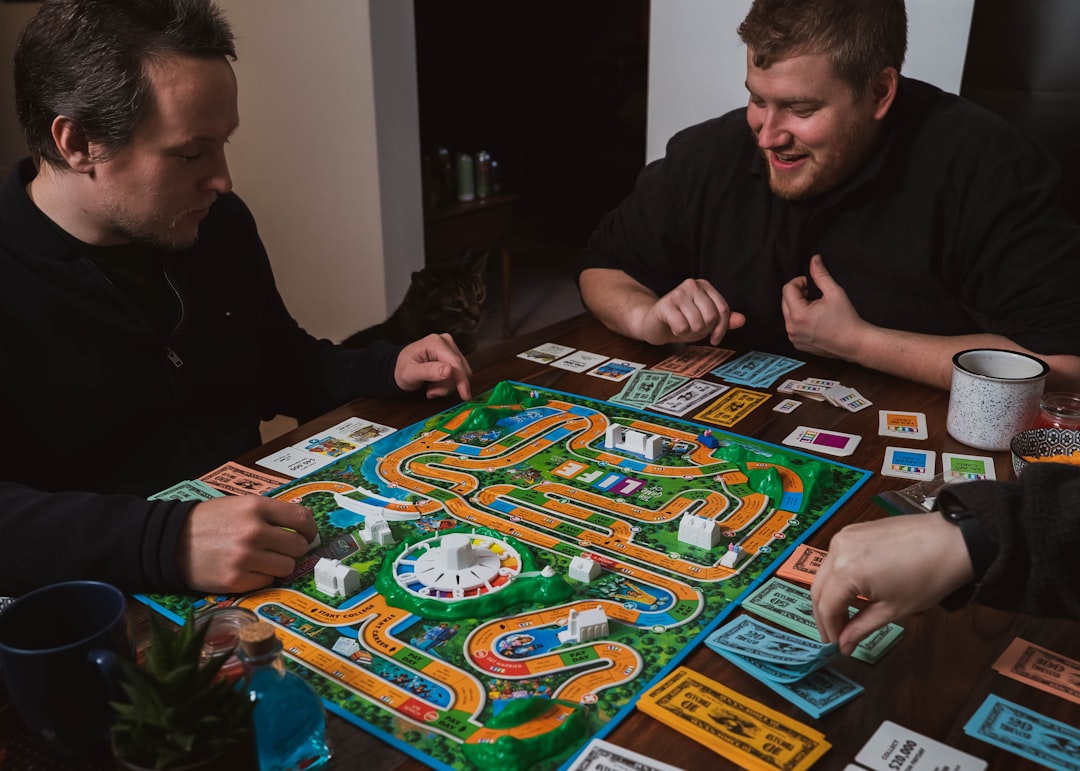
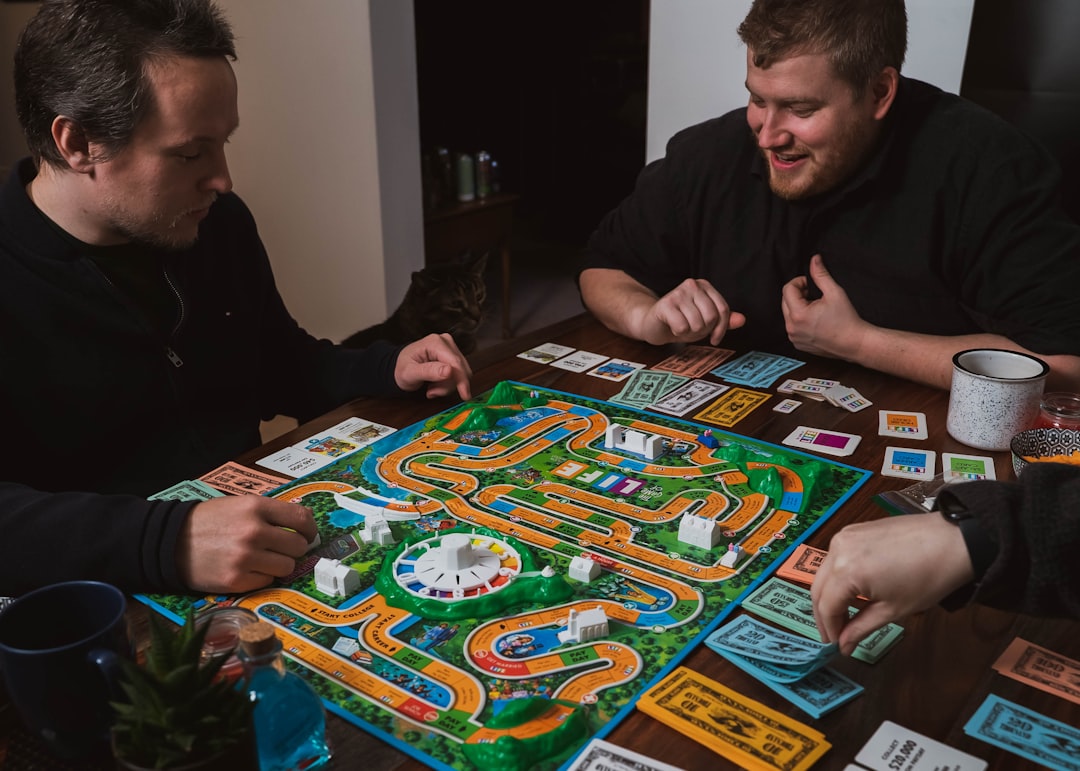
What grown-ups actually respond to is social friction. Not conflict for its own sake, but the particular pleasure of watching someone you know well make a terrible decision, or realising someone you thought was losing has been playing you for thirty minutes. That mix of surprise, recognition, and mild smugness is what generates real laughter at a game night.
Researchers who study play behaviour in adults consistently find that the games people remember most fondly involve moments of social revelation. Someone bluffed. Someone got caught. Someone overconfidently announced a strategy and watched it collapse. The game was just the stage. The entertainment was the people.
This is why a beautifully produced game with zero interaction can feel flat, while a cheap card game with the right mechanics produces absolute chaos in the best possible way.
The Four Types of Adult Fun
Not all fun is the same. It helps to know what kind of evening you are planning before you reach for the box.
Competitive fun is the satisfaction of outplaying someone. This is the pleasure of a well-timed trade, a bluff nobody saw coming, or a resource grab that cuts off your opponent just as they were gaining momentum. It requires a game with genuine decision-making weight.
Social fun is about the conversation the game generates. Some games are basically a prompt for people to be funny together. They work because the rules are light enough that the people around the table become the content.
Tension and release fun comes from games where the stakes build and then something explodes. Think of the final round of an auction game where suddenly everyone is bidding far more than the prize is worth purely out of stubbornness. The release when it resolves is genuinely satisfying.
Intellectual satisfaction is the quiet pleasure of a well-executed plan. This one does not always produce laughter, but it produces the kind of contentment that makes people say "same again next week?" as they leave.
The best fun board games for adults manage to hit at least two of these categories simultaneously.
Why Bluffing Changes Everything
There is a reason bluffing games are consistently the most requested at adult game nights. When you bluff successfully, you feel brilliant. When your bluff is called, it is briefly mortifying and then immediately funny. When you catch someone else bluffing, the table erupts.
Bluffing mechanics work because they make the other players the obstacle rather than the rulebook. You are no longer navigating an abstract system. You are navigating your friend Sarah, who you know always goes quiet when she has a strong hand, or your brother-in-law who raises his eyebrows when he is lying.
Negotiation games work for similar reasons. When the deal is between two people who know each other, it carries an extra charge. Promises get made. Promises get broken. Alliances shift. The game becomes a compressed social drama.
Smoothie Wars is a strong example of this combination in practice. Players compete as smoothie entrepreneurs on a tropical island, managing pricing, supply, and market positions. But the game also rewards reading other players, making bold moves under pressure, and occasionally bluffing about your available stock to shift a rival off their strategy. The blend of economic decision-making and social reading gives it a distinctly adult quality. You can read more about the mechanics in the business lessons from board games piece, which covers how the game mirrors real market dynamics.
Party Game Fun vs Strategy Game Satisfaction
Here is the question that splits most adult friend groups: do you want a party game or a strategy game?
Party games are fast, accessible, and designed to generate noise. They lower the barrier to entry so that everyone from your most board-game-phobic guest to the person who owns seventeen copies of Terraforming Mars can sit down together. The downside is that experienced players can feel unchallenged. The games rarely give you anything to think about the next day.
Strategy games ask more of you. They reward repeated play, pattern recognition, and planning. The first session can feel confusing. The fifth session is when they sing.
The sweet spot for adult fun is a game that has strategic depth but surfaces it through social dynamics rather than pure calculation. Something where the smartest play involves reading the room, not just running the numbers.
That category is more crowded than it used to be, which is good news for game night hosts everywhere.
A Game Night That Actually Worked
A few months ago, a group of six friends gathered for what was supposed to be "a relaxed evening." The host had tried a heavy strategy game the month before and half the table had glazed over by round two. This time she pulled out Smoothie Wars.
The first twenty minutes were cautious. Players set up their stalls, made sensible pricing decisions, played it safe. Then one player deliberately undercut everyone on mango smoothies, crashing the market. Another player, furious, decided to corner the pineapple supply. A third quietly accumulated cash while everyone else was distracted by the price war.
By the final round, two players had formed a temporary alliance to block the leader, whispering audibly enough that everyone could hear them. The leader responded by announcing a dramatic price drop that made the alliance pointless. Someone accused someone else of cheating. Nobody had cheated. The winner was the quiet one in the corner.
The evening ran ninety minutes longer than planned. Three people immediately asked to play again. This is what the right game does.
Fun Factor Breakdown
Here is a quick reference for some of the best fun board games for adults, based on the kinds of evenings they suit best.
| Game | Laughter Rating | Tension Rating | Skill Ceiling | Best Occasion |
|---|---|---|---|---|
| Smoothie Wars | High | High | Medium-High | Competitive game night, 3-8 players |
| Codenames | Medium | Medium | Medium | Mixed-group dinner party |
| Coup | High | Very High | Medium | Short sessions, experienced groups |
| Wavelength | Very High | Low | Low | Relaxed social evenings |
| Ticket to Ride | Medium | Medium | Medium | Casual introductory sessions |
| Sushi Go Party | High | Low | Low | Large groups, quick filler game |
| Secret Hitler | Very High | Very High | Low-Medium | Groups who enjoy social deduction |
The Laughter Rating here reflects moments of genuine surprise or social comedy, not just the premise of the game. Tension Rating reflects how much the final outcome feels uncertain and charged right up to the end.
How Many Players Actually Matters
Six adults at a dinner party is a completely different challenge from three adults who play games weekly. Most strategy games quietly break down above five players. Not because the rules say so, but because the cognitive load becomes too spread out and downtime between turns kills momentum.
This is actually one of Smoothie Wars' practical advantages. It was designed to work well at 8 players, which is genuinely rare in the strategy game space. Most games at that count either become party games by necessity or collapse under their own weight. Getting the resource management right at scale is hard to design, and it shows in the playability.
If you are regularly hosting larger groups, factor player count into your purchase decisions carefully. A great game that falls apart at six is not actually a great game for your specific situation.
Making the Most of Any Game Night
The game is only part of the equation. A few things that reliably improve adult game nights regardless of what you are playing:
Keep the rules explanation short. Read the rulebook yourself first, then teach by playing a practice round rather than front-loading explanation. Adults lose patience fast with lengthy setup talks.
Start with lower stakes. Let people fail a few times in round one without it mattering. They learn faster and feel less defensive.
Pick your game to the group, not to your personal taste. The most fun board games for adults are the ones the specific people in the room will enjoy, not the objectively "best" game.
And if someone is clearly not feeling it by the halfway point, it is absolutely fine to abandon ship and switch to something else. The goal is a good evening.
FAQ
What board game makes adults laugh the most?
Games with bluffing or social deduction tend to produce the most genuine laughter because they create moments of surprise and revelation around people you actually know. Coup, Secret Hitler, and Smoothie Wars all score well here because the comedy comes from watching real people rather than reading scripted prompts.
What is a fun board game for a dinner party?
You want something that works for mixed experience levels, does not take more than fifteen minutes to explain, and has a play time under ninety minutes. Codenames, Wavelength, and Smoothie Wars all fit this profile well. Smoothie Wars has the added advantage of scaling to 8 players without losing quality.
Are competitive board games more fun than cooperative ones?
For most adult groups, yes. Cooperative games can be wonderful, but they often suffer from one player leading and others following. Competitive games keep everyone personally invested because the stakes are individual. That said, cooperative games work brilliantly when the group genuinely collaborates and resists the urge to quarterback. It depends heavily on the personalities around the table.
What is the most fun board game for 6 adults?
Smoothie Wars handles 6 players very well because the market dynamics become genuinely unpredictable at that count. Coup is excellent for 6 and plays in 30 minutes. If the group includes people who do not play games regularly, Codenames or Wavelength will land better than something with a heavier ruleset.
How do I choose between a party game and a strategy game for my group?
Ask yourself two questions. First, how long do people actually want to play - party games typically wrap in 30-45 minutes, strategy games often run 60-120 minutes. Second, how much variation is there in gaming experience across the group. Wide variation favours party games or gateway strategy games. Uniform experience allows you to go deeper. If your group enjoys strategy tips for board games, a strategy-leaning choice will almost always land better.
The best fun board games for adults are the ones people remember three weeks later. Not because the rules were clever or the components were beautiful, but because something genuinely unexpected happened involving someone they actually know. Buy for the moment, not the box art, and you will rarely go wrong.