How Family Game Nights Build Better Communication Skills
Most parents know that spending quality time together matters. But not all "quality time" is created equal. Sitting in the same room while everyone scrolls their phones is not the same as genuinely talking, listening, and connecting.
Family game nights offer something surprisingly powerful: a structured reason to put screens away, look each other in the eye, and actually communicate. And the benefits go far deeper than simply "having fun together."
TL;DR
Regular family board game sessions naturally build communication skills through turn-taking, negotiation, emotional expression, and shared problem-solving. Organisations like Action for Children and the NSPCC highlight the importance of shared family activities for child development and relationship quality. Weekly game nights are one of the most accessible ways to create these meaningful interactions.
Why Shared Activities Matter for Family Communication
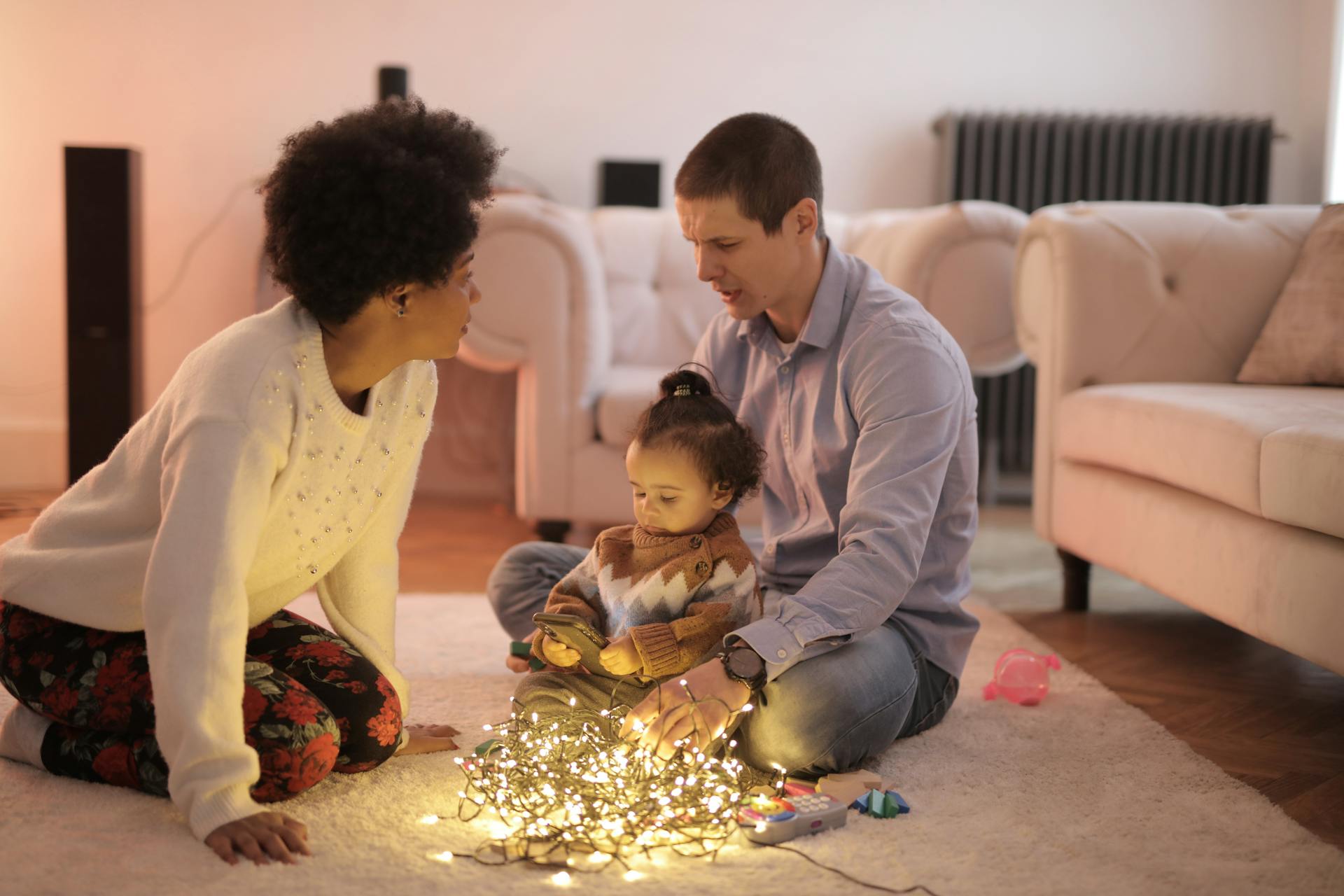
Family psychologists have long recognised that shared activities — particularly those requiring face-to-face interaction — strengthen family bonds in ways that passive activities simply cannot match.
Source:
The NSPCC's guidance on positive parenting reinforces this: children who feel heard and included in family activities are better equipped to express their emotions, manage conflict, and build healthy relationships as they grow.
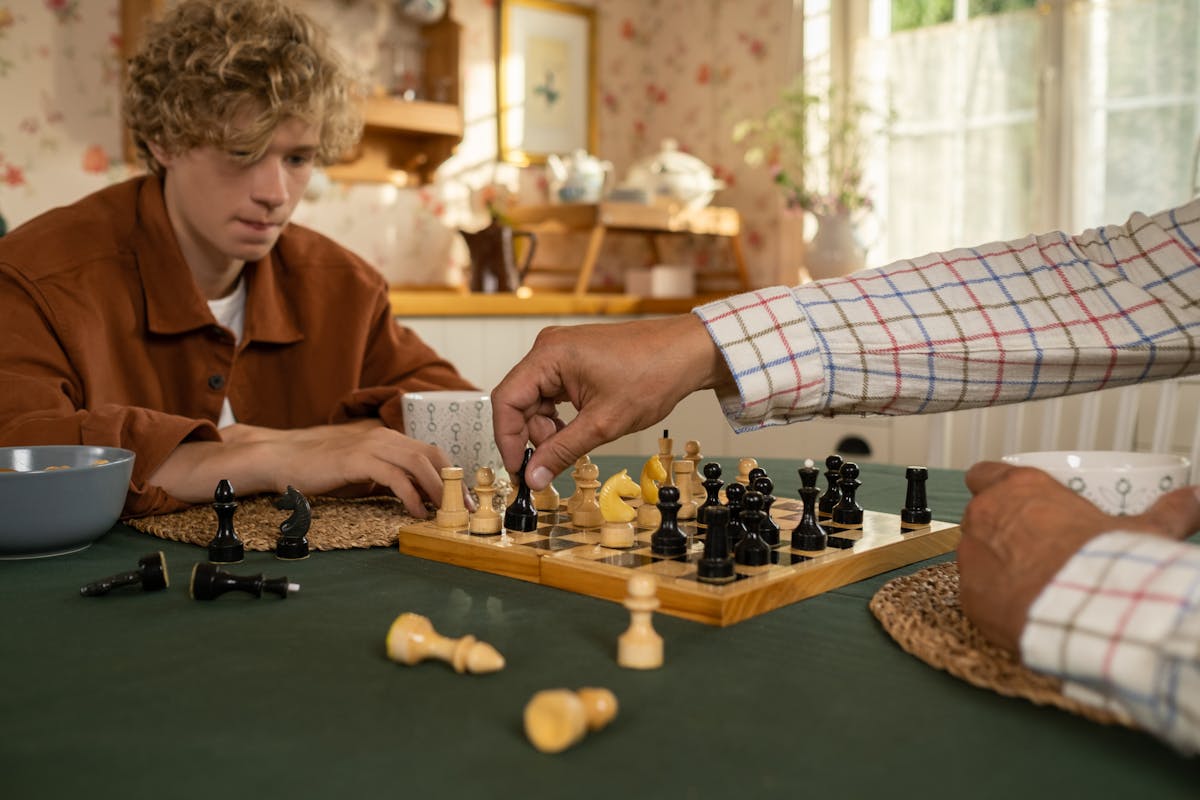
What makes board games particularly effective is their structure. Unlike watching a film together or going for a drive, games demand active participation from everyone at the table. You cannot passively coast through a round of Smoothie Wars — you need to talk, listen, strategise, and react.
Five Communication Skills Board Games Naturally Build
1. Turn-Taking and Active Listening
Every board game enforces a basic but essential communication skill: waiting your turn and paying attention to what others are doing. Children (and, let us be honest, many adults) struggle with this in everyday conversation. Games make it feel natural rather than forced.
When you are tracking what your opponent just did — did they buy strawberries at the beach market, or are they saving for a big move? — you are practising active listening without realising it.
2. Expressing Ideas Clearly
"I want to trade my bananas for your mangoes, but only if you give me two" — this kind of sentence requires a child to organise their thoughts, state their position clearly, and anticipate how another person might respond. That is sophisticated communication practice wrapped in gameplay.
Strategy games are particularly good at this. When players need to explain their reasoning or pitch a deal, they are rehearsing skills that transfer directly to school, friendships, and eventually the workplace.
3. Negotiation and Compromise
Games involving trading, alliances, or shared resources create natural opportunities for negotiation. Children learn that demanding everything rarely works, and that finding middle ground often leads to better outcomes for everyone.
📖 Scenario:
Imagine your ten-year-old wants to control the best smoothie stand location in the game. Their younger sibling also wants it. Rather than an argument, the game creates a framework: they can negotiate, trade resources, or compete fairly within the rules. Either way, they are practising conflict resolution in a low-stakes environment.
For more on handling the trickier moments, our guide on managing sore losers during family games covers practical strategies.
4. Emotional Expression and Regulation
Games generate real emotions — excitement when you pull ahead, frustration when your plan falls apart, disappointment when you lose. These feelings are genuine, but the stakes are low enough that families can process them together safely.
This is enormously valuable. Family Lives, the UK parenting charity, emphasises that children learn emotional regulation primarily through watching how the adults around them handle their own feelings. When a parent loses gracefully or manages frustration with humour, they are modelling skills their children will carry for life.
The moments after a game ends are golden for communication. A simple "How did that feel?" or "What would you do differently next time?" opens up conversations that children often resist in other contexts. Keep it light and curious, not interrogative.
5. Reading Social Cues
Board games are rich with non-verbal communication. Is your sister bluffing about her next move? Does Dad's expression suggest he is about to make a big play? Learning to read body language, tone of voice, and facial expressions in a playful setting builds social awareness that transfers to real-world interactions.
We explore this further in our piece on the psychology of competition in family board games.
What Makes Game Nights Different from Other Family Activities
Not all family activities offer the same communication benefits. Here is how common activities compare:
| Activity | Interaction Level | Communication Practice | Accessibility |
|---|---|---|---|
| Board games | High — constant interaction | Strong — negotiation, expression, listening | Year-round, any weather |
| Family meals | Moderate — conversation-dependent | Moderate — can be one-sided | Daily opportunity |
| Watching TV/films | Low — passive consumption | Minimal — limited to comments | Very easy |
| Outdoor activities | Variable — depends on activity | Moderate — natural conversation | Weather-dependent |
| Crafts/cooking together | Moderate — task-focused | Moderate — instruction and collaboration | Requires materials |
The advantage of board games is that communication is not optional — it is built into the activity itself. You cannot play without interacting, which removes the awkwardness of forced "let us all talk about our feelings" sessions that most families dread.
Getting Started: Practical Advice for Weekly Game Nights
Pick the Right Time and Stick to It
Consistency matters more than duration. A predictable 45-minute session every Sunday afternoon will build stronger habits than occasional two-hour marathons. Children thrive on routine, and knowing that game night is coming gives them something to look forward to.
The sweet spot for most families is 45 to 90 minutes. Sessions under 30 minutes often feel rushed, while anything over two hours risks fatigue and diminishing enjoyment — especially with younger children.
Choose Games That Match Your Family
The biggest mistake families make is choosing games that suit one age group but bore or frustrate another. If you have a wide age range, look for games with simple core rules but enough strategic depth to keep older players engaged.
Our guide on adapting games for different age groups has specific recommendations for mixed-age families.
Create the Right Environment
Put the phones away — all of them, parents included. Make it comfortable and enjoyable: favourite snacks, good lighting, maybe some background music. The goal is for everyone to associate game night with positive feelings.
Let Children Lead Sometimes
Letting children choose the game, explain the rules, or even modify them builds confidence and gives them ownership of the experience. This is especially powerful for quieter children who might not speak up much in other family settings.
Talk About the Game Afterwards
A brief post-game conversation — even just five minutes — dramatically increases the communication benefits. Questions like "What was the best moment?" or "What surprised you?" encourage reflection and emotional expression.
For more on structuring effective game nights, see our article on common family game night mistakes and how to fix them.
Age-Specific Benefits
Young Children (Ages 5-8)
At this age, board games help children practise articulating their choices ("I am going here because..."), following conversational turn-taking, and managing the big emotions that come with winning and losing. Simple games with clear rules work best.
Pre-Teens (Ages 9-12)
This is where strategic games really shine. Pre-teens benefit from explaining their reasoning, reading other players, and negotiating trades or alliances. These skills map directly onto the social complexity they are navigating at school.
Teenagers (Ages 13+)
Adolescence typically brings declining parent-child communication. Game nights offer a non-confrontational way to maintain connection during a period when many teenagers pull away from family interaction. The key is respecting their autonomy — let them choose games and avoid turning it into a lecture.
We cover cross-generational play in more detail in our multigenerational board gaming guide.
When Game Nights Get Difficult
Not every session will be harmonious. Arguments, sulking, and the occasional dramatic table-exit are normal. The important thing is how families respond to these moments.
📖 Scenario:
Your eight-year-old loses badly and declares the game "stupid and unfair." Instead of dismissing their feelings or lecturing them, try acknowledging the emotion first: "I can see you are really frustrated. Losing when you tried hard feels rubbish, does it not?" Then, once the emotion settles, you can talk about what happened and what they might try next time.
These difficult moments are actually where the deepest communication learning happens. Managing disappointment, resolving disputes fairly, and recovering from conflict are life skills that games provide natural practice for.
The Bigger Picture: Why This Matters Now
We live in an era of unprecedented screen time and fragmented attention. Ofcom's research consistently shows that families are spending more time in the same room but less time genuinely interacting. Board games push against this trend by demanding real, face-to-face engagement.
Organisations working with families — from Action for Children to Family Lives — consistently point to shared activities and open communication as protective factors for children's mental health and wellbeing. Game nights will not solve every family challenge, but they create regular, reliable opportunities for the kind of interaction that builds strong relationships.
And unlike many enrichment activities, they cost very little, require no special equipment beyond the game itself, and can happen in any home regardless of space or circumstances.
🔑 Key Takeaways
- Board games naturally build communication skills through turn-taking, negotiation, emotional expression, and active listening
- Weekly sessions of 45-90 minutes offer the best balance of engagement and sustainability
- The moments after a game — win or lose — are valuable opportunities for family conversation
- Game nights are especially powerful during adolescence, when parent-child communication often declines
- Difficult moments (arguments, sore losing) are actually where the deepest learning happens
- Consistency matters more than perfection — a regular, imperfect game night beats an occasional perfect one
Frequently Asked Questions
What age should children be before starting family game nights?
Most children can participate meaningfully from around age five, though simpler games work well even younger. The key is matching the game to the youngest player's ability while keeping it interesting for older family members.
How do we handle it when one child always wins and the others get upset?
This is one of the most common family game night challenges. Introduce games with a luck element to level the playing field, and focus praise on good sportsmanship rather than winning. Our guide on managing sore losers has detailed strategies.
What if my teenager refuses to join in?
Do not force it. Keep the invitation open, let them see others enjoying themselves, and ask if they would like to choose the game next time. Many resistant teens come round once they realise it is genuinely fun rather than a forced bonding exercise.
Are competitive or cooperative games better for family communication?
Both have value. Cooperative games are excellent for families just starting out or working through communication difficulties, as everyone works toward a shared goal. Competitive games build negotiation and resilience. A mix of both tends to work best over time.
How often should we have game nights for real benefits?
Weekly is ideal, but fortnightly still delivers meaningful benefits. The most important factor is consistency — a regular slot in the family calendar that everyone can count on.