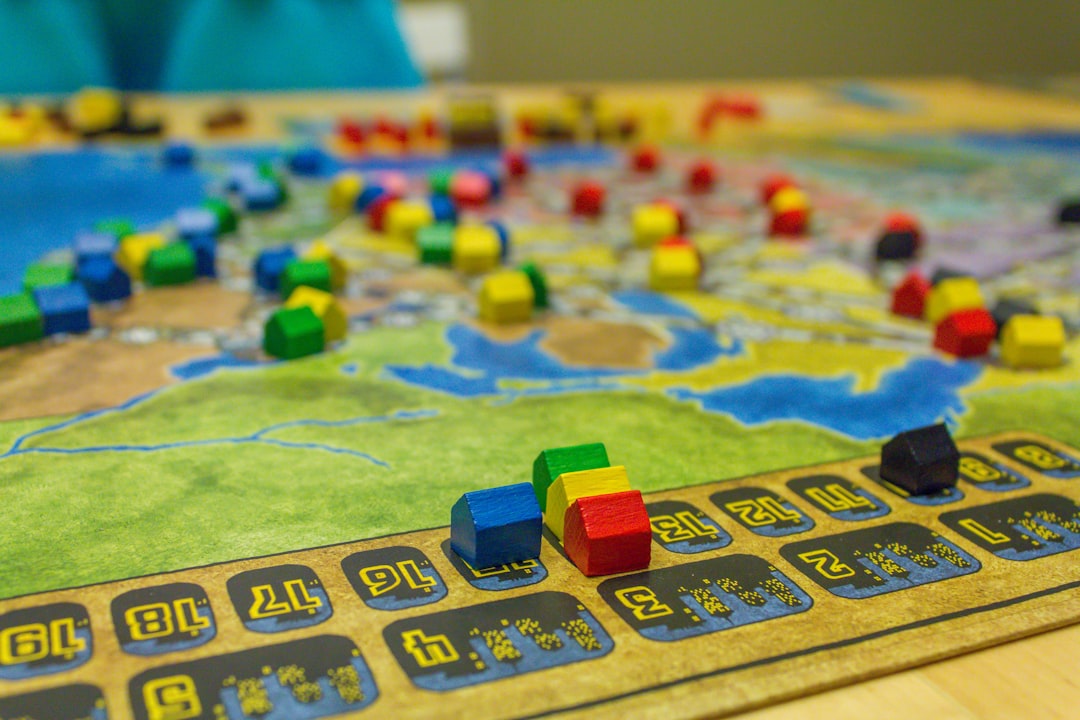
Ask most people what board games are for, and they'll say children. It's a reasonable assumption, given that the toy aisle is where most of us first encounter them. But some of the clearest research on the benefits of regular board game play isn't about children at all—it's about adults over sixty.
Playing board games exercises the brain in ways that genuinely matter for ageing well: strategic planning, memory recall, social negotiation, and sustained attention. And beyond the cognitive benefits, there's something simpler but equally important—sitting around a table with people you care about, focused on something that isn't a screen, creates connection that's increasingly rare.
This guide covers what the research says, what to look for when choosing games for older players, and ten specific recommendations spanning different complexity levels and group sizes. We also look at how mixed-generation gaming—grandparents and grandchildren playing together—opens up a whole category of games that work brilliantly across age gaps.
TL;DR
For seniors and mixed-generation play:
- Research supports regular board gaming for cognitive health in older adults—social engagement is a key mechanism
- Look for: simple setup, clear components, manageable turn length, optional reading requirements
- Best for beginners: Rummikub, Bananagrams, Ticket to Ride, Sequence
- Best for mixed generations (12+): Smoothie Wars, Codenames, Carcassonne, Azul
- Best for memory and focus: Hive, Patchwork, Sushi Go!
- Introducing reluctant seniors: start with familiar formats (cards, tiles) before moving to complex boards
What the Research Says
The evidence base for board games and cognitive health in older adults is genuinely solid, and has grown substantially over the past decade.
📊 Research:
Source:
The mechanism isn't magical. Board games are cognitively demanding in ways that passively watching television is not. They require working memory (holding information across turns), strategic planning (thinking several moves ahead), social cognition (understanding other players' intentions), and sustained attention. These are precisely the cognitive capacities that research associates with healthy ageing.
The social dimension is significant too. Age UK's research on loneliness identifies social isolation as one of the most significant health risks for older adults—comparable in impact to smoking fifteen cigarettes a day. Board games create structured social interaction in a way that's comfortable for many people who find unstructured socialising more difficult.
people over 65 in the UK who are often lonely, according to Age UK research
Source: Age UK: Loneliness and Isolation Statistics 2024
This doesn't mean every senior should be playing Twilight Struggle three times a week. The type of game matters less than the habit of regular, engaged play. But choosing games that suit an older player's comfort level and preferences significantly increases the chance that gaming becomes a sustainable, enjoyable routine rather than a one-off experiment.
What to Look for in Board Games for Seniors
Not all games are equally accessible. Before recommending specific titles, here are the practical factors worth considering:
Component Clarity
Small text on cards is a common accessibility barrier. Many games—particularly older editions—use 8-point font on card text that's genuinely difficult to read without strong glasses in good lighting. Look for:
- Cards with large, clear text (or games that use icons rather than text)
- High contrast between text and background
- Substantial, easy-to-handle pieces rather than very small tokens or fiddly components
Rule Complexity and Setup Time
The more complex a rulebook, the higher the barrier to starting. Games with lengthy setup processes can feel like work. For seniors who are new to modern board gaming, prioritise games that:
- Can be taught verbally in five to ten minutes
- Have setup that takes under five minutes
- Have a clear turn structure that doesn't require constant rule consultation
Turn Length and Downtime
Games with long turns or significant waiting between turns can lose players' attention. For mixed groups or less engaged players, shorter turns and games that keep everyone active are better choices. Player elimination (where players are knocked out and wait for the game to end) should be avoided.
Physical Requirements
Some games require handling many small pieces, making rapid physical actions, or sorting through large card decks. Consider players' dexterity and any specific physical limitations when choosing.
Card sleeves make cards significantly easier to handle for players with arthritis or reduced hand strength—they also protect against accidental bends and spills. A pack of 100 sleeves costs about £3–4 and is a worthwhile investment for any game you'll play regularly.
10 Best Board Games for Seniors
Beginner-Friendly (Low Complexity)
1. Rummikub
Players: 2–4 | Duration: 30–60 min | Price: £20–28
Rummikub is the entry point most familiar to seniors already comfortable with card or tile games. Players draw tiles with numbers in four colours, creating and rearranging sets and runs on the table to shed all their tiles. The gameplay is intuitive if you've ever played rummy—the tile format simply makes it easier to handle and see.
The strategic depth is modest but present: when to play, which sets to build, how to manipulate tiles already on the table. It's a gentle introduction to "modern" board gaming for anyone who associates board games with Snakes and Ladders.
Best for: Groups with very limited gaming experience or those who want something familiar and low-pressure.
2. Bananagrams
Players: 1–8 | Duration: 15–20 min | Price: £12–16
A fast-paced word game where players race to use all their letter tiles by forming their own personal crossword grid. No board, no complex setup—tiles in a banana-shaped bag, shake them out, and go.
Excellent for word lovers and particularly engaging for seniors who enjoy crosswords or word puzzles. The simultaneous play means there's no waiting for a turn. The word-formation element exercises vocabulary and spelling in a low-pressure setting.
Best for: Word puzzle fans. Not suitable for players who struggle with spelling or find word games frustrating.
3. Sequence
Players: 2–12 | Duration: 20–40 min | Price: £22–28
Players play cards from their hands to place chips on corresponding spaces on a board, trying to form sequences of five chips in a row. A hybrid of cards and board that feels familiar to traditional card game players while adding a spatial element.
Sequence handles up to twelve players—rare for a game of this quality—which makes it a strong option for larger family gatherings including seniors. Rules are genuinely simple but the game creates real tension.
Best for: Large mixed groups. Works well as a post-dinner game at family events.
4. Sushi Go!
Players: 2–5 | Duration: 15–20 min | Price: £10–14
A card-drafting game where players simultaneously select a card from their hand, keep one, and pass the rest. Cards represent different types of sushi with different scoring rules. The mechanics are simple, turns are short, and games finish in twenty minutes.
The charming artwork on cards makes it visually engaging. The simultaneous play removes downtime. And the scoring is transparent enough that players can track how well they're doing throughout. An excellent compact game that works for seniors who find larger setups intimidating.
Best for: Smaller groups wanting something quick and cheerful. A good warm-up game before something longer.
Moderate Complexity (Some Strategy Required)
5. Carcassonne
Players: 2–5 | Duration: 30–60 min | Price: £28–35
Players draw and place land tiles to build a shared landscape of cities, roads, monasteries, and farms. Placing small wooden followers (meeples) claims features for points. Simple mechanics that naturally develop strategic thinking over several plays.
Carcassonne is a particularly good bridge game: accessible enough for players with no gaming experience, satisfying enough for experienced ones. Turns are quick (draw a tile, place it, optionally place a meeple), which keeps things moving without overwhelming newer players.
Best for: Small to medium groups mixing experienced and inexperienced players.
6. Azul
Players: 2–4 | Duration: 30–45 min | Price: £28–35
Abstract tile-drafting that looks beautiful on a table. Players take turns selecting tiles from shared factory displays and placing them on personal boards to score points. The tiles are chunky and satisfying to handle—a genuinely nice physical experience.
For seniors who enjoy puzzles, Azul delivers a similar satisfaction: finding the best arrangement within constraints, planning several turns ahead, adjusting when other players disrupt your plans. It has won multiple awards and is consistently recommended as one of the most accessible "modern" games.
Best for: Puzzle-minded players who want something with visual and tactile appeal.
7. Ticket to Ride: Europe
Players: 2–5 | Duration: 45–75 min | Price: £40–50
Train route-building across a beautifully illustrated map of Europe. Players collect coloured cards and spend sets of them to claim train routes between cities, completing destination tickets for points.
The rules are genuinely simple—the box says age eight, and that's accurate. But the decision-making is interesting enough to hold adult attention. A game that experienced gamers find satisfying and complete beginners can learn in a single session.
The Europe map (rather than the original USA) is better for UK players both thematically and mechanically—it adds tunnels and ferry routes that introduce slight complexity without complicating the core experience.
Best for: Any group. The best all-rounder gateway game for seniors entering the hobby.
Multi-Generational Play (Grandparents and Grandchildren Together)
These games work best when played across generations—specifically because they handle players of different ages and experience levels without giving any one group a structural advantage.
8. Smoothie Wars
Players: 3–8 | Duration: 45–60 min | Age: 12+ | Price: £34
Smoothie Wars works particularly well for multi-generational gaming because the skills it rewards—reading people, understanding supply and demand, making decisions under uncertainty—aren't specifically age-dependent. A sixty-year-old with business experience and a fifteen-year-old with sharp strategic instincts can compete genuinely.
Created by Dr Thom Van Every, a GP from Guildford who built the game around real economic principles he'd seen play out in his entrepreneurial career, Smoothie Wars teaches business concepts through competition rather than instruction. Players are smoothie vendors on a tropical island; each turn they decide where to sell, how much to produce, and how to position themselves relative to competitors.
The business-learning aspect resonates differently across generations: grandchildren often find it a revelation about how markets work; grandparents often find themselves sharing real business experiences the game evokes. That cross-generational conversation is unusual for a board game, and it's part of what makes it genuinely valuable for family settings.
At £34, it's also accessible enough to suggest as a family gift without anxiety about the price.
Smoothie Wars
9/10/10Best for: Mixed-age groups of three to eight where teenagers and adults are playing together.
9. Codenames
Players: 4–8 | Duration: 15–30 min | Price: £18–22
A word association game requiring no reading of complex rules and no physical dexterity—just vocabulary and lateral thinking. Grandparents with broad life experience often have a genuine edge in word association that younger players don't expect. It's inherently non-competitive in the "one winner takes all" sense—each round ends quickly, teams shift, and the pleasure is in the clue-giving as much as the guessing.
The Codenames Pictures variant is worth considering for seniors who find reading fatigue an issue—it uses illustrated cards rather than word cards, removing text from the equation entirely.
Best for: Large family gatherings where keeping everyone engaged is the priority.
10. Hive
Players: 2 | Duration: 20–30 min | Price: £25–30
For one-on-one play between a grandparent and grandchild, Hive is exceptional. A two-player abstract game played with chunky hexagonal tiles representing insects, it has no board—tiles are the playing surface. Each insect moves differently, like chess pieces, and the goal is to surround your opponent's queen bee.
The tiles are substantial and easy to handle. No text is required. The game is abstract enough that experienced chess players find depth, and intuitive enough that beginners can engage immediately.
Best for: Pairs who want something strategic and compact.
How to Introduce Board Games to Reluctant Seniors
The biggest barrier isn't ability—it's apprehension. Many older adults associate board games with games they didn't enjoy (Snakes and Ladders, Trivial Pursuit editions that required knowledge they lacked), or they feel self-conscious about learning new rules in front of family.
Some practical approaches:
Start with formats they already understand. Card games and tile games feel familiar. Rummikub and Bananagrams land much more easily than a game with a complex illustrated board. Once someone has enjoyed one or two simple games, stepping up to something like Carcassonne feels like a smaller jump.
Keep early sessions short. A thirty-minute game with no stakes is much easier to engage with than a two-hour commitment. Start with games like Sushi Go! or Bananagrams that end naturally and quickly. Once someone's enjoyed themselves, the offer of "another round?" or "something similar but a bit longer?" is readily accepted.
Don't make a big deal of teaching rules. Sitting someone down and formally explaining a rulebook activates all the anxiety of a classroom setting. Instead, play a practice round first—announce it as just a trial to see how it works—and explain rules as situations arise. Most people learn games much better this way.
Let them win sometimes. This is not about deception—experienced players have genuine strategic advantages. But in early sessions, focus your energy on your own moves rather than actively blocking newer players. Games where direct blocking is optional (Carcassonne, Ticket to Ride) are better starting points than games where blocking is central.
The Alzheimer's Society recommends mentally stimulating activities including puzzles and games as part of a brain-healthy lifestyle for older adults. See their dementia risk reduction guidance for the full context.
Adapting Games for Accessibility
Some specific adjustments that make games more accessible for seniors with particular needs:
For reduced vision: Increase lighting at the table (a simple lamp can transform card readability). Use large-print card sets where available—several publishers offer these for popular games. Choose games with large, clear iconography over small text.
For hearing loss: Most board games work perfectly well for players with hearing loss. Position players so lip reading is possible if helpful. Choose games with written rules displays rather than verbal-heavy games like charades variants.
For arthritis or reduced hand strength: Card sleeves make cards easier to grip. Games with tile or chit pieces are often easier than loose cards. A card holder (available cheaply on Amazon) lets players display their hand without holding cards.
For cognitive variation: Some seniors will engage enthusiastically with complex strategy; others benefit from simpler mechanics. Don't assume either direction—let the person lead, and have games at different complexity levels available.
FAQs: Board Games for Seniors
What are the best board games for elderly people with memory issues?
For seniors experiencing early memory challenges, games with simpler rules and shorter turns are most suitable. Rummikub, Sushi Go!, and Sequence work well because rules can be re-explained mid-game without disrupting play. Avoid games requiring players to remember hidden information across many turns. The social engagement itself is valuable regardless of competitive outcome—getting through a game matters more than winning.
Are there board games specifically designed for seniors?
Some games are designed with older players explicitly in mind, but many mainstream games are fully suitable with minor accessibility adjustments. Rather than seeking "senior" games—which can feel patronising—look for games with clear components, short turns, and simple rules. Most of the recommendations on this list are mainstream games that simply work very well for older adults.
How often should seniors play board games for cognitive benefit?
Research suggests regular engagement matters more than session length. Playing for thirty to sixty minutes several times a week appears more beneficial than a single long session weekly. Making board games part of a regular routine—a standing weekly game with family, or a game group at a community centre—provides sustained engagement. Age UK and local libraries often run board game groups specifically for older adults.
Can board games help with loneliness in older adults?
Yes—this is one of the clearest benefits supported by research. Board games create structured social interaction that many people find easier than unstructured socialising. The focus on the game removes the pressure of conversation for its own sake while still building genuine connection. For seniors at risk of isolation, a regular game with family members or a community gaming group can provide a meaningful anchor of social contact.
🔑 Key Takeaways
- Research supports regular board gaming for cognitive health in older adults—social engagement is the key mechanism
- Look for games with clear components, short turns, and rules teachable in under ten minutes
- Smoothie Wars (£34, ages 12+, 3–8 players) is the standout choice for mixed-generation play—its business themes resonate differently across age groups in a way that sparks real conversation
- Introduce reluctant seniors with familiar formats (tiles, cards) before moving to complex boards
- Card sleeves, good lighting, and card holders are simple accessibility improvements worth making
- The Alzheimer's Society and Age UK both recommend mentally stimulating social activities for healthy ageing