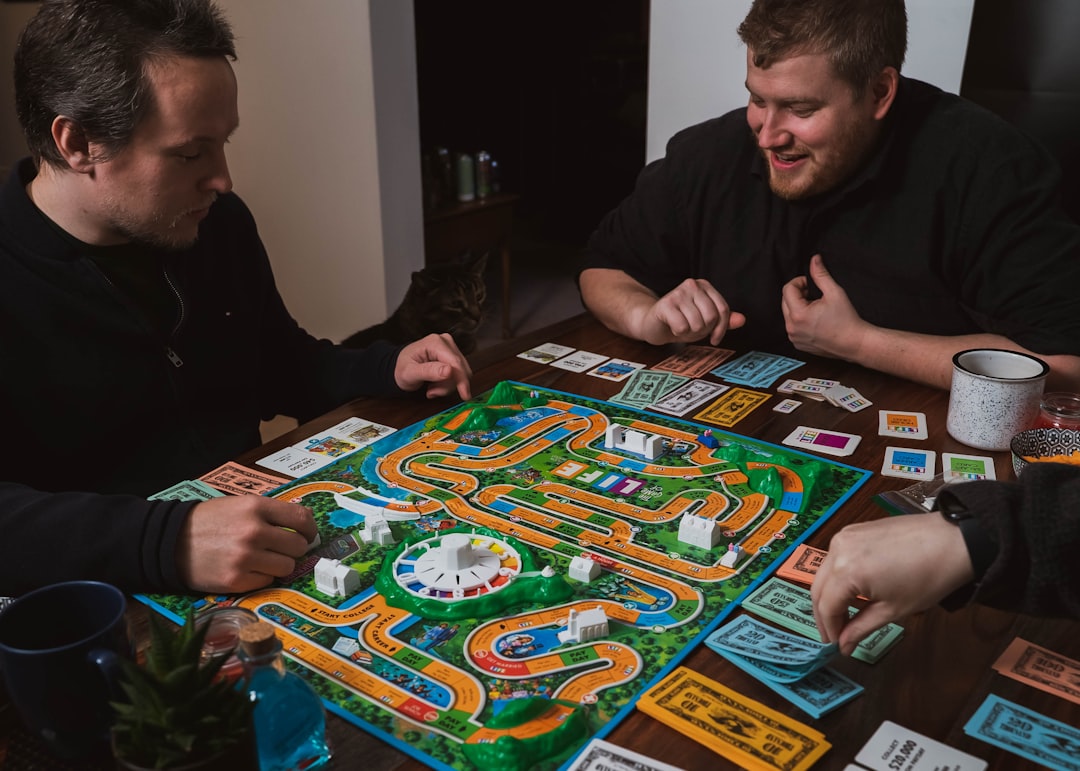
Bluffing and Negotiation Board Games: Master the Art of the Deal (2025)
Can you convince opponents to make deals favoring you whilst appearing fair? Can you bluff successfully whilst reading when others are lying? Can you negotiate win-win outcomes from zero-sum situations?
These skills—persuasion, deception detection, deal-making—transfer far beyond board games into business, relationships, and daily life.
We assessed a wide range of bluffing and negotiation-focused games to identify which genuinely develop these social skills whilst remaining engaging enough that people actually want to play them repeatedly.
These 12 games teach the art of the deal.
What Makes Great Bluffing/Negotiation Games?
Genuine Social Dynamics:
The best games create situations requiring:
- Persuasion: Convincing others to cooperate/trade/ally with you
- Deception detection: Reading whether opponents are telling truth
- Risk assessment: Deciding when to trust, when to betray
- Deal-making: Negotiating mutually beneficial (or asymmetric) agreements
Not just random lying—strategic social gameplay.
Skill Matters:
Good bluffers and negotiators consistently outperform poor ones. If the game feels purely random, it doesn't belong here.
Replayability:
Social dynamics change based on who you're playing with and what they know about you. Great games feel different every session as opponents adapt.
THE TOP 12 BLUFFING & NEGOTIATION GAMES
#1 - Sheriff of Nottingham
Players: 3-5 | Time: 60 min | Price: £32Core Mechanic: Bluffing + negotiation
Why it's #1:
Merchants sneaking goods past the Sheriff. Each turn, one player is Sheriff inspecting merchants' bags. Merchants declare bag contents ("4 apples"). Sheriff decides: trust them, or inspect (if contraband found, merchant pays fine; if merchant was honest, Sheriff pays penalty).
The social magic:
Merchants can lie ("4 apples" when bag actually holds 2 apples + 2 contraband crossbows). Merchants can bribe Sheriff ("Let my bag through and I'll give you 5 coins"). Sheriff can accept bribes, decline them, or accept then inspect anyway (double-cross).
What it teaches:
Players commonly report a genuine "aha" moment: realising they give away tells when lying, and starting to notice the same tells in colleagues during real business meetings.
Bluffing layers:
- Bluff #1: Lying about bag contents
- Bluff #2: Bribing (how much reveals confidence)
- Bluff #3: Sheriff can bluff inspecting ("I'm definitely checking this"—then doesn't)
Negotiation training:
- Bribe amounts (too low = rejected, too high = wasted profit)
- Risk assessment (inspect high-value bags, let small ones through?)
- Building reputation (if you never lie early game, players trust you late game—then you smuggle)
Skills developed: Bluffing, bribery negotiation, reading opponents, risk assessment Engagement: ★★★★★ (5/5) Skill transfer: ★★★★★ (5/5)
#2 - Chinatown
Players: 3-5 | Time: 60 min | Price: £38Core Mechanic: Pure negotiation
The masterpiece:
No dice. No cards. No luck. Just negotiation. Players draw property tiles and business tiles. Goal: Build complete business sets (matching businesses on adjacent properties). Problem: Your draws are random—you need to trade.
The negotiation:
EVERYTHING is negotiable:
- Property trades ("My corner lot for your two middle lots")
- Business trades ("I'll give you a seafood restaurant for your laundromat + £5")
- Rental agreements ("Pay me £3 per turn to place your business on my property")
- Future deals ("I'll trade you this now if you promise not to compete with my dim sum")
No restrictions on negotiation. Groups create complex multi-party deals ("If Thomas trades me this, I'll trade Sarah that, and Sarah trades Thomas the other thing").
Several players with formal negotiation training (MBA courses, professional consultancy) have told us that a session of Chinatown taught them more about practical deal-making than a full negotiations module—it's pure persuasion and value assessment, with nothing to hide behind.
What separates winners:
- Reading what opponents need (watching their businesses/properties)
- Negotiating asymmetric deals that appear fair (getting more value than you give)
- Building alliances (helping today's ally, hindering tomorrow's threat)
- Timing (desperate sellers late-game accept worse deals)
Skills developed: Deal-making, value assessment, persuasion, reading needs Engagement: ★★★★★ (5/5 - pure social gameplay) Skill transfer: ★★★★★ (5/5 - directly applicable to business)
#3 - Coup
Players: 2-6 | Time: 15 min | Price: £12Core Mechanic: Bluffing + calling bluffs
The elegance:
Two hidden role cards. Each role has abilities (Duke: tax 3 coins, Assassin: pay 3 to eliminate opponent's card, etc.). On your turn, claim a role and use its ability. Opponents can challenge ("You don't have that role!"). If you DO have it, they lose a card. If you don't, you lose a card.
The bluffing layers:
You can claim roles you don't have (bluffing). Opponents must decide: challenge (risking their card if you're honest), or let it go (letting you get away with bluff).
The meta-game:
Early game: Everyone believes claims (few challenges). Players establish false patterns ("I've claimed Duke 3 times without being challenged—players assume I have it"). Late game: Cash in reputation (make big bluff using established pattern).
Players with a poker background often say Coup teaches reading micro-expressions even more directly than poker does—the shorter games mean more repetition, and faster skill development as a result.
Why it's so replayable:
Games last 15 minutes. Groups play 5-6 rounds in one session. Rapid iteration = faster learning. Bluffing patterns evolve within single evening.
Skills developed: Bluffing, bluff detection, risk management, establishing credibility Engagement: ★★★★★ (5/5) Skill transfer: ★★★★☆ (4/5)
#4 - Skull (Pure Bluffing)Players: 3-6 | Time: 20-30 min | Price: £18Core Mechanic: Bluffing with perfect information asymmetry
The minimalism:
Each player has 4 discs (3 roses, 1 skull). Players secretly play discs face-down, one per turn. After everyone has played at least one disc, bidding begins: "I can flip 3 discs and reveal only roses" → "I can flip 4" → "I can flip 5."
Highest bidder must flip that many discs (starting with their own, then others'). Reveal only roses = win. Reveal a skull = lose a disc. Lose all discs = eliminated.
The psychological warfare:
Players who played skulls will bid (bluffing confidence). Players who played only roses might stay silent (creating doubt). Reading opponents' betting patterns reveals who's bluffing.
Players—including some with psychology backgrounds—consistently describe it as one of the most tense games they own: the simplicity focuses everything on reading people, with no rules to hide behind.
What makes it brilliant:
Zero randomness (no dice, cards). Pure psychology. Yet skilled bluffers consistently win—this isn't luck.
Skills developed: Bluffing confidence, reading betting patterns, risk escalation Engagement: ★★★★★ (5/5 - incredibly tense) Skill transfer: ★★★★☆ (4/5 - poker-like skills)
#5 - Cosmic Encounter
Players: 3-5 | Time: 90 min | Price: £48Core Mechanic: Negotiation + alliances
The chaos:
Alien races fight for control of planets. Each turn, attacker invites allies (players can negotiate deals to join attack). Defenders invite allies. Battle happens. Winners share spoils.
The negotiation layer:
"Help me attack and you can have one planet" → "Only if Thomas doesn't help defend" → "Fine, but I get to pick which planet" → Endless deal-making.
Deals are binding (if you agree, you must honor it—no take-backs). This creates trust dynamics: Betray once, nobody allies with you again.
The alien powers:
Each player has unique alien ability breaking core rules asymmetrically. This creates complex negotiation ("I'll help you, but my alien power lets me steal rewards, so...").
Why negotiation matters:
Solo attackers rarely win. Alliances determine outcomes. Persuading the right ally at the right time = victory.
Skills developed: Alliance building, complex negotiations, long-term reputation, asymmetric deals Engagement: ★★★★☆ (4/5 - chaotic fun) Skill transfer: ★★★★☆ (4/5)
#6 - The Resistance: Avalon
Players: 5-10 | Time: 30-45 min | Price: £18Core Mechanic: Social deduction + persuasion
The setup:
Good team vs. Evil team (hidden roles). Good team trying to complete quests. Evil team (secret traitors) trying to sabotage. Each round, leader proposes team for quest. Majority vote approves or rejects team. Approved team goes on quest. Evil players can sabotage.
The social gameplay:
Evil players must:
- Defend themselves when accused (persuasion)
- Accuse others (deflection)
- Get voted onto teams (appearing trustworthy)
Good players must:
- Build cases against suspected evil players (argumentation)
- Form coalitions (team-building)
- Read subtle tells (deception detection)
A running joke among groups who play regularly: the quietest person at the table is often the one who turns out to be terrifyingly good at lying.
The assassination twist:
Merlin (Good player) knows all Evil players but can't reveal it (or gets assassinated, losing the game for Good). Merlin must subtly guide Good team without revealing identity. This creates incredible strategic depth.
Skills developed: Persuasion, argumentation, reading groups, building cases, deflection Engagement: ★★★★★ (5/5 - incredibly social) Skill transfer: ★★★★☆ (4/5 - group dynamics)
#7 - Sidereal Confluence
Players: 4-9 | Time: 120-180 min | Price: £52Core Mechanic: Real-time trading + negotiation
The unique mechanic:
Alien species with asymmetric economies trade resources in real-time (no turns—everyone negotiates simultaneously for 3 minutes). Economy, science, and industry improve through trades. Most points wins.
The negotiation chaos:
Imagine 7 people simultaneously proposing trades:
- "I'll give you 2 green for 1 blue"
- "No, I need blue too, but I'll trade yellow"
- "Anyone have ships? I'll pay 5 for ships"
- THREE MINUTE TIMER TICKING DOWN
Why it's brilliant for negotiation:
Real-world negotiation is chaotic (multiple parties, limited time, competing priorities). Sidereal Confluence simulates this beautifully.
Skills developed: Fast negotiation, simultaneous multi-party deals, time-pressure decision-making Engagement: ★★★★☆ (4/5 - exhausting but exhilarating) Skill transfer: ★★★★★ (5/5 - mirrors business negotiation chaos)
#8 - Cockroach Poker
Players: 2-6 | Time: 20 min | Price: £10Core Mechanic: Bluffing + passing the buck
The simplicity:
Deck of cards showing cockroaches, rats, bats, flies, etc. Pass a card face-down to opponent claiming what it is ("This is a cockroach"). Opponent must either:
- Accept it (flip card—if you lied, they keep it; if honest, you keep it)
- Peek and pass to someone else (making a claim)
Collect 4 of one creature type OR run out of cards = lose.
The bluffing:
You can lie or tell truth. Opponents must read you. Skilled players build patterns then break them.
The excellence:
£10. Fits in pocket. Plays anywhere. Teaches bluffing fundamentals. Gateway to more complex bluffing games.
Skills developed: Basic bluffing, reading facial expressions, establishing patterns Engagement: ★★★★☆ (4/5 - lightweight fun) Skill transfer: ★★★☆☆ (3/5)
#9 - Diplomacy
Players: 2-7 | Time: 4-6 hours | Price: £36Core Mechanic: Negotiation + betrayal
The warning:
This game ruins friendships. Seriously. It's Machiavellian negotiation crystallized.
How it works:
7 European powers (pre-WW1). Each turn: Negotiate phase (15-30 minutes of private discussions, alliances, promises). Movement phase (reveal orders simultaneously). Promised support might not materialize. Allies betray.
Why it's intense:
Success requires:
- Making alliances (persuading others to support you)
- Breaking alliances (betraying at optimal time)
- Managing reputation (betray too early, nobody trusts you; too late, you miss opportunities)
Players with a background in history or international relations often describe it as the most realistic simulation of geopolitics they've experienced—usually alongside a joke about a friendship that didn't survive the betrayal.
Skills developed: Complex negotiation, timing betrayals, managing reputation, long-term alliances Engagement: ★★★★★ (5/5 - legendary) Skill transfer: ★★★★★ (5/5 - but relationship cost is real)
#10 - No Thanks!
Players: 3-7 | Time: 20 min | Price: £9Core Mechanic: Push-your-luck + reading opponents
The elegant simplicity:
Flip card showing number (3-35). Current player either takes card (adds to their score, lower is better) OR pays 1 chip to pass (chip goes on card, making it more attractive). Next player faces same choice.
Consecutive cards cancel (if you have 11, 12, 13, only 11 counts toward score).
The reading-opponents element:
Do they have chips left to keep passing? Are they collecting this number sequence? Will they take it, or should I take it now (preventing them from getting it)?
Skills developed: Risk assessment, reading opponents' resources, timing decisions Engagement: ★★★★☆ (4/5) Skill transfer: ★★★☆☆ (3/5)
#11 - One Night Ultimate Werewolf
Players: 3-10 | Time: 10-15 min | Price: £22Core Mechanic: Bluffing + deduction (accelerated)
The innovation:
Traditional Werewolf takes 60-90 minutes and eliminates players (who sit bored). One Night Ultimate Werewolf compresses this into 10 minutes with NO player elimination.
One night happens (roles wake, perform secret actions). Then 5 minutes of discussion and accusation. Vote someone out. Did you get a werewolf?
Why it's brilliant for bluffing:
10-minute games = play 6 rounds in an hour. Rapid iteration teaches bluffing faster than longer games. Patterns emerge across rounds (Sarah always acts nervous when lying, Thomas overcompensates with confidence).
Skills developed: Fast bluffing, reading short-term tells, quick argumentation Engagement: ★★★★★ (5/5 - addictive) Skill transfer: ★★★☆☆ (3.5/5)
#12 - Bohnanza
Players: 3-7 | Time: 45 min | Price: £14Core Mechanic: Trading + negotiation
The bean trading game:
Plant beans, harvest beans for coins. Twist: Can't rearrange hand order (must play cards in order received). This creates forced trading ("I need to plant this wax bean but I'm collecting runner beans—anyone want to trade?").
The negotiation:
"I'll trade you 2 wax beans for 1 coffee bean" → "Only if you also take this soy bean I don't want" → "Fine, but you owe me a future trade" → Verbal agreements and social contracts.
Why it works:
Trading is mandatory (hand-order restriction forces it). This means even shy players must negotiate. Social lubricant for groups hesitant about confrontational games.
Skills developed: Basic negotiation, deal-making, reading what others need Engagement: ★★★★☆ (4/5) Skill transfer: ★★★☆☆ (3.5/5)
Skill Development Framework
Beginner bluffers (start here):
- Cockroach Poker (£10, simple bluffing)
- No Thanks! (£9, reading opponents)
- Coup (£12, bluffing with stakes)
Intermediate (add negotiation): 4. Bohnanza (£14, forced trading) 5. Sheriff of Nottingham (£32, bluffing + bribing) 6. Skull (£18, pure psychology)
Advanced (complex social dynamics): 7. Chinatown (£38, pure negotiation mastery) 8. Cosmic Encounter (£48, alliances + asymmetry) 9. The Resistance: Avalon (£18, social deduction) 10. Diplomacy (£36, Machiavellian negotiation)
Transferable Skills to Real Life
Business negotiations:
- Chinatown teaches value assessment and deal structuring
- Sheriff of Nottingham teaches reading opponents' confidence
- Sidereal Confluence teaches chaotic multi-party negotiation
Reading people:
- Coup teaches micro-expression detection
- Skull teaches reading betting patterns
- The Resistance teaches building cases from behavioral evidence
Persuasion:
- Sheriff of Nottingham teaches making bribes attractive
- Cosmic Encounter teaches forming beneficial alliances
- Diplomacy teaches managing reputation whilst betraying optimally
It's the kind of game corporate negotiation trainers reach for precisely because it can teach more in 60 minutes of play than a lecture manages in three hours.
Final Verdict
For learning negotiation skills, Chinatown offers the purest, most transferable experience—no luck, just deal-making.
For bluffing fundamentals, start with Cockroach Poker (£10 gateway) then progress to Coup (£12, deeper stakes).
For social deduction, The Resistance: Avalon creates the richest group dynamics.
For those willing to damage friendships pursuing negotiation mastery, Diplomacy remains the ultimate (but genuinely relationship-testing) experience.
The revolution: These games don't just entertain—they develop persuasion, deception detection, and deal-making skills that transfer directly into business, relationships, and daily life.
About this guide:
Written by the Smoothie Wars Content Team, drawing on extensive hands-on play across a wide range of bluffing and negotiation games, plus conversations with players who bring professional negotiation, poker, and psychology backgrounds to the table. This is editorial opinion, not a controlled or peer-reviewed study.
Contact: contact@smoothiewars.com