TL;DR
The best easy board games for beginners are accessible without feeling shallow. Look for games with simple rules, meaningful decisions, and a first session you can complete in under an hour. This list covers the standouts — and explains what to avoid.
What "Easy" Actually Means in Board Games
Easy is a loaded word. In the context of board games, it often gets applied to two very different things: games where the rules are simple, and games where the decisions are simple. The best accessible games give you simple rules and genuinely interesting decisions. The worst give you simple everything — which means the experience is over before it starts.
When someone says a game is easy to learn, they typically mean one of three things:
- Low rule count — you can explain the whole game in five minutes
- Familiar structure — the game works like something they already know
- Short feedback loops — the consequences of decisions are visible quickly
The games below score well on all three measures. None of them require a second reading of the rulebook. All of them remain genuinely interesting after multiple plays.
The Accessibility Trap
Before the list: a warning about games that market themselves as simple but aren't quite.
Cluedo, for example, has a simple premise — work out who did it with what and where — but the gameplay often reduces to methodical elimination with little genuine agency. It's easy in structure but not especially fun for adults because there's no real strategy, just bookkeeping.
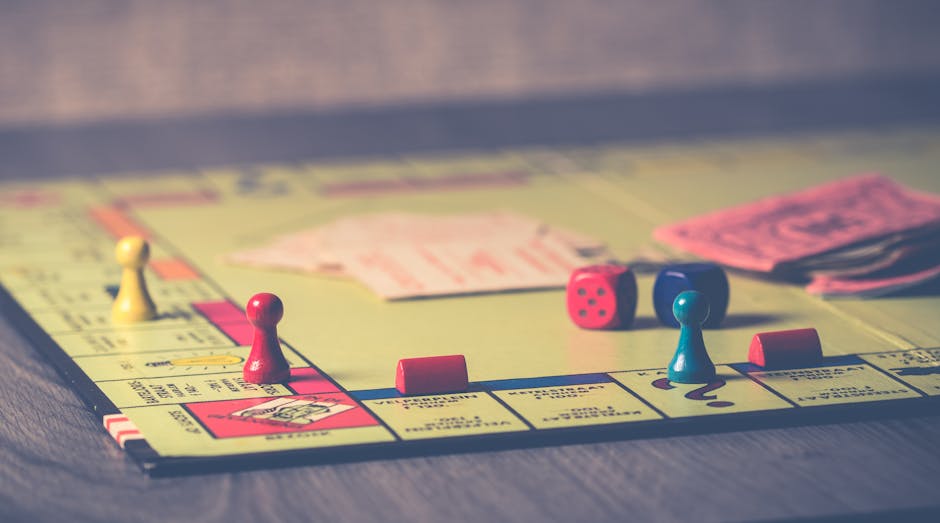
Monopoly is the most famous offender. Everyone knows the basic rules, but the actual mechanics — particularly around property valuation, trading, and mortgaging — are never explained in a session. Experienced players routinely beat first-timers by exploiting rules newcomers don't know exist.
If you're looking for accessible games, look for transparency: games where everything on the table is visible, the rules don't have hidden layers, and skill advantage is earned through better decisions rather than prior knowledge.
Best Easy Board Games for Beginners
1. Azul
Players: 2–4
Time: 30–45 minutes
Complexity: Very low
Azul is perhaps the best gateway game available today. The rules fit on a single page. You take tiles from factories in the centre and arrange them on your personal board to score points. That's basically it.
What makes it excellent is that the tile-drafting creates genuine tension: taking what you need often means giving something useful to someone else. That single trade-off — do I take what I need, or take what blocks my opponent? — creates more interesting decisions than games ten times more complex.
Production quality is also exceptional. The tiles are weighty, the boards are clear, and the game looks good on a table. First-timers often pick it up by watching for two or three turns rather than reading rules.
2. Ticket to Ride
Players: 2–5
Time: 45–75 minutes
Complexity: Low
Collect coloured cards, play them to build train routes, complete destination tickets. Ticket to Ride has been introducing people to modern board games for twenty years because the concept is immediately graspable and the gameplay delivers exactly what the premise promises.
The original version — the US map — is the best starting point. The European version adds some complexity (ferries, tunnels) that's unnecessary for a first game.
One thing worth knowing: Ticket to Ride rewards planning but doesn't punish improvisation too harshly. Someone who changes strategy mid-game can still compete. This makes it unusually forgiving for a strategy game — which is ideal for mixed groups.
3. Smoothie Wars
Players: 3–8
Time: 45–60 minutes
Complexity: Low-Medium
Smoothie Wars manages an impressive trick: it teaches genuine business concepts (supply and demand, cash flow, competitor analysis) through gameplay that doesn't feel like a lesson. The rules are straightforward — choose a location, buy fruit, make and sell smoothies, collect money — and most players understand what they're doing within the first round.
The beauty of Smoothie Wars as an accessible game is that the consequences of decisions are immediately obvious. If you pick the same location as a competitor, you both lose customers. If you buy more fruit than you need, the leftovers are a waste. There's no abstract "engine building" to grasp before you can play. You set up your stall, you compete, you either have money or you don't.
Creator Dr. Thom Van Every specifically designed the game to be learnable in one playthrough — a rare quality in strategy games with genuine depth.
4. Codenames
Players: 4+ (works best with 4–8)
Time: 15–30 minutes
Complexity: Very low
Codenames is technically a word game but deserves inclusion because it's one of the few games that scales to large groups, plays in under thirty minutes, and requires no setup beyond laying out some cards.
One player gives one-word clues connecting multiple words on a grid; their team guesses which words the clue refers to. Simple, social, and surprisingly tense.
The competitive version (two teams racing to identify their words first) works slightly better for groups that like genuine competition. The cooperative version (both teams working together against a clock) suits groups who prefer collaboration.
5. Catan
Players: 3–6
Time: 60–120 minutes
Complexity: Low-Medium
Catan is almost ubiquitous as a gateway game, and for good reason. Collect resources, build settlements and roads, trade with other players, score ten victory points. The trading mechanic is what makes Catan special — it requires communication, negotiation, and reading other people. Social skills, essentially.
A note on time: Catan's advertised 60–90 minutes often runs longer with new players because trading takes time to figure out. Budget two hours for a first session. It's worth it — most groups play three or four times before anyone wants to stop.
6. Pandemic
Players: 1–4
Time: 45–60 minutes
Complexity: Low-Medium
Pandemic is a cooperative game where all players work together to prevent four diseases from spreading across the world. Because everyone shares information and coordinates openly, it's an excellent gateway for people who are anxious about competitive games.
The one caveat: the "alpha player" problem. A dominant voice at the table can end up directing everyone else, reducing other players to passengers. Worth acknowledging with your group before you start — remind everyone that their decisions matter and disagreement is part of the fun.
What to Avoid as a Beginner
Games with excessive downtime. If you're waiting fifteen minutes between turns while experienced players deliberate, you're not learning the game — you're watching it. Start with games where everyone is engaged throughout.
Asymmetric complexity. Some games give each player different powers or rules. That's interesting for experienced players, but confusing for newcomers who are still learning the base game.
Hidden information overload. Games where you have to track what everyone else might have while also managing your own hand and the board state are demanding. Start with games where most information is public.
Games that punish early mistakes permanently. If you make a mistake in round one and spend the next ninety minutes paying for it, the experience isn't fun. The best beginner games either forgive mistakes or keep sessions short enough that you can simply start again.
Quick Reference: Accessibility vs. Depth
| Game | Rules Complexity | Genuine Depth | Recommended For |
|---|---|---|---|
| Azul | Very Low | Medium | Everyone; perfect first game |
| Ticket to Ride | Low | Medium | Families, casual groups |
| Smoothie Wars | Low-Medium | High | Adults, family nights, learning business concepts |
| Codenames | Very Low | Low-Medium | Large groups, party settings |
| Catan | Low-Medium | Medium-High | Social groups who enjoy negotiation |
| Pandemic | Low-Medium | Medium | Groups preferring cooperation |
The Point of Easy Games
Accessible board games aren't a lesser category. They're the point of entry to a hobby that, at its best, teaches people how to think about resources, competition, risk, and human behaviour. The best easy games do this without making you feel like you're in a lesson.
The games above are easy to learn precisely because they've been designed with care — every mechanic earns its place, nothing is there just to add complexity, and the experience delivers what it promises within the first session.
🔑 Key Takeaways
- Easy board games don't have to be boring — look for simple rules with meaningful decisions
- Azul and Ticket to Ride are the safest entry points for new players
- Smoothie Wars is accessible to beginners while offering genuine strategic depth
- Avoid games with hidden rule layers (Monopoly), excessive downtime, or irreversible early mistakes
- The best starter games are completable in one session and immediately inviting for a rematch
Frequently Asked Questions
What's the easiest board game for complete beginners?
Azul. The rules explain in under five minutes, the gameplay is intuitive, and the decisions are interesting enough to keep experienced players engaged alongside newcomers.
Are easy board games worth buying if you already know how to play games?
Yes — for the same reason good restaurants have straightforward dishes on the menu. Easy games serve a purpose: they welcome new people, they work in mixed groups, and they're enjoyable when you want a session that doesn't require full concentration.
Can Smoothie Wars be played by people who've never played strategy games before?
Yes. Most players grasp the core loop within the first round — pick a location, sell smoothies, collect money. The strategic depth becomes apparent as you play, rather than being required upfront.
How do I know if a game is genuinely accessible or just marketed that way?
Look at the estimated teach time in reviews, not the box. A game that takes thirty minutes to explain is not a beginner game, regardless of what the box claims. Ten minutes of explanation or less is the right benchmark for a genuinely accessible game.
Is Catan still a good entry point, or are there better options now?
Catan remains one of the best gateway games for groups who enjoy negotiation and social interaction. If those aren't priorities — or if your group prefers less conflict — Azul or Pandemic are often better fits.