TL;DR
Good board games share identifiable design qualities: decisions that matter, mechanics that serve the theme, player count ranges that stay honest, and session lengths that respect your time. The games that stay on tables — rather than gathering dust on shelves — almost always hit multiple of these marks simultaneously.
Most board games spend one Christmas on the table and the rest of their lives on a shelf. A select few get played dozens, hundreds, eventually thousands of times. The difference isn't marketing, price, or production quality — though all of these matter somewhat. The difference is design.
Good board game design is identifiable. There are specific qualities that separate genuinely excellent games from decent ones, and decent ones from forgettable ones. Understanding what these qualities are helps you buy better games and appreciate why the ones you love keep calling you back.
The Core Quality: Meaningful Decisions
Everything else in game design flows from this. A good board game gives you real choices — decisions where the options have genuine trade-offs and where the better decision produces better outcomes over time.
Consider the two failure modes:
Too random. Snakes and Ladders has no decisions. You roll, you move, you're done. There's no agency, no skill, nothing to learn, no reason to feel good about winning or bad about losing. It's a pastime for very young children and has no claim to be a game for anyone else.
Too obvious. Some "strategy" games have choices that are actually clear best moves — one option is obviously better than the alternatives every time. These games feel like work without the satisfaction of genuine problem-solving. If you always know what you should do, the game is actually testing your arithmetic rather than your judgement.
The sweet spot is decisions with genuine trade-offs. "If I take this action, I gain X but forgo Y, while my opponent can now do Z." This is what Chess achieves in pure form. It's what Catan achieves in an accessible social format. It's what Smoothie Wars achieves in a competitive economic context: every location decision, every pricing choice, every production investment involves real opportunity cost.
Mechanics That Earn Their Place
Game mechanics — the systems by which players take actions and generate consequences — should be there for a reason. The best games have mechanics that do real work.
The Worker Placement Mechanism
Worker placement creates scarcity by having players claim limited action spaces. When one player claims the "Harvest" space in Agricola, no one else can use it that round. This creates tension, requires planning, and makes other players feel like active participants in your strategy rather than scenery.
The mechanism earns its place because it models something real: limited capacity creates competition, and competition around limited resources creates meaningful decisions.
The Engine-Building Mechanism
Engine builders let players develop combinations of cards or tiles that generate increasing returns over time. Wingspan is the most acclaimed recent example. The satisfaction comes from building something — a system that generates payoffs through interdependency — and watching it work.
Engine-building captures a genuine human pleasure: the compound payoff of patient investment. It's satisfying because it feels like building rather than consuming.
Supply and Demand Mechanisms
Economic games that model supply and demand create dynamic, player-responsive markets. As more players compete for the same market, margins compress — exactly as in real markets. This mechanism earns its place because it's modelling something true, not just simulating it arbitrarily.
Smoothie Wars' supply and demand system is the game's central mechanic. The tropical island has locations with different demand levels; as players compete for them, the economics shift. Players who correctly anticipate how the market will evolve do better than those who react to what's already happened. This is how real markets work, compressed into 45 minutes.
Theme That Integrates With Mechanics
The best games use their theme to make their mechanics intuitive. The theme isn't decoration — it's a cognitive shortcut that helps players understand why rules work the way they do.
In Pandemic, the disease-spreading mechanic makes immediate sense because everyone knows diseases spread through contact. You don't need to memorise the rule; you understand it because you understand disease. The theme makes the mechanic legible.
In Smoothie Wars, the tropical island setting justifies the market dynamics. Why does the beach resort attract more customers? Because beachside locations attract tourism — that's obvious from the setting. Why do smoothies make sense as the product? Fresh fruit, tropical climate, health-conscious tourists — the context makes the premise immediate.
This integration is harder to achieve than it looks. Many games paste a theme over generic mechanics — the theme is essentially irrelevant to how the game works. These games can be mechanically excellent but feel oddly cold, as if you're operating an abstract system rather than inhabiting a world.
Honesty About Player Count and Time
The most common misleading claims in board game marketing are player count and session time.
A game listed as "2-6 players" that's genuinely best at exactly three players is not a 2-6 player game. A game claiming "45 minutes" that takes 90 minutes with first-time players is not a 45-minute game.
Good game design is honest about these things. Better game design solves the underlying problem: designing mechanics that actually scale well across a range of player counts, and actual playtesting to determine accurate session lengths.
Smoothie Wars is one of the more honest games in this regard. The 3-8 player range is genuine — the game scales because the island map provides sufficient competitive space at all player counts, and higher player counts create more complex market dynamics rather than just longer turns. The 45-60 minute claim holds for experienced players, with a slightly longer first-play.
The "Play It Again" Test
A good board game passes the "play it again" test: after finishing a session, at least some players want to play again. Right now, if possible.
Games that pass this test do so by creating experiences that feel different each time. Variable setup (random map in Catan, different player factions in Root), variable player strategies (different approaches succeed in different situations), and the knowledge that you understand more about the game than you did last session all contribute.
Games that fail the test either repeat identical experiences (luck-dominated games where strategy makes little difference) or reveal their entire content in a single play (games with a single winning strategy everyone discovers quickly).
Production Quality: Important But Not Decisive
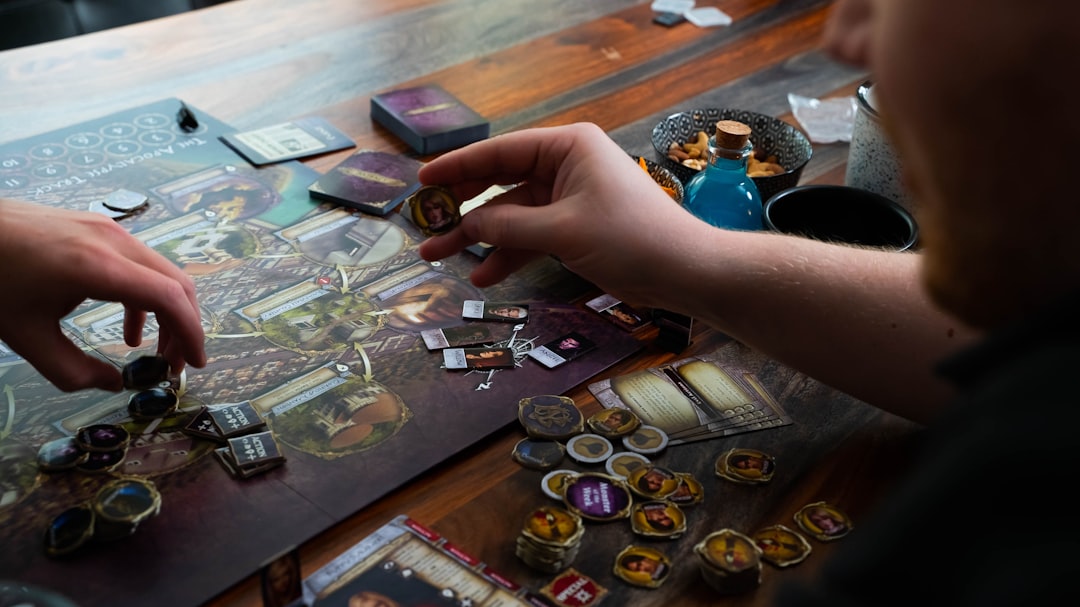
The tactile quality of good board game components matters. The egg miniatures in Wingspan. The tile pieces in Azul. The detailed island map in Smoothie Wars. These physical qualities create genuine pleasure in the act of playing — picking up components, placing them, seeing the game state develop visually.
But production quality is a multiplier, not a foundation. A beautifully produced bad game is still a bad game. A mechanically excellent game with average components is still worth playing.
The worst outcome is when high production costs are used as a substitute for design quality — the £80 Kickstarter game with exquisite miniatures and hollow mechanics.
A Framework for Evaluating Good Board Games
| Quality | Questions to Ask | Red Flags |
|---|---|---|
| Decisions | Do choices have real trade-offs? | Always one obvious best move |
| Mechanics | Does every rule earn its place? | Rules that don't change anything |
| Theme | Does theme make mechanics legible? | Pasted-on, irrelevant setting |
| Player count | Does it work across stated range? | "Best at exactly 4" |
| Session length | Does play time match box claim? | 45-minute box, 2-hour reality |
| Replayability | Does each session feel different? | Solved after first play |
| Player engagement | Are all players engaged throughout? | Player elimination |
| Fair losing | Can losing players learn something? | Outcome determined by first 10 minutes |
Games That Hit Every Mark
The hardest thing to find in board gaming is a game that genuinely scores well across all the dimensions above — not outstanding in one area while mediocre in others, but consistently excellent.
A short list of games that manage it:
Chess: Perfect on decisions, mechanics, and engagement. Fails on theme (there is none) and accessibility for newcomers.
Catan: Excellent on social dynamics, accessibility, and player count. Weaker on pure decision depth compared to heavier designs.
Pandemic: Outstanding on cooperative engagement, theme integration, and replayability. Weaker if you want competitive play.
Wingspan: Excellent production, strong engine-building satisfaction, decent social engagement. One of the stronger recent designs.
Smoothie Wars: Genuine decision depth, integrated theme, honest player count and time claims, passes the play-again test. A strong entry in the competitive economic strategy space, particularly for groups of 3-8.
FAQ
What makes a board game good for beginners?
Accessible rules (learnable in 10-15 minutes), clear feedback loops (it's obvious what your decisions accomplished), meaningful but not overwhelming choices, and a session length under 60 minutes. Ticket to Ride is the benchmark. Smoothie Wars is a good step up for beginners who feel ready for slightly more strategic engagement.
How important is luck in a good board game?
Some randomness is fine — it creates variety and ensures experienced players can't always predict exact outcomes. Too much luck makes skill irrelevant and outcomes feel arbitrary. The best games have enough randomness to keep games feeling fresh and variable, but not so much that decisions cease to matter.
What makes a board game fail after a few plays?
Usually: a dominant strategy that everyone discovers, identical experiences regardless of different starting conditions, player elimination that creates boredom, or session lengths that were acceptable once but feel excessive on repeat. Games with genuine replayability are the ones worth buying.
Are expensive board games better than cheap ones?
Not necessarily. Price reflects production costs, licensing, and publisher scale more than it reflects design quality. Some of the most consistently enjoyable games are mid-priced (£25-45). The best value in board gaming is often found at specialist retailers rather than general retail, where cheaper games tend to be older, less well-designed titles.
How do you know if a board game will suit your group before buying?
Watch a playthrough video (Shut Up & Sit Down and No Pun Included are excellent sources). Check Board Game Geek ratings — but also check the "recommended player count" section from community ratings, which often differs from the box claim. If possible, try before you buy at a game shop demo session or games café.