TL;DR
Worker placement is one of the most satisfying board game mechanics: players take turns assigning tokens to action spaces, blocking rivals and managing limited resources to build the best position. This guide explains the mechanic, why it works, and the best worker placement games to try.
If you spend time in board game communities, you will encounter a shorthand vocabulary. Deck-building. Engine-building. Area control. Push-your-luck. These are the building blocks -- the mechanics -- that designers use to create gameplay.
Worker placement is one of the most popular, most satisfying, and most frequently discussed of these mechanics. Understanding what it is and why it creates good strategy unlocks an entire category of games that might otherwise feel opaque.
This guide explains worker placement from the ground up: what it means, how it feels to play, why it creates interesting decisions, and which games are worth your time.
What Is Worker Placement?
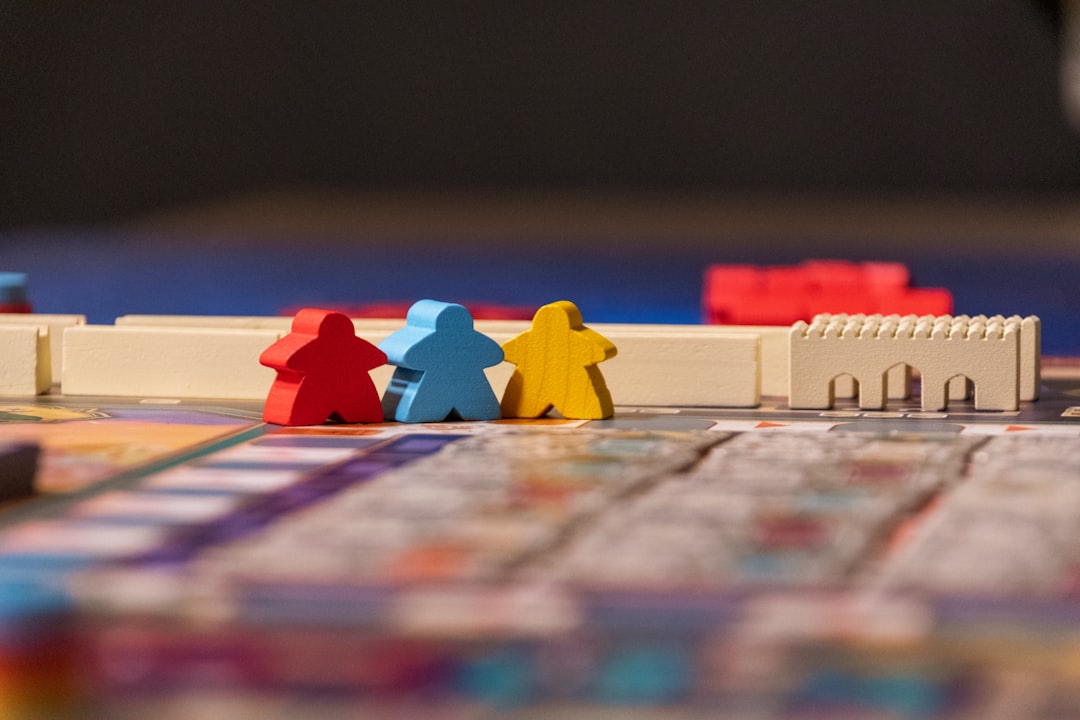
Worker placement is a mechanism where players have a limited number of tokens -- typically called workers or meeples -- and take turns placing them on action spaces on a shared board. When you place a worker on a space, you gain that space's benefit. Crucially, that space is now occupied, and in most worker placement games, other players cannot use it until the round ends and all workers are recalled.
The result is a constant tension between what you want to do and what is available. Your optimal strategy exists in a vacuum. In practice, you are competing for the same spaces as every other player, reacting to what gets taken before your turn, and making decisions about what to do when your first choice is blocked.
This tension -- between planning and responding, between ideal and available -- is what makes worker placement compelling. Every decision depends on the state of the board, the number of workers you have, and the priorities of your opponents.
The Core Design Choices
Not all worker placement games work the same way. Designers make different choices about the rules that govern the mechanic, and those choices shape the feel of the game entirely.
Blocking. In the purest form of worker placement, once a space is taken it is unavailable to all other players that round. This creates aggressive blocking as a viable strategy -- you place a worker not for the action itself, but to deny it to someone else. Agricola and Viticulture are classic examples of this design.
Multiple slots. Some games allow multiple workers on the same space, but penalise later arrivals. The first player to a space gets the full benefit; subsequent players get a reduced version, or pay a fee. This softens blocking while maintaining competition.
Open versus limited workers. Some games give all players the same number of workers. Others let players accumulate more workers as part of their strategy, creating a progression system within the mechanic itself.
Round structure. In most worker placement games, all workers are recalled at the end of each round, resetting the board. In some games, workers stay in place across rounds, creating longer-term commitments.
Each of these design choices changes the strategic texture significantly. The same basic mechanic produces very different experiences depending on how these decisions are made.
Why Worker Placement Creates Great Strategy
The mechanic has become a board game staple because it produces a specific quality of strategic decision-making that players find deeply satisfying.
Multiple competing priorities. You almost always have more things you want to do than workers available. The question is not "what should I do?" -- it is "what should I do first, given that I can only do some of these things, and rivals will take the rest?"
Reactive decision-making. Because the board state changes every time someone places a worker, you are constantly updating your plan. The game rewards players who can identify good alternatives when their primary plan is blocked.
Spatial reasoning. Reading the board -- understanding which spaces are about to be contested, which have been ignored, which are about to become critically important -- is a core skill. This kind of spatial and temporal reasoning develops with practice.
Efficiency as mastery. The most elegant play in worker placement games is getting the maximum value from the minimum number of worker placements. This efficiency principle transfers to real-world resource management skills and strategic thinking more broadly.
Worker Placement in Practice: A Short Example
Imagine a simple farming game. You have three workers. The available spaces this round are: Collect Wood, Collect Stone, Build a House (requires two wood and one stone), Visit the Market, and Take Food.
You have two wood already and need stone. Your optimal play: collect stone, then build a house. But if your opponent takes the stone space before your turn, you cannot build. You can pivot to the market, or take wood to build next round, or take food to survive. Each choice closes some options and opens others.
This micro-drama -- the small gap between what you planned and what you can actually do, and how you respond -- repeats dozens of times in a session. That is the pleasure of worker placement.
Economic and Business Games with Worker Placement
Many of the most well-regarded economic strategy games use worker placement or elements of it. That connection is not accidental.
Worker placement games mirror real resource allocation challenges. A business cannot do everything simultaneously. Marketing competes for budget with product development. Hiring one team means not hiring another. Worker placement games capture this tension in miniature and reward the same kind of prioritised, adaptive thinking that effective business decision-making requires.
Smoothie Wars uses elements of positional allocation that echo worker placement logic. Players choose where to set up their smoothie stalls each round -- locations that other players cannot fully replicate -- and manage limited ingredients and budget. The decisions feel similar to pure worker placement: you are always asking "where should I be, given where everyone else is, and what resources do I have?"
Understanding worker placement mechanics makes Smoothie Wars more legible as a strategy game. If you want to explore those business strategy elements more deeply, there is a clear thread connecting worker placement theory to practical economic thinking.
The Best Worker Placement Games
For Beginners
Viticulture (Essential Edition) Players manage a winery in Tuscany, placing workers on vineyard actions to grow grapes, produce wine, and fill orders. The essential edition is accessible, beautifully produced, and the seasonal structure provides helpful scaffolding for new players. A warm, rewarding introduction to the mechanic.
Stone Age Players manage a tribe of cave-dwellers, sending workers to gather resources, develop tools, and build civilisations. The luck element (dice rolling for resource gathering) softens the strategic sharpness slightly, making it a gentler entry point than pure worker placement. Very friendly for new players.
Everdell Set in a woodland world of anthropomorphic animals, Everdell uses worker placement alongside card engine-building. The visual presentation is exceptional and the learning curve is gentle. An ideal game for groups who want aesthetic beauty alongside strategic depth.
For Intermediate Players
Agricola One of the defining worker placement games and still a benchmark nearly two decades after its release. Players develop a farm over fourteen rounds, feeding their family, expanding their home, and pursuing multiple scoring paths. The blocking is aggressive, the resource tension is real, and the game rewards multiple plays to understand the card combinations.
Wingspan Wingspan uses a lighter version of worker placement within a bird-collection engine-building framework. The egg-laying mechanism for gaining additional worker spaces is elegant. Consistently excellent for groups who want meaningful strategy without heavy cognitive load.
Architects of the West Kingdom A game that does something interesting with blocking: workers can be arrested by opponents and stay captured until you pay to recover them. This creates unusual risk calculus and memorable confrontations. More adversarial than most worker placement games -- excellent for competitive groups.
For Experienced Players
Brass: Birmingham Brass: Birmingham is not a pure worker placement game, but its network-building and shared resource actions create similar dynamics of position and access. For players who have exhausted lighter worker placement games, Brass offers a considerably higher ceiling. The economic themes connect clearly to real business strategy.
Tzolk'in: The Mayan Calendar The most mechanically unusual worker placement game on this list. Instead of immediate returns, workers are placed on interlocking cog wheels that rotate each round -- earlier placement means waiting longer for better rewards. This creates deeply strategic timing decisions unlike anything else in the genre.
Patchwork A two-player worker placement puzzle game about creating a quilt by selecting and fitting tetromino pieces. Deceptively simple, genuinely deep, and exceptionally fast-playing. One of the best two-player games ever designed.
How to Get Better at Worker Placement Games
If you are new to the mechanic and finding the competition for spaces overwhelming, a few principles help.
Think in sequences, not single actions. Before placing your first worker, ask what sequence of three placements would serve you best. Then evaluate which of those will likely still be available and adjust accordingly.
Watch opponents' resources. What someone does on a given turn tells you what they needed. Tracking this helps you predict what spaces they will compete for in future rounds.
Value blocking deliberately. Sometimes it is worth sacrificing an action space to deny it to a rival who needs it more. This is most valuable when the rival is well ahead and you need to slow their progress.
Do not ignore unfashionable spaces. Contested spaces draw attention, but often the quietly available spaces offer better value because of the lack of competition for them. This is an underused principle that separates average players from strong ones.
Worker placement is one of board gaming's great mechanics because it captures something true about decision-making under constraint. You cannot do everything. You must prioritise. You must adapt. And the best play comes not from executing a perfect plan but from maintaining a flexible strategy under pressure.
Once you understand it, you will start seeing worker placement logic everywhere -- in business decisions, in time management, in competitive positioning. The games are teaching you something real.
For your first worker placement game, try Viticulture or Everdell. Both are beautiful, accessible, and deeply replayable. Once you are comfortable with the mechanic, Agricola will offer a considerably sharper challenge.